
Democrats are continuing their crusade against the wealthy and in support of higher taxes, and yet history keeps making a fool of them.
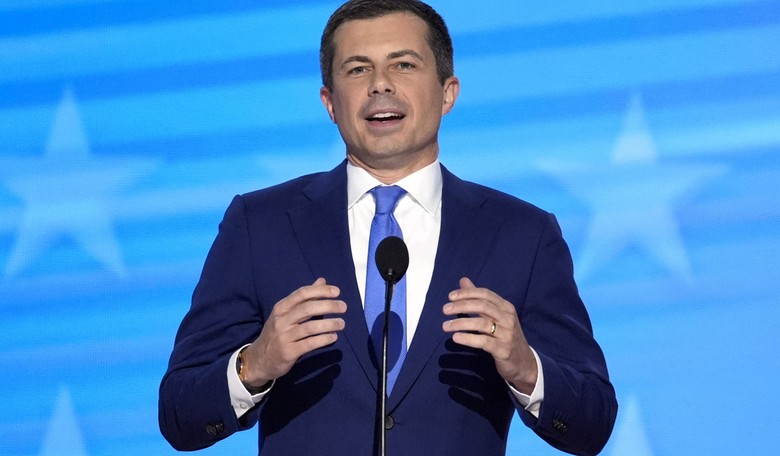
The latest example is former Transportation Secretary under President Joe Biden, Pete Buttigieg. On an episode of the “Diary of a CEO” podcast with Steven Bartlett, Buttigieg argued that higher taxes, especially on capital gains and inheritance, could generate the revenue needed to build high-speed rail networks across the U.S. and fund priorities like rural hospitals and publicly funded education.
Pete Buttigieg says higher taxes would help America build fast trains.
— KanekoaTheGreat (@KanekoaTheGreat) August 3, 2026
Has he seen California’s high-speed rail?
"If we had a more reasonable rate of taxation on capital gains and corporate income, and made it harder to pass along inherited wealth..."
"We’d be out of this doom… pic.twitter.com/5RgHc8o2ug
"I am sure that if we had a more reasonable rate of taxation on capital gains and on corporate income, and if we made it harder to pass along wealth without, especially inherited wealth, without paying any taxes on it, or some of these other maneuvers like this borrowing thing you're talking about, we would have a fairer country because we'd still have capitalism, there'd still be lots of motivation and lots of reason to innovate and build a business and create jobs and do all the things that very wealthy people have done," Buttigieg said.
"And also we would be out of this doom loop where they're saying, well, we can't possibly have as good healthcare as other countries. We couldn't possibly do something like, I don't know, fast trains here in the United States. We couldn't possibly have rural hospitals be properly funded or public education. Of course we can."
Trains are a peculiar example, not just because of the colossal failure that is California’s high-speed rail, a project that has burned through hundreds of billions with nothing to show for it, but because the ghost of government in the transcontinental railroad looms large.
Underlying Democratic philosophy is the idea that government funding is the solution to every problem. The same was true with the first transcontinental railroad, as the federal government sought to supercharge the project by subsidizing both the Union Pacific and the Central Pacific, not by how well they performed, but by gifting the companies 12,800 acres of land per mile of track, plus $16,000 per mile on level prairie, $32,000 in foothills and plateaus, and $48,000 in mountainous terrain.
The result was exactly what such incentives should produce: a transcontinental railroad, yes, but one so shoddily constructed it had to be rebuilt; one that ignored the most efficient routes because detours meant more miles and more money; one that barreled through Native American lands with reckless disregard, putting thousands of lives at risk in the race to lay claim to federal bounties.
And what’s more, this was a textbook case of government failure, yet private enterprise took the blame for the inefficiencies, paving the way for even more federal oversight. That is the story of government involvement. Not occasionally, not as a rare exception, but as the rule. It happens every single time.
So when Buttigieg touts higher taxes on capital gains and inheritance as the key to funding projects like a national high-speed rail network, he’s not simply ignoring California’s $100-billion-plus ghost train; he’s doubling down on the same playbook that has failed, again and again.
The transcontinental railroad may have connected a continent, but it did so at the cost of massive subsidies, inflated contracts, and a legacy of government overreach that private builders were forced to carry. Buttigieg’s, and the Democrats’, vision asks Americans to trust that this time will be different: that more taxes, more bureaucracy, and more federal control will finally deliver the trains, hospitals, and schools that decades of similar promises have not.
History suggests otherwise. The pattern is clear and decisive. It’s time for those who champion government involvement to come up with a new playbook.