





Founded 55 years ago, Amtrak set out with a bold mission to revive passenger rail. Fast forward to today, and this experiment has failed. Politicians have often designed routes to win votes rather than attract riders. As a result, Amtrak has misspent taxpayer money since 1971.
Take, for instance, the Infrastructure Investment and Jobs Act of 2021. It allocated a monumental $66 billion in subsidies to bolster passenger rail. Despite this support, Amtrak's losses grew from $1.12 billion in FY2019 to $2.09 billion in FY2025.
Amtrak’s last annual report showed a $661.7 million loss, but left out four costs:
- $1.05 billion in depreciation,
- $364.2 million in Project-Related Expenses,
- $328.1 million in state subsidies, and
- $28.1 million in funding for the Office of Inspector General.
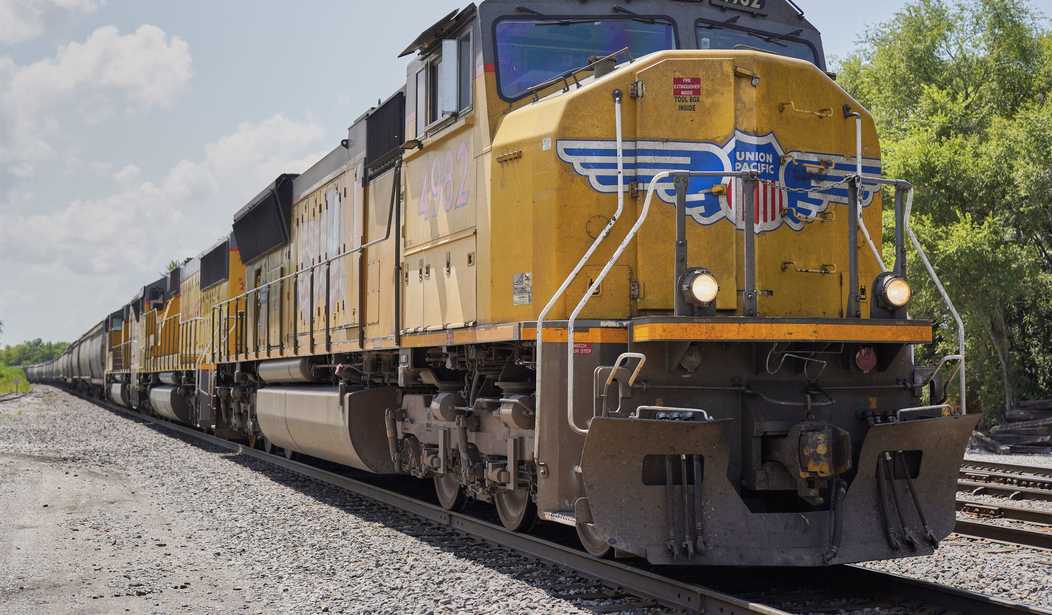
Much of that loss stems from routes operating over Union Pacific and Norfolk Southern tracks. These routes cause about 58 percent of Amtrak's avoidable losses, combined.
Instead of throwing good money after bad, the Surface Transportation Board (STB) should try a different approach. It should make unsubsidized passenger rail a condition of the pending merger between Union Pacific and Norfolk Southern.
Here's how. Union Pacific would operate two all-sleeping-car routes, each departing every 72 hours. One route would connect Hoboken with Los Angeles via Denver and Las Vegas. Another would travel between Seattle and Los Angeles. Each train would comprise 16 Superliner cars: 14 sleeping cars, one dining car, and one lounge car. With a capacity of 582 passengers, a 65 percent load factor, and an average yield of $0.39 per passenger per mile, both routes could operate at a profit without a single dollar of taxpayer subsidy.
In return, Amtrak would drop its loss-ridden routes over Union Pacific and Norfolk Southern tracks. Eliminating them could save taxpayers $800 million to $1 billion each year. Union Pacific would also reclaim valuable track capacity currently used for those routes.
This isn't a speculative idea — it builds on proven facts. Union Pacific operated passenger trains before 1971, but coach-heavy configurations made them unprofitable. The problem is that short-haul passengers take seats meant for longer trips. For example, a person going from Redding to Sacramento uses a seat that could serve a Seattle-to-Los Angeles passenger.
Eliminating coach seats and adding more sleeping cars would flip the economics. Nine Amtrak routes used Superliner sleeping cars in FY2024:
- Auto Train, which earned $60.08 million in sleeping car revenue and $17.41 million in coach revenue.
- California Zephyr, which earned $43.47 million in sleeping car revenue and $20.78 million in coach revenue.
- Capitol Limited, which earned $11.98 million in sleeping car revenue and $10.06 million in coach revenue.
- City of New Orleans, which earned $8.31 million in sleeping car revenue and $13.4 million in coach revenue.
- Coast Starlight, which earned $26.73 million in sleeping car revenue and $19.71 million in coach revenue.
- Empire Builder, which earned $40.88 million in sleeping car revenue and $22.77 million in coach revenue.
- Southwest Chief, which earned $25.39 million in sleeping car revenue and $17.46 million in coach revenue.
- Sunset Limited, which earned $5.96 million in sleeping car revenue and $4.83 million in coach revenue.
- Texas Eagle, which earned $10.56 million in sleeping car revenue and $14.97 million in coach revenue.
In total, Amtrak’s Superliner sleeping cars earned $233.36 million in revenue. Meanwhile, Superliner coaches earned only $137.06 million.
Only five of those nine routes operated over Union Pacific or Norfolk Southern tracks. They were the California Zephyr, Capitol Limited, Coast Starlight, Sunset Limited, and Texas Eagle. On those five routes, the Superliner sleeping cars earned $98.7 million. Coaches earned only $65.95 million.
In fact, several all-sleeping-car trains in Australia already operate without subsidies. This innovative approach shows similar potential for Amtrak. We don't need new trains or new tracks. We only need a smarter configuration.
Continuing to subsidize Amtrak would be both foolish and counterproductive. Amtrak set a ridership record in FY2025, but that figure is misleading. Since FY2011, 38 Amtrak routes have seen a decline in passenger-miles per train-mile.
Ridership on the high-speed Acela trains has dropped by 12 percent since FY2019. It carried 3.58 million passengers in FY2019, but that dropped to 3.15 million in FY2025. Meanwhile, the slower Northeast Regional saw a 34 percent increase in riders. It carried 8.94 million passengers in FY2019, which grew to 12.02 million by FY2025. Without the Northeast Regional, there would have been no ridership record.
Politicians rarely realize that travelers prefer north-south routes over east-west routes. In FY2025, Amtrak’s east-west routes lost over $530 million. Meanwhile, the Auto Train (Virginia to Florida) made a $9.3 million profit.
In fact, travelers prefer north-south routes over east-west routes by a ratio of three to one.
Between Chicago and Los Angeles, the Desert Wind lost less money than the Southwest Chief. In FY1995, it lost only $14.6 million compared to $38.2 million for the Southwest Chief. Despite this, Amtrak favored the Southwest Chief, which passed through more congressional districts. That made it politically useful.
The Desert Wind and the California Zephyr were the same train between Chicago and Salt Lake City. At Salt Lake City, the Desert Wind split off and continued to Los Angeles alone. For this reason, it passed through fewer congressional districts. Amtrak discontinued the Desert Wind in 1997, leaving Las Vegas without train service.
This was not a business decision. It was a political one. Unfortunately, taxpayers are still paying for it today.
The Southwest Chief still loses money. Its operating losses grew from $56.1 million in FY2019 to $81.7 million by FY2025. It also uses a lower-quality track, which cost taxpayers more than $45 million for repairs. Instead of allocating more subsidies, we should explore alternate routes.
Union Pacific would restore service to Las Vegas along the Desert Wind route. Political opposition would be minimal, since Union Pacific would fill most of the gaps between Amtrak's other routes. If successful, the STB could pursue a similar strategy for Amtrak's other routes.
The numbers add up. The policy is clean. The savings are real. As a merger condition, the STB should ask Union Pacific and Norfolk Southern to reestablish unsubsidized passenger rail.
Editor’s Note: Do you enjoy Townhall’s conservative reporting that takes on the radical Left and woke media? Support our work so that we can continue to bring you the truth.
Join Townhall VIP and use promo code FIGHT to receive 60% off your membership.


Join the Conversation
VIP members get the ability to comment on articles.