




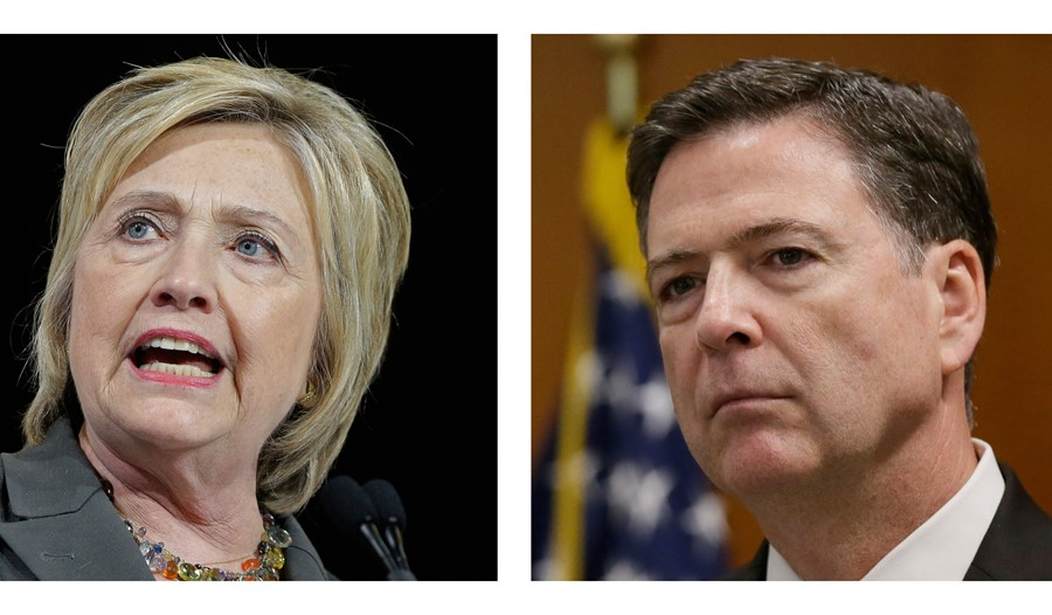
As the FBI reopens its criminal investigation of former Secretary of State Hillary Clinton (thanks to information found on a "device" belonging to Anthony Weiner, the ex-husband of top aide Huma Abedin under FBI investigation for sexting an underage girl), it's important to go over what the FBI found the first time around.
FBI’s Original Findings in #Clinton Email Case
— Fox News Research (@FoxNewsResearch) October 28, 2016
52 email chains w/ CLASSIFIED info when sent/received
8 TOP SECRET
36 SECRET
8 CONFIDENTIAL
In July, FBI Director James Comey admitted Clinton was "extremely careless" in her handling of classified information on multiple private servers but did not announce an indictment.
"There is evidence they [Clinton and staff] were extremely careless in their handling of classified information," Comey said. "Although there is evidence of potential violations of the statutes regarding the handling of classified information, our judgment is that no reasonable prosecutor would bring such a case. Prosecutors necessarily weigh a number of factors before deciding whether to bring charges."
"One hundred-and-ten emails in 52 email chains have been determined by the owning agency to contain classified information at the time they were sent or received. Eight of those chains contained information that was top secret, at the time they were sent, 36 of those chains contained secret information and eight contained confidential information at the time," Comey continued. "Our investigation looked at whether there is evidence classified information was improperly stored or transmitted on that personal system in violation of a federal statue that makes it a felony to mishandle classified information either intentionally or in a grossly negligent way or a second statute, making it a misdemeanor to knowingly remove classified information from appropriate systems or storage facilities. And consistent with our counter intelligence responsibilities, we have also investigated to determine if there is evidence of computer intrusion by nations states or by hostile actors of any kind."

FBI agents have been reportedly enraged for months over the non-indictment, with some sources saying Comey stood in the way of a Grand Jury investigation for the case.
This post has been updated with additional information.







Join the conversation as a VIP Member