


Editor's note: This piece was authored by Jonathan W. Plante.
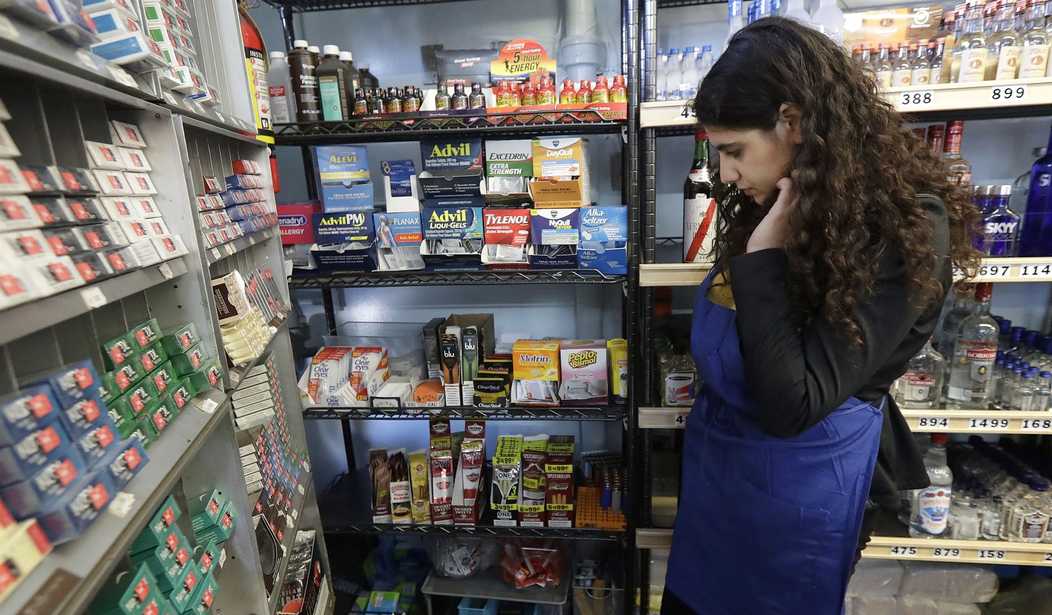
The Food and Drug Administration’s pending ban on the distribution of menthol cigarettes could be announced as early as September. While the FDA’s intentions may be pure, all this ban would do is increase crime in the US.
The aim of this proposal is to reduce addiction and cigarette related deaths among youth and young adults. According to the FDA, menthol cigarettes make it easier for people — especially youth and young adults — to deal with the harshness of cigarettes. In other words, menthol makes it easier for first time smokers to get through their first pack of cigarettes and, as a result, get addicted.
The FDA’s claims have been researched and reiterated by “Campaign for Tobacco-Free Kids,” an anti-tobacco organization. CTFK goes even further than the FDA, claiming a ban on menthol cigarettes would not only decrease deaths and addiction in Black American communities, but also reduce health disparities among Black Americans and other races.
Clearly, the proposal to ban menthol cigarettes has a noble aim. Still, it is doubtful that the ban will reduce addiction or the number of cigarette related deaths. The problem with simply taxing or banning a product is that it doesn’t stop consumers from wanting it. And when consumers want something, the market moves to fulfill that demand by any means necessary.
Banning menthol cigarettes won’t stop their production or distribution, it will just change the channels by which they are produced and distributed. It will increase the market for smuggled cigarettes — mainly among drug cartels.
Some have claimed that this proposed ban will increase crime at the border. Others go a step further and name Mexico’s Cártel de Jalisco Nueva Generación (CJNG) as the cartel that will profit from this proposed ban.
Recommended
Yes, as previously mentioned, the ban has noble intentions. Moral people want to support noble causes.
However, noble causes often have unintended consequences. It’s the “Baptist and Bootlegger” phenomenon. Behind every “Baptist” — a do-gooder, or a public-spirited individual or group — is a bootlegger who can profit off Baptists’ noble motivations.
Baptists in this case are groups like Campaign for Tobacco-Free Kids. Bootleggers are groups like CJNG who can provide consumers with menthol cigarettes despite the ban.
It doesn’t matter how pure the Baptist’s motives are, the only effect of their noble ban will be more crime and more profits for criminals.
Don’t believe this is possible? Visit the interactive map published by Mackinac Center for Public Policy. This map provides 2021 data on tax revenue and smuggling rates for states that have issued taxes on menthol cigarettes.
At one extreme are states with high taxes like New York and Massachusetts — which had per pack taxes of $4.35 and $3.51, respectively. These high taxes had negative impacts on tax revenue — with a revenue loss of $1.1 million for New York and $2.2 million for Massachusetts. Both states also had high smuggling rates. New York had the highest in the nation at 54%. Massachusetts had a rate of 38%.
Compare these data to states with low taxes like North Dakota or Nebraska. North Dakota had a tax rate of $0.44 per pack. This low tax resulted in a revenue gain of $2.5 million and a negative smuggling rate of -15.2%. Similar results occurred in Nebraska, which had a tax of $0.64. Revenue was $1.3 million, and smuggling was -2.7%.
One could object that these data are from states — and, as such, the conclusions wouldn’t apply to the entire country. However, the fact that these phenomena are occurring at the state-level is precisely why one should be worried it would happen at the national level. If states can’t even stop smuggling, it is doubtful a nation can.
We as a nation are left with a choice. We have to decide if this increase in crime is worth a well-intentioned ban that won’t decrease addiction, death, or health disparities. There are better solutions, and those are worth researching.
Jonathan W. Plante is a Ph.D. candidate at George Mason University and a Young Voices contributor.





Join the conversation as a VIP Member