





The United States may very well owe a crushing $20 trillion by 2020. And thus President Obama last week named a bipartisan commission to find ways to address our national debt.
Such a Periclean response might sound sincere and worthwhile. But it comes 13 months into this administration -- and only after Obama added nearly $1.5 trillion in new borrowing in 2009. And by the time the new deficit commission submits its recommendations at the end of this year, the current 2010 budget will have put us out another $1.5 trillion.
The president not that long ago ran on the theme of fiscal sobriety. During the 2008 campaign, he took advantage of the public anger over the Bush deficits that had climbed to an aggregate of $2.5 trillion over eight years. Now, though, he looks to trump Bush's eight-year record of red ink in his first two years.
Obama also just invited the Republican opposition to a summit at the White House to iron out differences over his stalled health-care legislation. Such a "let bygones, be bygones" group discussion likewise sounds like a good idea -- given the climbing cost of health insurance and the millions who cannot afford it.

But the problem again is that such outreach comes too little too late -- more than a year after Obama began his unilateral effort to have the government assume much of the nation's health-care system. A year ago -- with a supermajority in the Senate and basking in the swell of the November 2008 election -- Obama didn't worry much over the lack of Republican input.
Instead, in partisan mode, he issued a series of deadlines for his party to ram through his own preferred reforms -- first by the August 2009 vacation, then by the Thanksgiving recess, then by the Christmas break, and so on.
Recommended
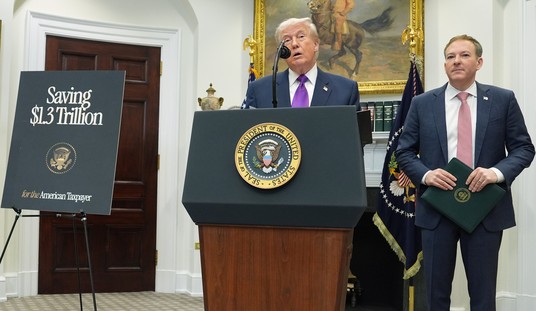
A couple of fence-sitting Democratic legislators, who alone could block passage, were to be bought off with awards of multimillion-dollar earmarks. Meanwhile, the president himself reportedly ridiculed angry tea party protestors as "the teabag, anti-government people." He, it appeared, did not worry too much about the opposition.
Recently, a petulant Obama blasted Washington partisan politics, the media and congressional inaction. In his January State of the Union address, Obama deplored "the partisanship and the shouting and the pettiness" by "politicians (who) tear each other down instead of lifting this country up" and "TV pundits (who) reduce serious debates into silly arguments."
Other administration supporters lamented the Republican resort to the filibuster.
But once again, 13 months ago, the upbeat president had little bad to say about one-party governance, pundits and politics. And there was no criticism of the filibuster -- which in early 2009 was considered irrelevant anyway, given Obama's supermajority in the Senate.
So what's behind Obama sudden embrace of statesmanship?
A year ago, a newly elected President Obama enjoyed a 68 percent public approval rating. There were substantial Democratic majorities in both houses of the Congress. Presidential press conferences were little more than media lovefests. Apparently there was no need to reach out, when a bold, new liberal agenda for the country seemed a sure thing.
But now? Obama consistently polls below 50 percent. The Senate supermajority was lost with the stunning win of Republican Scott Brown in liberal Massachusetts. A grassroots conservative tea-party movement helped put Republican governors in Virginia and New Jersey. And polls show that the November 2010 elections might result in the largest Democratic setback in a generation, with possible losses of both houses of Congress.
Pundits of both parties now fault Obama's style of governance. Public protests express disapproval over out-of-control federal spending and borrowing, and the idea of state-run health care.
So fairly or not, it seems like a panicked President Obama is abruptly scrambling to do what he should have done over a year ago.
But the problem is that a now jaded public believes that Obama is changing both course and tone not because he wants to for the country, but because he is forced to for his own survival.
In other words, the "hope and change" of last year's messiah has devolved into this year's "whatever it takes" of a cynic.




Join the conversation as a VIP Member