







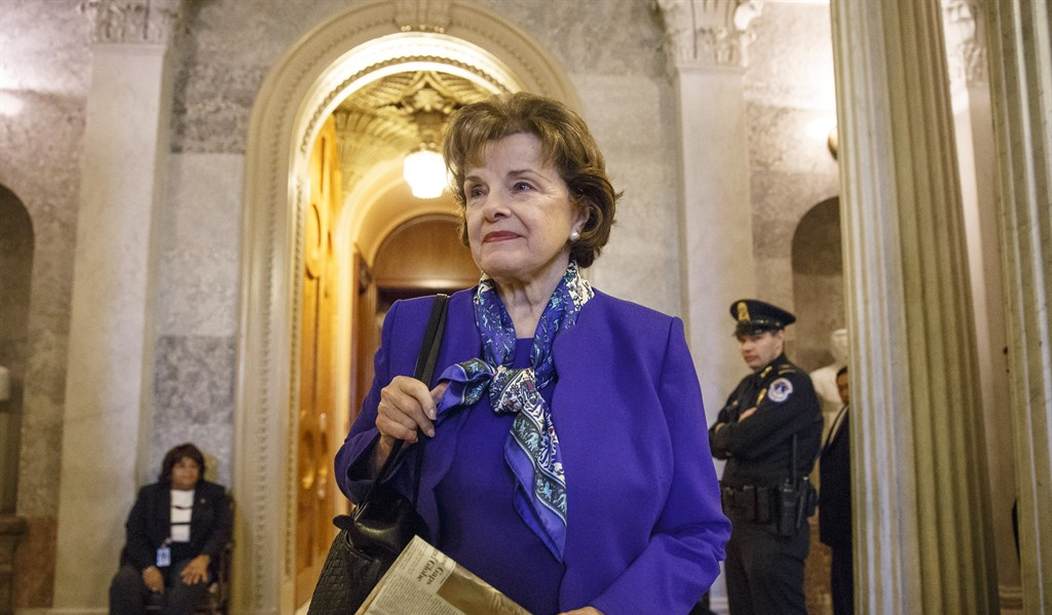
Sen. Dianne Feinstein, a stalwart ally of the nation's intelligence agencies, says she is appalled to learn they have been spying on her committee, ignoring federal law and possibly trampling on the Constitution in a heavy-handed targeting of innocent people. Hey! Maybe now she knows how the rest of us feel.
Getting Feinstein to denounce the CIA is like trying to get Texas Republicans to disown Ted Nugent. As head of the Intelligence Committee, the California Democrat normally defends the spymasters no matter what. But even the longest rope is finite in length, and Feinstein has hit the end of hers.
That's the good news. The bad news is that, as with everything connected to intelligence and national security, it probably doesn't matter. Charges will fly, revelations will emerge, people will be outraged, and things will go on as they did before.
Feinstein's shock stems from her assumption that elected officials exercise the ultimate authority over what our intelligence agencies may do. But that's an illusion, as Tufts University international law professor Michael Glennon writes in the Harvard National Security Journal.
"Judicial review is negligible; congressional oversight is dysfunctional; and presidential control is nominal," he argues. We have, he says, a "double government" -- the public one that citizens naively believe is in charge, and the hidden one that almost always prevails on anything it cares about.
Bradford Berenson, a lawyer in George W. Bush's White House, put it more delicately: "The dirty little secret here is that the United States government has enduring institutional interests that carry over from administration to administration and almost always dictate the position the government takes."
Barack Obama's presidency will be remembered for confirming this view beyond doubt. He ran on the promise of new protections for privacy, new limits on government snooping and new transparency about the government's activities. But he has governed as a champion of secrecy and untrammeled government power.
Obama continued the secret mass surveillance of Americans' phone records begun under Bush, sat mute as his national intelligence director misled Congress about the program and declined to punish anyone for the use of torture.
He signed a bill authorizing indefinite imprisonment of Americans without charges or trial. He refused to publish the legal rationale for using a drone missile to vaporize a U.S. citizen in Yemen.
"The president will go down in history for having retained and defended George W. Bush's surveillance programs rather than reformed them," Anthony D. Romero, executive director of the American Civil Liberties Union, said in January. Over and over, Obama has been Bush lite -- except for the lite part.
Why? Because he either won't or can't corral the mammoth national security and intelligence apparatus built into the federal government. Presidents come and go, but the bureaucracy is eternal, and Obama is no match for it.
Neither is Congress. As Feinstein has learned, the security state is ferocious in defending against any threat posed by its purported overseers. She noted Tuesday that the CIA ran its overseas detention and interrogation program for four years before it let Congress know of its existence. It destroyed videotapes of interrogations using waterboarding and other savage techniques so Congress could never see them.
When the Senate Intelligence Committee found damning information among the 6.2 million pages of material it extracted from the CIA, Feinstein said, the agency searched the computers used by committee staffers and blocked access to crucial documents. In short, the CIA behaved like a rogue elephant.
How much power does even the Intelligence Committee have? It compiled a 6,300-page report that says the CIA misled Bush and others about the value of its harsh interrogation methods -- which, the committee determined, were virtually worthless. But the administration has refused to declassify a summary of the committee report so the public can see for itself.
And where is Obama, the law school instructor who railed against Bush for "violating our fundamental notions of privacy"? He might as well still be teaching law.
Our mistake is trusting that what is visible in our system of government -- elections that transfer power from one person and one party to another, wrangling between the president and Congress -- is what matters. That no longer appears to be the case.
Why do the people in charge of our security apparatus behave as though they can do whatever they want? Because no one has stopped them. What's worse, maybe no one can.

Join the Conversation
VIP members get the ability to comment on articles.