



In 1954, the U.S. Supreme Court ended legal segregation in public schools with a unanimous 9-0 decision in Brown v. Board of Education. While the ruling paved the way for future integration of American society, the court itself was far from integrated. The decision was reached by nine white men.
It wasn't until Thurgood Marshall was appointed to the Supreme Court in 1967 that the all-white barrier was broken. It took until 1981 before a woman was confirmed as a justice. Since then, Italian-American and Hispanic-American justices have been added to the mix. A more diverse court is a good thing for America.
Unfortunately, while the Court has become more diverse in some ways over that past half century, there has been a disturbing reduction in educational diversity. In 1954, the Court that overturned government-sponsored segregation in public schools boasted members with law degrees from the Universities of Indiana, California, Texas and Alabama, along with Columbia, Harvard and Sorbonne. One of the Justices had no law degree whatsoever.
Today, such diversity is nowhere to be found. All nine justices attended either Harvard or Yale for law school. It's nearly as bad at the undergraduate level. In 1954, there were justices who did their initial college work at schools like Whitman College, Bowdoin College or City College of New York. No more.
While it is certainly possible to get a good legal education at Harvard or Yale, it is problematic when all the supremes have been trained in one narrow school of thought. The nation would be much better served by a collection of justices who came from different schools in different parts of the country. To take just one example, someone attending law school in the West might bring an invaluable and unique perspective into coming court battles concerning the federal government's control over western lands.
Recommended
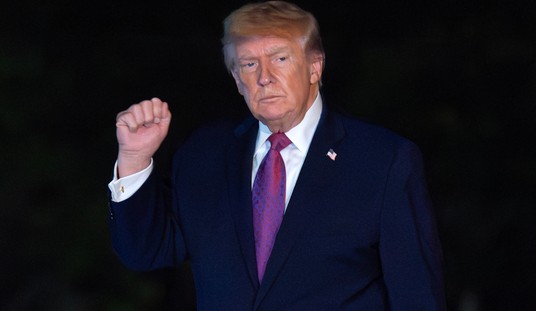
The problem extends beyond the Supreme Court. Since 1988, every president has had a degree from Harvard or Yale. Some people might be puzzled as to why I consider this a problem. Why wouldn't we want the best and brightest to lead us? At Harvard a few years back, a faculty member asked me that very question.
Partly, the answer is that there are many ways of learning. People who graduate from the elite universities may be the best and brightest of the book learners, but many learn in other ways. For example, successful entrepreneurs are often lousy students. Bill Gates and Steve Jobs dropped out of college to found Microsoft and Apple.
Limiting the top tiers of political power to those who attend just a couple of schools deprives the nation of the diverse leadership it needs in these challenging times. We need doers and pragmatic problem solvers as well as book learners. We need leaders who understand the American people as much as we need those who can navigate the challenges of an Ivy League school.
We can never find the leaders we need if we limit our search to only the "right" people. It hurt the United States for generations to exclude women and minorities from leadership. It is hurting us today to exclude those who didn't attend the "right" schools.
Diversity of education at the highest ranks of government is absolutely essential if we want government of, by and for the people to survive.



Join the conversation as a VIP Member