


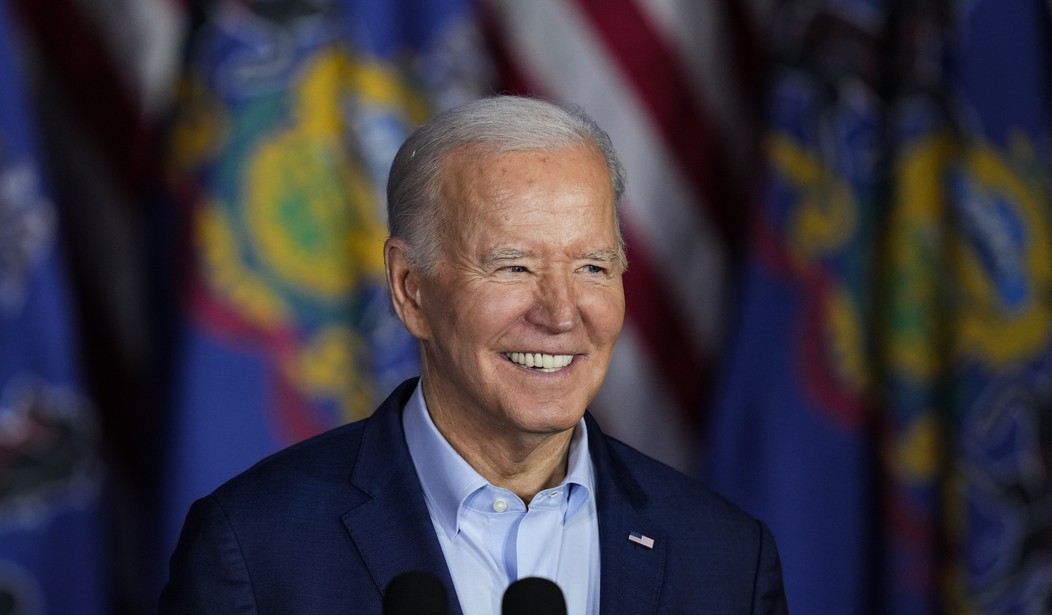
President Joe Biden recently unveiled his $7.3 trillion budget proposal for next fiscal year. He has pitched his plan as one that would "preserve Medicare benefits and the Medicare trust fund."
It's a nice soundbite. But it's not the whole story. The president's budget would raise taxes without solving Medicare's financial woes. There are better ways to shore up Medicare.
For years, Medicare's Board of Trustees has warned of the imminent bankruptcy of the entitlement's Part A hospital insurance trust fund. According to the latest projection, the fund will run out of money by 2031.
That's in part because the entitlement is growing. Roughly 26 million Baby Boomers will turn 65 and become eligible for Medicare through 2030. As a result, Medicare spending is expected to more than double in the next decade.
Last year, Medicare spending was roughly $1 trillion. That number will reach about $2.1 trillion by 2034, according to a new projection by the Congressional Budget Office.
President Biden's solution for this looming fiscal catastrophe is to "increase[e] the Medicare tax rate on incomes above $400,000 [and] clos[e] loopholes in existing Medicare taxes."
But tax hikes on the rich will not keep Medicare solvent. There's only so much money Democrats can squeeze from high earners. In 2019, the top earning-quintile paid 69% of federal taxes. Raising taxes too high would have negative consequences for economic growth -- and could thus reduce the amount of revenue the federal government takes in.
Recommended
Policymakers must therefore enact practical, structural reforms to bring costs down and keep Medicare solvent for future generations. Luckily, there are plenty to choose from.
Raising Medicare's eligibility age is one idea. People are living much longer than they did in 1965, when the program was established under President Lyndon Johnson’s Great Society. The eligibility age for the program should reflect that reality.
Back in 1965, men who reached age 65 could expect to live another 12.9 years. Women who reached 65 had life expectancy of over 16 years.
In 2022, men who reached age 65 could look forward to another 17.5 years of life. For women, life expectancy at 65 was another 20.2 years.
Seniors are drawing on the program for far longer than their forebears did. It's time for the eligibility age to catch up -- especially given the fiscal strain the entitlement is under.
Policymakers could also means-test Medicare by requiring high-income enrollees to pay for more of their coverage or receive fewer taxpayer-funded benefits.
The top 5% of Medicare beneficiaries have savings of more than $1.6 million, as of 2023. The top 5% by income all made over $138,500 that year. It's reasonable to ask that people with savings in the seven figures and annual incomes in the six figures shoulder more of their own healthcare costs.
Lawmakers could also harness the power of competition to reduce the cost of Medicare. Under a "premium support" model, the government would give enrollees a set amount of money, based on their healthcare needs, that they could use to purchase a private health insurance plan. These vouchers would effectively set a ceiling on what taxpayers would pay for Medicare.
More importantly, a premium support model would force health plans to compete for enrollees' business. Such competition is likely to lead to better benefits at lower cost -- a win-win for both patients and taxpayers. A recent estimate from Douglas Holtz-Eakin of the American Action Forum found that a premium support model could save taxpayers $1.8 trillion and beneficiaries $333 billion over a decade.
And premium support isn't the only idea that would allow Medicare to harness the cost-cutting benefits of a freer healthcare market. A recent paper from the Paragon Health Institute recommends strengthening Medicare Advantage -- the privately administered alternative to traditional, government-run Medicare -- to further increase competition and lower costs.
Specific ideas include changing the benchmarks by which Medicare Advantage rates are calculated and directing beneficiaries to choose between traditional Medicare and Medicare Advantage when they first enroll, rather than enrolling seniors in traditional Medicare by default.
President Biden is attempting to use his budget proposal as proof that he's serious about lowering voters' healthcare costs. But his proposal for saving Medicare is anything but serious. Americans deserve practical reforms that will actually preserve the Medicare trust fund for generations to come.
Sally C. Pipes is President, CEO, and Thomas W. Smith Fellow in Health Care Policy at the Pacific Research Institute. Her latest book is False Premise, False Promise: The Disastrous Reality of Medicare for All (Encounter 2020). Follow her on X, formerly Twitter, @sallypipes.









Join the conversation as a VIP Member