






Any student of the American Revolution and the critical period that followed it will recognize the name Montesquieu, and the role he played in shaping our Constitution.
He was cited early and often by the Founders, as well he should have been. Especially for his warning that no one branch of government -- executive, legislative or judicial -- should be able to concentrate all power in its hands. Instead he proposed a system of checks and balances in which each branch would be separate, yet all would have to cooperate to get anything done.
Montesquieu's was a revolutionary idea at the time, for it eliminated France's old Estates General that had long dominated that country's politics: monarchy, nobility and clergy. They would all have to go, along with any other remains of medieval rule.
Montesquieu's magisterial works include a short but comprehensive study of the decline and fall of Rome's republic. It, too, is full of still useful insights. Like this one: "At the birth of societies, the leaders of republics create the institutions; thereafter it is the institutions that form the leaders of republics."
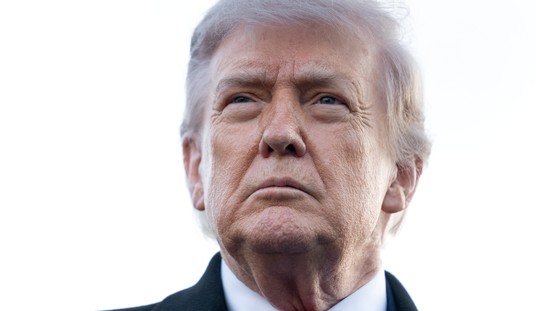
But in this Age of Trump, one institution -- the now less than Grand Old Party -- has imploded. The contrast Montesquieu drew between Cicero and Cato is still relevant: "Cicero always thought of himself first. Cato always forgot about himself. The latter wanted to save the republic for its own sake, the former to boast of it."
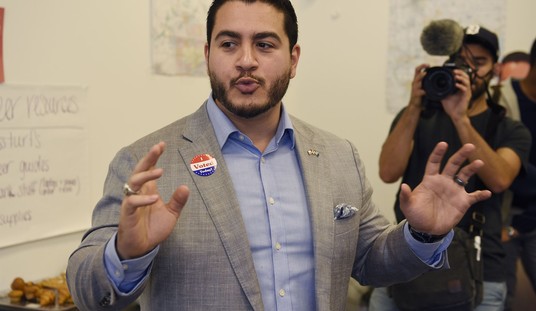
Sound familiar? Which of Donald Trump's rivals want to beat him in order to advance their own careers, and which to save their party? Note which ones are striking out on their own and which are sticking with the Republican Party -- and the whole two-party system come hell or Hillary Clinton.
It is the Democratic Party these days that is the traditional, well-organized one, complete with a loyal opposition headed by Bernie Sanders -- independent, socialist and Democrat by turns. But always a general disturber of the peace. Every party needs one Bernie Sanders, if only one. It is all so traditional. And stable.
What a turnaround from the old days when Will Rogers could boast: "I am not a member of any organized political party. I am a Democrat." Now it is the Democratic nominee-presumptive who presides over the well-organized party. Hillary Clinton could be the traditional political boss at the head of a well-greased machine. She could be today's Boss Crump or Mayor Daley the First.
There's just this one not-so-small problem with HRC: From the beginning till now in her ever-rising political trajectory, she's been a wheeler-dealer with no discernible set of moral values. She used to have somebody else fix her commodity trades. Now she and her daughter, Chelsea, have assumed a leading role in Clinton Inc., that complex network of foundations whose tentacles extend around the world.
Now we learn she will not be indicted because of her secret emails. That's typical of an era when political clout counts more than the mere rule of law. So Hillary Clinton beat this rap, too. But that scarcely makes her an ideal leader for a republic that ought to be based on virtue instead of self-interest.
It was Montesquieu who warned us that "more states have perished by the violation of their moral customs than by the violation of their laws." Speculation about whether Hillary Clinton's dubious emails violated the law will doubtless continue, but what will matter more to this republic is a higher law: the one that sets moral virtue as the goal of a republic.






Join the conversation as a VIP Member