





The Washington Post's Ezra Klein has found what he thinks is a bright spot amid the gloomy Obamacare news. When you hear what he's enthusiastic about, you'll perhaps understand why I wonder if there is any common ground at all between liberals and conservatives. Klein reports that Obamacare's "biggest success" is that 4 million new enrollees signed up for Medicaid as of November and the number should be even higher when December's statistics are tallied. "If the point of health care reform is covering people who need health insurance, the expansion of Medicaid should be a huge win."
Sorry, but the expansion of dependence on government is never cause for rejoicing. Conservatives acknowledge that a safety net is necessary for the poor, but we regard only the number of people leaving a government program like Medicaid as cause for celebration, not adding to the numbers who receive benefits. Klein is hardly alone. Nancy Pelosi describes unemployment benefits as the greatest possible "stimulus" to the economy. By this logic, we should put everyone on unemployment, right?
Why is it terrible news that millions more people are signing up for Medicaid? Here are just a few of the reasons:
Medicaid is one of the entitlements whose growth endangers national solvency. Together with Medicare, Medicaid was already consuming more than one in five federal dollars before the enactment of Obamacare. The growth in health care spending was one of the rationales for Obamacare, but expanding Medicaid spending simply contributes to the problem.
Medicaid is plagued by fraud. Among the common scams perpetrated by enrollees, the National Conference of State Legislatures lists "obtaining medications or products that are not needed and selling them on the black market, filing claims for services not received" and more. Providers commit fraud by "billing for services not performed, billing duplicate times for the same service, ordering excessive or unnecessary tests" and so forth. Just last month, dozens of Russian diplomats -- yes, noncitizens -- were charged with bilking Medicaid of $1.7 million over the course of nine years.
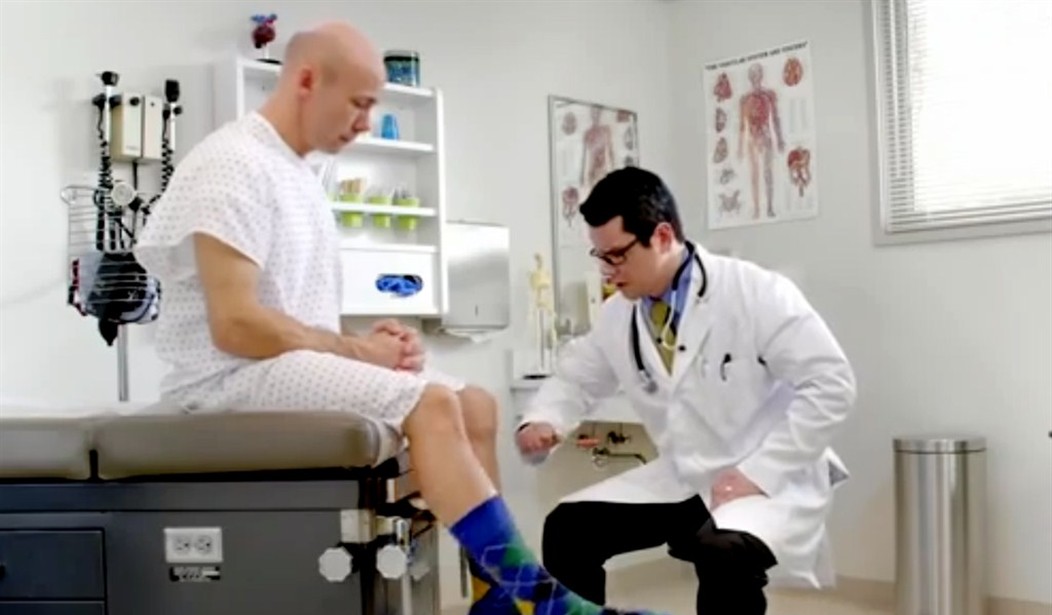
Medicaid is not just a program for the poor; it's a poor program. Reimbursement rates for doctors, dentists and other professionals are so low under Medicaid that enrollees have difficulty finding care. Having health insurance does not equate with having medical care. As Avik Roy recounts in "How Medicaid Hurts the Poor," there is a "massive fallacy at the heart of Medicaid, and therefore at the heart of Obamacare. It's the idea that health insurance equals health care." In fact, people without health insurance get care in a variety of ways. The startling news is that Medicaid enrollees fare worse on health outcomes than those with no health coverage at all.
Expanding Medicaid was sold on the premise that uninsured people were driving up health care costs by waiting until they were very sick before seeking care and thus overburdening emergency rooms. If the near poor had Medicaid coverage, the argument went, they would see doctors before their conditions became critical and required expensive emergency room treatment.
But research on Oregon's program, published in the journal Science, found the reverse to be true. Tracking 25,000 enrollees for a period of 18 months, researchers found that Medicaid patients used emergency rooms 40 percent more than similarly situated adults who lacked health insurance. Having a Medicaid card did not divert people away from emergency rooms and into primary care. The number of ER visits for nonemergency matters increased. There was no change in the number of visits for nonpreventable emergencies.
An earlier analysis of Oregon's data found that having a Medicaid card did not improve health outcomes. Medicaid patients were no healthier than the uninsured, except on one measure of mental health (which might be the result of people initially feeling -- however incorrectly -- that they had access to good medical care).
Medicaid is a poor program because it promises benefits but squeezes provider reimbursement to keep costs down. The result is rationing. The poor are forced to wait in long lines for treatment and are sometimes denied care altogether. Klein may applaud these results, but the poor clearly don't. Medicaid is also the model for Obamacare -- top-down price-fixing and mandates from Washington.
There are alternatives -- like a combination of health savings accounts and catastrophic insurance -- that would provide better care to the poor and an improved outlook for the nation's fiscal health. Klein's happy talk notwithstanding, there are no "successes" in Obamacare. Left alone, it will remake the entire health care system in Medicaid's image.
Join the Conversation
VIP members get the ability to comment on articles.