


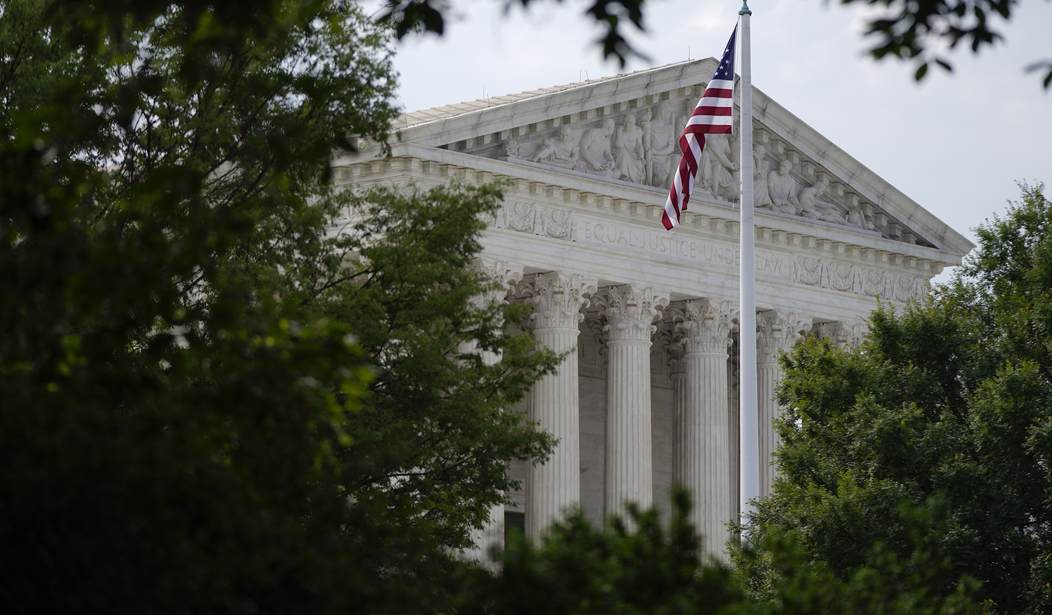
As conservatives continue to celebrate a historic slate of recent Supreme Court victories—including the end of Roe v. Wade and major wins for the Second Amendment, school choice, and free speech rights—one significant case has gotten undeservedly lost in the mix.
In a Kennedy v. Bremerton School District, the Court issued a landmark ruling on religious liberty that will go a long way in protecting American citizens with deeply held religious convictions. In a 6-3 ruling, the Court affirmed a public high school football coach’s right to pray on the field after games—dealing a major blow to heavy-handed state censors and government officials who have been working for decades to eliminate faith from the public square.
Joe Kennedy, a Marine veteran, was an assistant coach for the Bremerton High School varsity football team—where he regularly took to the 50-yard line following games to kneel in silent prayer in thanksgiving to God. Eventually, some players on the team took note of the routine and opted to join him in his post-game prayers, which generally lasted as little as 15-30 seconds (they were at no point coerced into doing so). Seven years into Kennedy’s coaching career, however, his superintendent informed him the district was launching an investigation into his compliance with the school board’s “Religious-Related Activities and Practices,” eventually deciding that students were not permitted to join him in prayer—and that his prayers must be “non-demonstrative.”
But they didn’t stop there. The district later broadened its complaints about Kennedy’s praying and began questioning his “right to conduct a personal, private prayer” at all—ultimately denying Kennedy a religious exemption and barring him from any “demonstrative religious activity” whatsoever. In October 2015, the district placed Kennedy on administrative leave and prohibited him from “participating in any capacity in the BHS football program.”
Recommended
Kennedy then retained First Liberty Institute and Kirkland & Ellis, LLP as legal counsel and initiated a series of lawsuits—ultimately culminating in last month’s monumental decision, which held that Kennedy does, in fact, have a First Amendment right to pray in his capacity as coach.
“Both the Free Exercise and Free Speech Clauses of the First Amendment protect expressions like Mr. Kennedy’s,” Justice Neil Gorsuch wrote for the majority opinion, which was released on June 27. “Nor does a proper understanding of the Amendment’s Establishment Clause require the government to single out private religious speech for special disfavor. The Constitution and the best of our traditions counsel mutual respect and tolerance, not censorship and suppression, for religious and nonreligious views alike.”
The significance of the Court’s ruling for religious liberty is difficult to overstate—and for Kennedy, who was ruthlessly targeted by left-wing ideologues as part of their longstanding crusade to extinguish religion from public life, the victory is all the more meaningful.
“For my part, I can’t wait to get back to the field, to be with my guys, pushing them to be the best players that they can be, to give everything they have for every second of every game,” Kennedy wrote in an op-ed following the Court’s ruling.
Despite the left’s relentless campaign to strip Americans of their God-given right to exercise their sincerely-held religious beliefs, religious freedom has won the day. I was proud to join other Attorneys General in filing an amicus brief in support of Kennedy, and I will never stop fighting for the religious freedoms of every America citizen.
Whether in the pews, in the plaza, or at the 50-yard line, religious freedom is an intractable cornerstone of American life—and will continue to be for generations to come. “Win or lose,” Kennedy wrote, “when the whistle blows and everyone shakes hands, you’ll find me at the 50-yard line on a knee in private prayer.”
And that—regardless of what the left might tell you—is exactly where he should be.
Matthew Whitaker is co-chair of the Center for Law and Justice at the America First Policy Institute and the former Acting Attorney General under the Trump administration.



Join the conversation as a VIP Member