







Give Stephen Fuller credit for this much: He's willing to admit he was wrong.
During the debate leading up to the federal budget sequester, Fuller was a voice of doom. An economist at George Mason University and the director of its Center for Regional Analysis, he predicted that sequestration would be especially calamitous for Washington, D.C., and its surroundings. If Congress didn't stop the automatic spending cuts from going into effect, Fuller warned last year, the Washington area was headed for a "devastating recession." Some 450,000 jobs, many of them in the private sector, would be wiped out in Virginia, Maryland, and the District of Columbia.
"It's something you don't even want to draw a picture of because it's too scary," he said in a radio interview last summer. In January he described the sequester's impact on the national capital region as an "end-of-the-world kind of hit."
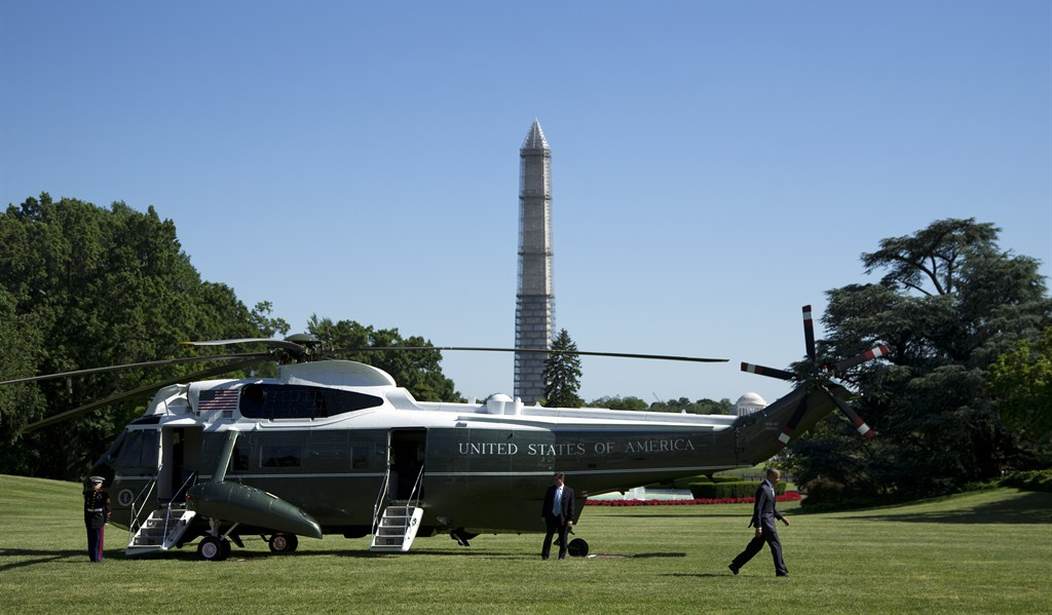
But the world hasn't ended. Not even in Washington.
In the months since President Obama signed the order to cut federal outlays by $85 billion, the Washington Post reported last week, the region has added 40,000 jobs. "Income-tax receipts have surged in Virginia, beating expectations. Few government contractors have laid off workers." There is no sign of the economic hellfire and brimstone foretold by Fuller, who says it's a "surprise" to him that Washington's economy is still booming. "We've done better than I expected," he confessed.
The real surprise is that anyone is still surprised by the affluence of the Washington area.
According to the most recent census data, seven of the nation's 10 wealthiest counties surround Washington – including the only three counties in the United States with median incomes above $100,000: Loudoun, Fairfax, and Arlington, all in Northern Virginia. In 2010, there were six Washington-area counties in the Top 10; in 2007, there were five. The Great Recession may have left great swaths of America reeling, but it didn't stop Washington from surging even higher in the income rankings.
If the worst recession in decades couldn't tarnish Washington's opulence, sequestration – a political budget maneuver designed to achieve merely a tiny reduction in the growth of federal spending over the next decade – isn't likely to either.
Coverage of the D.C. area's high-flying economy sometimes sounds like an episode of "Lifestyles of the Rich and Famous." In a front-page article last weekend – "What Sequester? Washington Booms as a New Gilded Age Takes Root" – The Wall Street Journal described the extraordinary wealth of Washington's "moneyed brain trust," beneficiaries of a generation's worth of soaring government budgets and immense political aggrandizement. Examples of extravagance are everywhere, from the flourishing Aston Martin dealership selling sports cars at $120,000 and up to the Georgetown hotel that charges $22 for a martini.
Washington hasn't grown so rich because it is home to industries that produce wealth through commerce or manufacturing or invention. Unlike Silicon Valley or Manhattan or Houston or Hollywood, Washington's primary activity isn't the creation of goods and services that have intrinsic value in themselves, and that raise the national standard of living. Government doesn't generate new income – it redistributes income that others have already generated. Through taxes, spending, and regulation, the federal establishment now dominates more of the private economy than ever, directly confiscating trillions of dollars earned in the private economy, and indirectly controlling the fate of tens of trillions more.
"Power is the great aphrodisiac," Henry Kissinger famously claimed. It is also a great conduit to other people's money. When a single tweak in the tax code can make or break a business, when fortunes are being doled out through federal bailouts and contracts, when regulations can decide the future of industries and interest groups, it stands to reason that so many will spend so much to get a piece of what government controls.
"Most federal activity involves taking money from some people, giving it to others, and keeping a big chunk as a transaction fee," says the Cato Institute's David Boaz. At its broadest, that "transaction fee" is reflected in everything from overpaid federal employees to Washington's gargantuan lobbying industry to the clustering of America's wealthiest counties in suburban Washington.
If sequestration really meant a sharp decline in government spending and influence, Versailles-on-the-Potomac might have reason to fear those doomsday scenarios. That is why you can be sure that Congress and the president will never voluntarily enact anything of the kind. The federal boom will continue at our expense, as ever more of America's wealth goes to Washington to be consumed.


Join the Conversation
VIP members get the ability to comment on articles.