


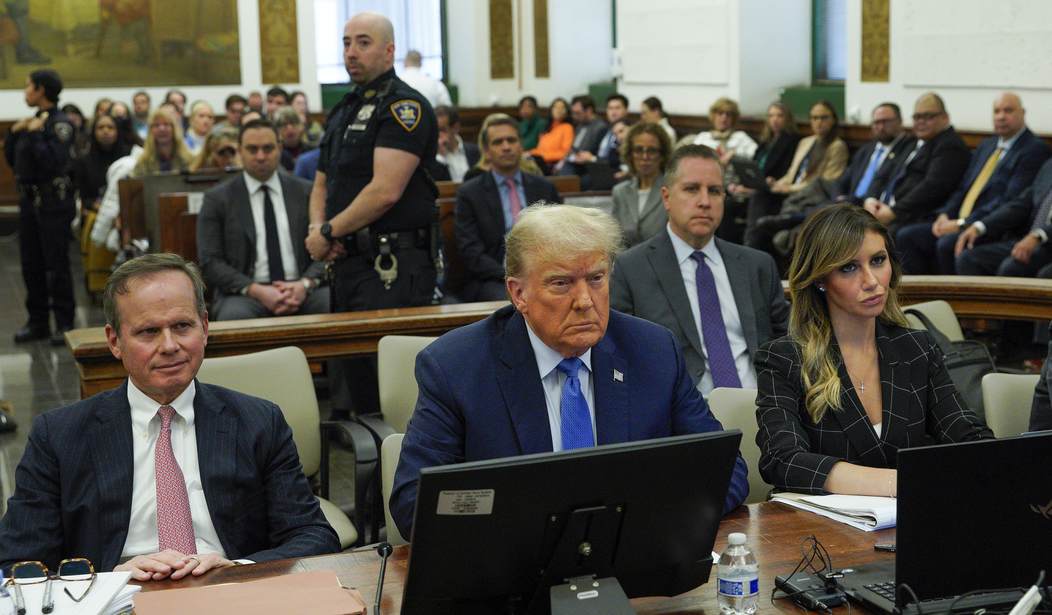
"I'll be the only politician in history" who "won't be allowed to criticize people," former President Donald Trump complained last month. He was referring to the gag order issued by the judge who is overseeing the federal case that charges him with illegally conspiring to reverse the outcome of the 2020 presidential election.
While Trump's claim was characteristically hyperbolic, the order does raise serious constitutional questions that are surprisingly unsettled. That much was clear on Monday, when the U.S. Court of Appeals for the D.C. Circuit considered Trump's First Amendment objections to the speech restrictions that U.S. District Judge Tanya Chutkan imposed on Oct. 16.
Trump's lawyers argue that the order was not justified by a "clear and present danger," while the government says the relevant question is whether the extrajudicial statements covered by the order would create "a substantial likelihood of material prejudice to the proceedings." The government's position "doesn't seem to give much balance at all to the First Amendment's vigorous protection of political speech," D.C. Circuit Judge Patricia Millett remarked.
Chutkan's order bars Trump from making "any public statements" that "target" special counsel Jack Smith, his staff, court personnel or "any reasonably foreseeable witness or the substance of their testimony." Although that language is ambiguous and potentially far-reaching, Chutkan said it left Trump free to defend himself and criticize the prosecution, a major issue in his current presidential campaign.
Trump portrays the prosecution as a legally baseless and blatantly corrupt attempt to help President Joe Biden by distracting and discrediting his opponent. Chutkan said Trump could continue to make that argument, provided he did not "vilify and implicitly encourage violence against public servants who are simply doing their jobs."
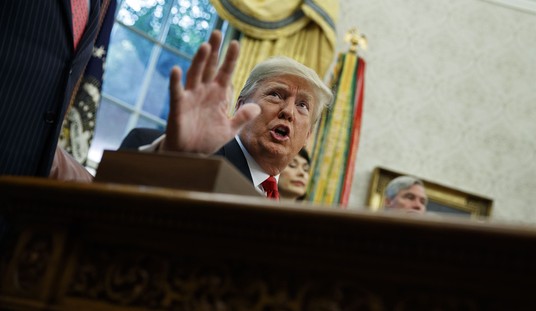
Under Chutkan's order, Trump can describe the prosecution as politically motivated, but he cannot call Smith "deranged" or refer to his staff as "thugs" and "political sleazebags." Such insults, Chutkan worries, are apt to "encourage violence."
That rationale, Trump's lawyers argue, amounts to an unconstitutional "heckler's veto," constraining the candidate's speech based on speculation about how his audience might react to it. As Millett noted, "inflammatory language" generally is protected by the First Amendment.
Millett mentioned a 1987 case in which the U.S. Court of Appeals for the 6th Circuit rejected a gag order imposed on Rep. Harold E. Ford Sr. (D-Tenn.), who argued that the Reagan administration's corruption case against him was politically and racially motivated. "Calling someone racist is pretty inflammatory," Millett noted.
The "clearly overbroad" order that the 6th Circuit vacated was more sweeping than the order against Trump. Among other things, it covered any "opinion of or discussion of the evidence and facts in the investigation or case," statements about "any alleged motive the government may have had in filing the indictment," and "any opinion" about "the merits of the case."
Chutkan's order nevertheless seems to cover some of the same territory. On its face, it precludes Trump from discussing what potential witnesses might say, which goes to the heart of the case against him.
As Trump's lawyers note, those potential witnesses include estranged allies such as former Vice President Mike Pence and former Attorney General Bill Barr. If Trump is not allowed to "target" them, does that mean he cannot respond to their criticism of him, which is obviously relevant to his qualifications for office?
Still, concerns about witness intimidation cannot be dismissed out of hand. The government cites a pattern of harassment and threats inspired by Trump's public attacks on people he believed had wronged him, including Pence and election workers in Georgia.
On Oct. 24, four days after Chutkan temporarily froze her gag order, Trump publicly wondered if Mark Meadows, his former chief of staff, would show himself to be a "coward" and "weakling" by agreeing to "lie" for the prosecution in exchange for immunity. The question for the D.C. Circuit is whether Chutkan overstepped in trying to stop Trump from making comments like that.






Join the conversation as a VIP Member