


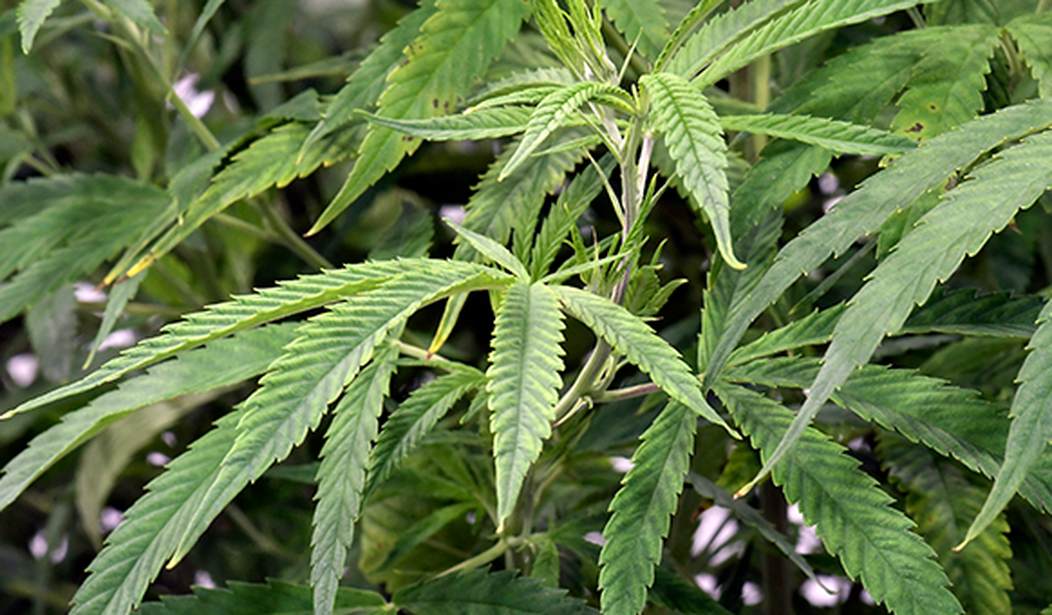
For half a century, reformers have been urging the Drug Enforcement Administration to reclassify marijuana, which since 1970 has been assigned to Schedule I of the Controlled Substances Act, the law's most restrictive category. Although the DEA has always rejected that proposal, it could change course in light of a recent recommendation from the Department of Health and Human Services.
Last week, HHS recommended that the DEA move marijuana from Schedule I, which includes illegal drugs such as heroin, LSD, psilocybin and MDMA, to Schedule III, which includes prescription medications such as anabolic steroids and Tylenol with codeine. Although that reclassification would facilitate medical research and indirectly benefit state-licensed marijuana businesses, it would leave federal prohibition essentially untouched.
Schedule I supposedly is reserved for drugs with "a high potential for abuse" that have no recognized medical applications and are so dangerous that they cannot be used safely even under a doctor's supervision. Marijuana's Schedule I status never made much sense, and the justification for that designation has become steadily weaker over the years.
Back in 1985, the Food and Drug Administration approved Marinol -- a synthetic version of THC, marijuana's main active ingredient -- as a treatment for nausea and vomiting caused by cancer chemotherapy. The FDA later extended that approval to AIDS wasting syndrome, and five years ago it approved Epidiolex, which contains cannabis-derived CBD, as a treatment for two forms of severe, drug-resistant epilepsy.
Research indicates that marijuana is effective at relieving various symptoms, including neuropathic pain and muscle spasms as well as nausea and epileptic seizures. Based on such findings, 38 states allow medical use of cannabis.
It is therefore hard to defend the proposition that marijuana has "no currently accepted medical use," as Schedule I requires. And since marijuana's side effects compare favorably to those of many prescription drugs, the idea that it cannot be used safely "under medical supervision" -- another Schedule I criterion -- is also at odds with reality.
Recommended
If the DEA, which has the final say on scheduling decisions, ultimately agrees with HHS, that decision would not authorize medical use of marijuana, which still would be limited to FDA-approved products legally available only by prescription. But rescheduling would facilitate medical research that could pave the way for FDA approval of cannabis-based medicines.
"The moment that a drug gets a Schedule I (designation), which is done in order to protect the public so that they don't get exposed to it, it makes research much harder," National Institute on Drug Abuse Director Nora Volkow, whose agency participated in the HHS review of marijuana's classification, noted during congressional testimony in 2019. That designation, she explained, entails special regulatory requirements that deter scientists from studying marijuana's therapeutic potential.
Moving cannabis to Schedule III would benefit marijuana suppliers as well as researchers. Because of an Internal Revenue Code provision aimed at drug traffickers, companies that sell Schedule I or Schedule II substances without federal authorization are barred from deducting standard business expenses when they pay income taxes -- a huge financial burden that rescheduling would eliminate.
State-authorized marijuana merchants nevertheless would still be committing federal felonies every day because they would still be selling controlled substances without federal permission. And they still would have trouble obtaining financial services -- an obstacle that fosters a heavy reliance on cash, which invites sometimes deadly robberies -- because banks would still be leery of serving a federally illegal industry.
The most straightforward way to address these problems would be to completely deschedule marijuana instead of merely reclassifying it. That reform, which two-thirds of Americans favor, would treat marijuana like alcohol and tobacco, recreational intoxicants that are not considered "controlled" substances at all.
The HHS recommendation, which resulted from a review that President Joe Biden ordered last October, shows that Biden has come a long way since his days as a zealous drug warrior. Unfortunately, he has not come far enough to resolve the longstanding conflict between federal and state marijuana laws.







Join the conversation as a VIP Member