



Donald Trump has an opportunity to chart a new course for Republicans on defense spending -- a course that would combine GOP hawkishness with a budget-cutter's approach to Pentagon waste.
Although falling as a percentage of the federal budget, defense is still the federal government's largest single non-entitlement spending item -- about 16 percent of the budget in 2016.
In recent years, the GOP's position on defense spending has been one long protest against sequester limits. The nation should spend more on the Pentagon, Hill Republicans have argued. At times, GOP lawmakers have seemed considerably less concerned about the billions the Department of Defense throws away every year.
Trump can change that. While the president-elect still wants to spend more on defense, he has given just as high a profile to his desire to cut waste. It could be a popular combination.
Last week the CEO of Lockheed, Marillyn Hewson, traveled to Florida to meet with Trump to discuss cost overruns on the troubled F-35 fighter. Separately, Trump met with Air Force Lt. Gen. Chris Bogdan, who runs the F-35 program for the military.
"Troubled" does not begin to describe the F-35 situation. The plane has become the poster child for a bloated Pentagon bureaucracy, at nearly $200 billion over budget and many years behind schedule -- "both a scandal and a tragedy with respect to cost, schedule, and performance," in the words of GOP Sen. John McCain.
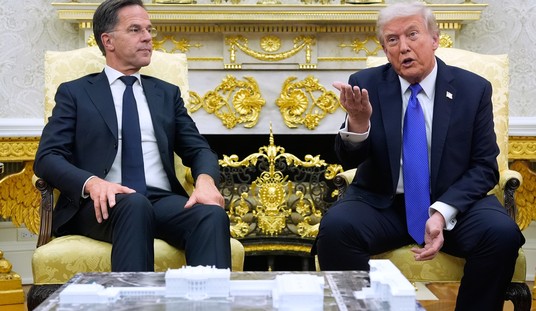
After Trump's meeting with Hewson, the president-elect did not claim any concrete progress. "We're just beginning," Trump told reporters. "It's a dance. It's a little bit of a dance. But we're going to get the costs down and we're going to get it done beautifully."
Recommended
The F-35 is just the beginning. In early December, the Washington Post reported that the Pentagon "has buried an internal study that exposed $125 billion in administrative waste in its business operations amid fears Congress would use the findings as an excuse to slash the defense budget."
Anyone who even casually follows government affairs has heard such things for years. Back in 2012, then-Sen. Tom Coburn, the Republican scourge of government overspending, said he could cut $69 billion in Pentagon waste over a decade just by going after programs "where the Pentagon works that have nothing to do with defense."
There will be plenty of people to tell Trump he can't do anything about Pentagon waste. There already are. On Dec. 22, Politico published a piece premised on the notion that Trump planned to intervene in contracting "to score political points, reward his friends and punish his enemies." Doing so, Politico reported, would "driv(e) up prices for federal government purchasing overall." The suggestion of contracting professionals interviewed by Politico was that contracting -- "a technical, complex part of the government that is run by tens of thousands of career civil servants" -- is better left the way it is.
The article did not really contemplate the possibility that Trump might actually want to impose controls on Pentagon spending to save taxpayers money.
When he met with Lockheed's CEO, Trump also met with Dennis Muilenburg, head of Boeing, to discuss the cost of building two new 747s to serve as Air Force One. Trump famously stirred up the issue with a tweet claiming that the project's "costs are out of control" and threatening to "cancel the order." After the meeting, he said, "I think we're looking to cut a tremendous amount of money off the program."
Perhaps Trump can't make much progress on either Air Force One or the F-35. (Critics have pointed out that the F-35 program is nearly finished, with contracts spread in congressional districts around the country; the only way to save money now, they say, is to build fewer of the planes, which would result in less bang for far too many bucks.) But there are many, many targets of opportunity for Pentagon waste-cutters. And going after waste would have three big benefits for Trump:
1) Waste is objectively a serious problem that needs to be addressed.
2) An anti-waste crusade would strengthen the Republican image of fiscal responsibility.
3) It would keep a Trump campaign promise.
If he actually tried to tackle the waste problem, Trump would make many enemies, Republican and Democrat. But he would win the support of many voters.






Join the conversation as a VIP Member