



Governments love to tax. It matters little if it is your local county commission looking to raise the millage rate on property taxes, or the federal government searching for new ways to tax income pursuant to the authority granted it by the 16th Amendment to the Constitution – the default for government is to increase revenue.
There may, however, be a bit of light at the end of the tax tunnel.
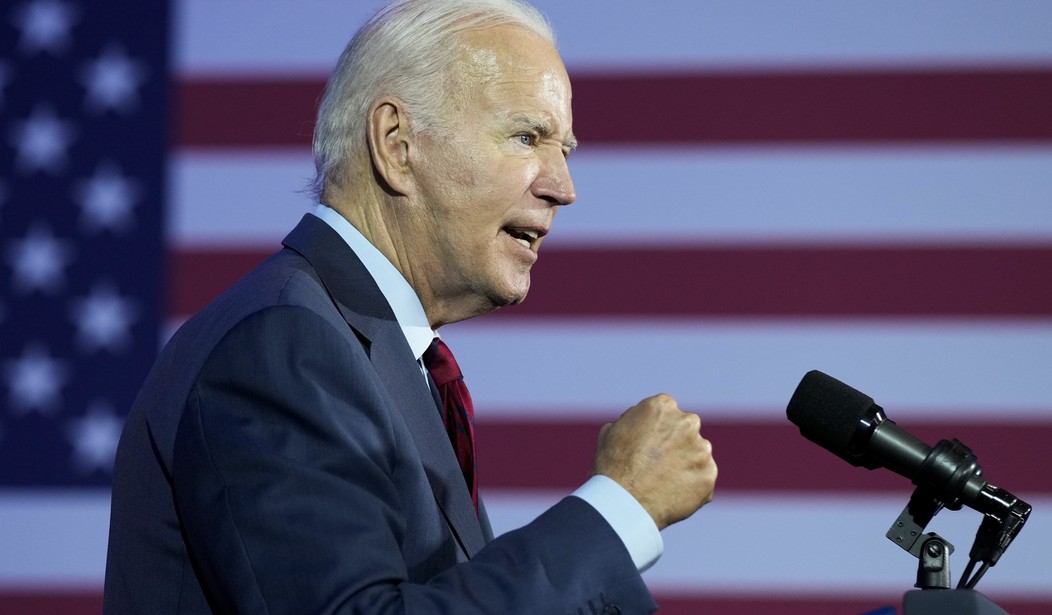
Predictably, of course, the Biden Administration and its cohorts on Capitol Hill and in lobbyist offices on the K Street Corridor remain adamantly opposed to any talk of tax “cuts.”
The cautious optimism many experts see on the tax horizon, is thanks to the reality that Republicans maintain majorities in both the U.S. House of Representatives and in state governorships and legislatures. Tax policies that are supportive of both families and businesses are reasons why states including my home state of Georgia attract jobs, while high-tax states such as California are losing both people and businesses.
Even at the international level, where President Biden two years ago embraced a G-7 plan for a global minimum tax of 15%, recent pushback by the GOP-controlled House has thrown a monkey wrench into Treasury Secretary Janet Yellen’s plan to move the United States closer to that competition-killing policy.
Few public policy issues define more clearly the divide between Democrats and Republicans than taxes, and thankfully the GOP by and large remains the party that understands if you reduce the tax burdens on individuals and on businesses that create jobs, sufficient funds will still flow into government coffers with which to provide essential services. Democrats, on the other hand, consider tax-cuts such as those implemented by former President Trump and which now are being implemented at the state level by many “Red State” governors, to be inherently “regressive” -- a “worrisome trend” symptomatic of a “fever” that must be broken before it does more harm to the citizenry.
Recommended
The degree to which Biden’s party abhors tax cuts was displayed starkly in 2021 when Senate Democrats included a provision in the President’s $1.9 trillion “American Rescue Plan” that actually would have prohibited states from cutting taxes if they accepted funds made available through the Plan. This absurd restriction finally was struck down by the federal appellate courts early this year, but it serves to illustrate just how far Democrats will go in their drive to keep taxes high.
Meanwhile, Uncle Sam is being hoisted on his own petard. By pushing consumers to buy electric vehicles rather than gas-powered cars and trucks, fuel tax revenues have dropped noticeably. This has caused Biden and several states to turn their greedy eyes at taxing vehicles based on miles driven rather than the amount of gas purchased at the pump.
Biden’s predilection for a gas mileage tax was evident in his 2022 infrastructure spending bill, which included $125 million for a pilot program. As gas tax revenues diminish, the lure of increased taxes that could be reaped by way of a mileage tax is becoming ever more desirable
Speaking of taxes, the U.S. Supreme Court has agreed to consider a case in its 2023-24 term that may determine whether it is constitutionally permissible for the IRS to continue taxing unrealized gains on investments. In other words, whether the government can force an individual to pay taxes on income based solely on profits earned by a company in which an individual has invested but never themself received any income.
A professor at Chapman University has noted that this tax case, which will test the limits of the federal government’s 16th Amendment power to tax income, is the most important to be decided by the High Court in a century.
If the Supreme Court in fact places such a common sense limit on the reach of the government’s power to tax income; if the House continues to resist opening new tax avenues for the executive branch, such as taxing corporations by way of a global minimum tax; and if Red State governors continue to reduce state income taxes, that faint light at the end of the tax tunnel could grow considerably brighter by the time next year’s elections arrive.
Bob Barr represented Georgia’s Seventh District in the U.S. House of Representatives from 1995 to 2003. He served as the United States Attorney in Atlanta from 1986 to 1990 and was an official with the CIA in the 1970s. He now practices law in Atlanta, Georgia and serves as head of Liberty Guard.






Join the conversation as a VIP Member