



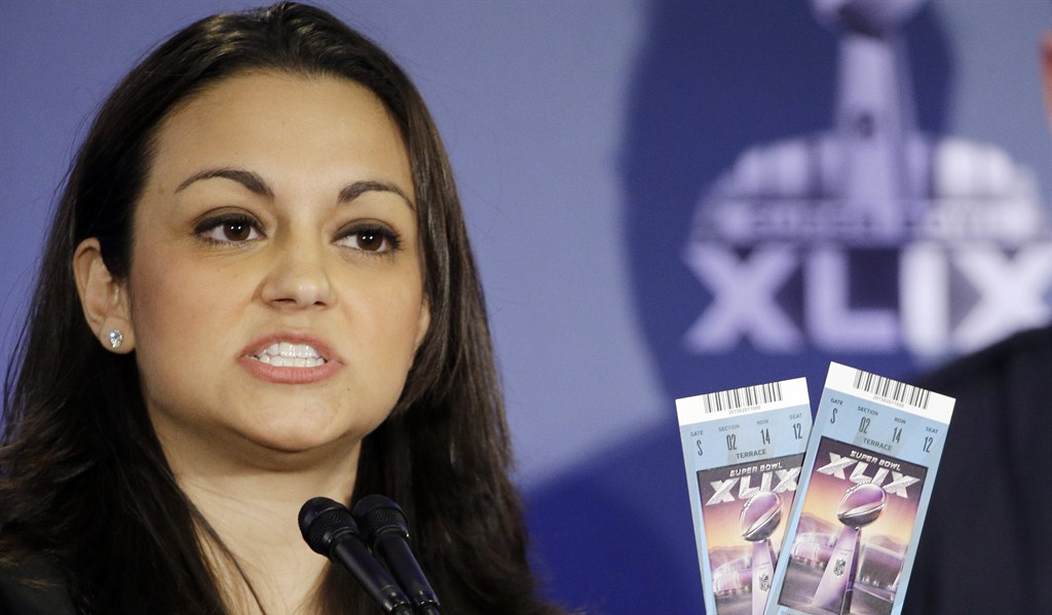
Are you ready for some football?
Super Bowl Sunday is a day for fun, food and friends - and a good time to enjoy friendly rivalries as fellow Americans, rather than seeing one-another through "liberal" and "conservative" lenses.
But as you enjoy the football game, consider the deeper meaning of it all – and how our economic fortunes could improve if we seriously changed our outlook. Consider these important "truths" about the game, and how they can apply to more important areas of our lives.
1) By the end of the game one team will be declared the winner, one team will be declared the loser, and only one individual player will be declared "MVP" - These facts are so obvious and common place that we don’t really think much about them. Yet allowing for natural and healthy competition to determine the score is completely counter to how most Americans (as well as the politicians they elect) think about labor, the possession of wealth, and the health of the economy.
Instead of allowing the best performers to enjoy the spoils of their labor (as we do with athletic competitions), with economic matters many Americans think in terms of "shared prosperity" (you have too much wealth and the government should take more of it away!), "shared responsibility" (the rich people should pay for my food stamps, Medicaid, mortgage relief, etc..), and "leveling the playing field" (I can’t have get enough success if you are enjoying too much of it). It’s not an accident that Americans continually elect politicians who promise to make our lives easier by minimizing the success of others. If we accepted other people’s success in the economy the way we accept it on the football field, we might just find that other people’s success actually creates jobs and benefits everybody.
2) Every member of each team is expected to play by the same rules – the NFL goes out of its way to eliminate human error when it comes to officiating. The recent "ball deflation" scandal is an exception to the rule, and the fans' outrage demonstrates that people expect fair play, and fair governance, in the game.
It also gets overlooked that the referees are well-trained professionals who are expected to enforce the rules in equal measure with all the players from both teams. When applying the rules is uncertain, digital instant replay technology is deployed to make sure that the "law" is applied appropriately.
But when it comes to real-life things like jobs, opportunity, wages and wealth, Americans don’t necessarily like the "everyone plays by the same rules" approach. We prefer government policy makers who hold some of us to the letter of the law, but give others of us special breaks. A tax deduction for me, a tax hike for you. Special grants and opportunities according to our gender, ethnicity and marital status. "Free" subsidies for so-called "green energy" companies, but harsh taxes and penalties for oil companies. We twice empowered a President who promised free and lower-cost healthcare, but we allow him to grant waivers of non-enforcement of his signature health care reform law to certain groups of people, when it is to his benefit to do so. This is apparently the way we like it. Yet we might just find that if we chose a government that held us all to the same requirements, the "high scoring" players among us might create more opportunity for all of us, and us "lower scoring" players might be incentivized to improve our game.
3) "Inequality" runs rampant in the NFL – and it’s not a bad thing - By its nature the game of football treats quarterbacks differently from punters and place kickers, and we think nothing of it. Quarterbacks negotiate for the highest compensation possible with an NFL team, yet many punters and kickers are lucky to play for the base minimum salary guaranteed by their union.
Yet when it comes to economic matters outside of professional sports it is often presumed to be unfair that the CEO of a company earns a multi-million dollar salary, while entry-level employees of the company earn a government mandated minimum wage. We accept the fact that the value that football players bring to their team may vary according to their talents, skills and position, but in our workplace everybody is somehow supposed to be treated "equally."
If we stopped demonizing the high achievers among us (and quit electing politicians who demonize them as well), we’d likely learn that other people’s achievements can create opportunity and prosperity for all of us.
Recommended

Will America return to being that "shining city on the hill" where achievement is respected, both on and off the field?






Join the conversation as a VIP Member