



The banking collapse and the economic meltdown have prompted many Americans to turn to the federal government as indispensable savior, telling Congress and the president: We hope you can fix it; we want you to do whatever is necessary to fix it; and we don't care what it costs.
That was not the sentiment in evidence at the tea party protests held on Tax Day.
There, the message was one of great skepticism about the efficacy of the government's remedies and great apprehension about the expense (along with some of the extremist lunacy that accompanies any mass movement). The scale of the federal response to the crises has come as a frightening surprise to many Americans, who suspect the cure will be worse, and less transitory, than the disease.

Since last September, a federal budget that was already growing steadily suddenly accelerated out of control. The ride began in the winter of 2008, when Congress and President Bush agreed on a fiscal stimulus package of $170 billion in tax rebates and incentives. It picked up speed in the fall, when the Treasury spent $85 billion to take over insurance giant AIG and Congress approved $700 billion to rescue failing financial institutions.
By the time Barack Obama took office in January, projected federal outlays for this year had soared by nearly $1 trillion over last year, and the budget deficit had nearly quadrupled. But was that enough? Not nearly. Obama saw Bush and raised him, immediately pushing through another fiscal stimulus program with a price tag of $787 billion.
Fiscal hawks thought the budget was out of control before. Now they look back on the pre-2008 profligacy as a golden age of budgetary restraint.
The amount of money involved in all this would be staggering to anyone not benumbed by the incessant torrent of bad news. But judging from the tea party protests, the numbness is not universal. No matter what the state of the economy, some Americans are still capable of being shocked to see trillions of federal dollars pouring out like water rushing over a broken dam. And like many reputable economists, they suspect most of it will be wasted.
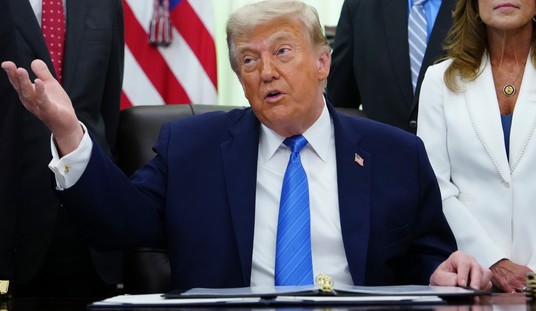
The invocations of the Boston Tea Party -- on April 15, no less -- suggested that the protests stemmed from anger about taxes under Obama. But Obama has not actually increased income taxes -- only the federal tax on tobacco, which the majority of people don't pay. His tax plan calls for cutting income taxes for most Americans, and not raising them on the rest until 2011.
So why did people rally across the country when they should have been planning how to spend their tax refunds? Because their true dismay is about the mushrooming of federal outlays, which the demonstrators regard as a future tax increase in the making. Which, of course, it is.
The problem is not just the spending supposedly needed for the current economic emergency. Obama claims that he will cut the deficit in half, to $533 billion, by the end of his first term. Two problems: 1) The Congressional Budget Office says the more likely number is $672 billion, and 2) that is 46 percent more than the deficit in 2008. Worse yet, the CBO says the deficit will then resume its upward trajectory, reaching $1 trillion by 2018 and nearly doubling the national debt over the next decade.
The realism about expenditures is the encouraging thing about the protests. It's easy to convince people that the government should take less of their money. It's harder to persuade them that the government should provide them less in the way of benefits and services. Yet the teabaggers took the view that whatever Washington plans to provide, they don't want -- not at this price, anyway.
The country has gotten into a painful fiscal predicament because both parties have let us believe we can have more and more goodies from Washington at no additional cost. The recent explosion of federal spending has succeeded in one way: It has exposed that assumption for the fiction it was.
Like Bernie Madoff's investors, we now face the bleak truth that the comfortable future we expected is gone. Everything the federal government is doing will be forcibly extracted from our future earnings. The tea party protesters see that and are angry. Can the rest of the country be far behind?









Join the conversation as a VIP Member