


Neighborhoods matter.
That's the upshot of two fascinating new studies from Harvard economist Raj Chetty and his colleagues. In the 1990s, the federal government launched an experiment, called the Moving to Opportunity project. It created a lottery for housing vouchers that would allow the winners to move out of high-poverty neighborhoods into low-poverty ones.
The project's initial findings were a disappointment for people -- like me -- who argue that culture matters quite a lot. It did find that neighborhood poverty was a big factor in determining economic mobility, but researchers saw little evidence that getting poor people out of poor communities and into thriving ones helped them all that much.
But Chetty et al. revisited the data, looking at how a move affected young children. The changes were enormous. The earlier kids got out of impoverished neighborhoods, the better they did over their lifetimes.
Poor kids who left poor neighborhoods were much more likely to go to college and earn more. Chetty estimates that giving kids (age 8 on average) a voucher to move into low-poverty areas increases their lifetime earnings by about $302,000. The data suggest that girls were 26 percent less likely to become single mothers.
In a larger study, Chetty and other colleagues looked at earnings data for 5 million families in the U.S. over 17 years. The findings were the same: Neighborhoods matter. A lot. Economist Justin Wolfers writes that these studies "are the most powerful demonstration yet that neighborhoods -- their schools, community, neighbors, local amenities, economic opportunities and social norms -- are a critical factor shaping your children's outcomes."
Wolfers is right to include a laundry list of possible explanations for why neighborhoods matter. The presence of economic opportunities in non-poor neighborhoods -- i.e., jobs -- is surely important. But not all-important. If it were, the initial findings of the 1990s study wouldn't have been so lackluster.
Recommended
Some social scientists argue that peers are more important than parents in determining how kids turn out. Others argue that parents, particularly married parents, are the crucial factor. And everyone agrees that schools, criminal justice policies and racial attitudes are important variables. The debates are about how much weight we should give them.
All of these factors influence each other. In very poor neighborhoods they combine to compound problems. In middle-class neighborhoods, they reinforce each other in positive ways.
In other words, neighborhoods matter because culture matters. Middle-class families have always known this, which is why so many parents move to the suburbs in pursuit of safer streets, better schools and shared values. Maybe parents matter less than peers. But parents have an enormous role in deciding what kind of peers their kids will be exposed to.
The importance of culture -- broadly defined to include everything from social norms to legal structures -- is largely settled in the global arena. For instance, low-skilled Mexican laborers become 10 to 20 times more economically productive merely by crossing the U.S. border, according to one study. It only makes sense that culture matters in neighborhoods as well.
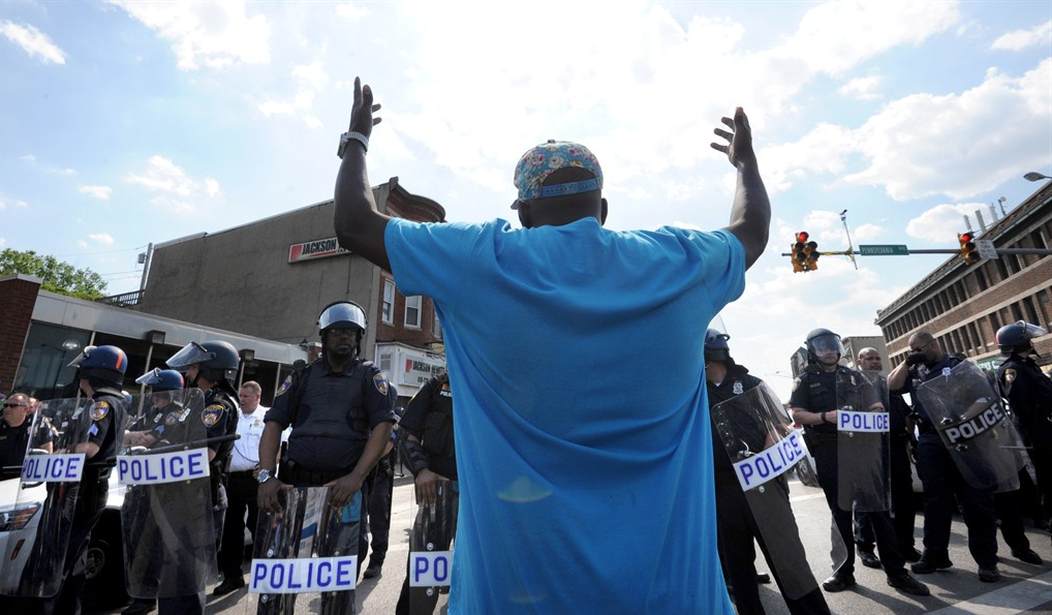
Consider Baltimore. If you're poor, it is a very bad idea to raise your kids there if you can avoid it. According to Chetty, every extra year of childhood in Baltimore's worst areas reduces earnings by 1.39 percent for low-income boys.
No doubt some people find such statements offensive. But they're going to have to get over that if the nation is going to make progress on intergenerational poverty. It may be more satisfying to debate whether the term "thug" is racist or to demonize "one-percenters," but that's the policy equivalent of looking for your lost car keys under the streetlight because the light is better.
"The broader lesson of our analysis," Chetty and Nathaniel Hendren write, "is that social mobility should be tackled at a local level."
What that means in terms of actual public policies is something that reasonable conservatives and liberals alike can debate. But it seems clear that the only way to break the cycle of poverty is to fix the culture of poverty.








Join the conversation as a VIP Member