






"Demography is destiny."
After Barack Obama's election in 2008, the phrase was on the lips of progressive prognosticators everywhere. A permanent alignment had arrived. The growing ranks of Latinos, the reliably liberal voting patterns of blacks, the Republican Party's longstanding problem with single women, plus the fact that surveys found young people -- aka millennials -- to be the most liberal generation in decades all proved that the aging, white GOP was destined for near-eternal rump status. In a Time magazine cover story featuring Obama as a Photoshopped FDR, Peter Beinart wrote that the "coalition that carried Obama to victory is every bit as sturdy as America's last two dominant political coalitions: the ones that elected Franklin Roosevelt and Ronald Reagan."
Democratic strategist Simon Rosenberg eulogized Republicans: "Their coalition no longer works in the changing demography of the day, and is dangerously old; their Southern strategy ... has become a relic of the past; their tech and media tools have not kept up with the times; their ideas have become spent and discredited. ... They are an aging and frayed bunch, living off the fumes of a day and politics gone by."
The New Republic's John Judis penned an essay, "America the Liberal," proclaiming that Obama's "election is the culmination of a Democratic realignment that began in the 1990s, was delayed by September 11, and resumed with the 2006 election. This realignment is predicated on a change in political demography and geography. Groups that had been disproportionately Republican have become disproportionately Democratic, and red states like Virginia have turned blue. Underlying these changes has been a shift in the nation's 'fundamentals' -- in the structure of society and industry, and in the way Americans think of their families, jobs and government."
In fairness, most of these analyses offered the caveat that Obama could blow this golden opportunity. The problem is that most of the prognosticators advised that Obama and House Speaker Nancy Pelosi do exactly what they did: cram a hard progressive agenda down the voters' throats.
And look at them now. Forget the fact that indispensable independents have almost completely abandoned Obama and his party. Disregard GOP victories not only in Judis' "blue" Virginia but in Massachusetts and New Jersey. That's old news. Also never mind that, according to an NBC News/Wall Street Journal poll Monday, Pelosi has a favorability rating of 8 percent among independents.
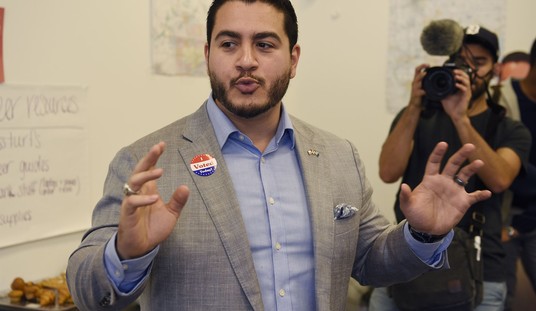
Obama's "sturdy" coalition is coming apart like wet Kleenex in a blender. For the first time since polling on the question began in 1982, Republicans now have a decisive advantage with women. Obama's support among young voters is stagnating. A recent survey by Harvard University's Institute of Politics is just one of several studies showing that millennials' enthusiasm for politics and Obama is waning. Young people still lean liberal, but less so and with much less enthusiasm. In a hypothetical ballot between Obama and a generic Republican, Obama leads by a whopping 1 percentage point. An economic hangover brings sobriety even to the young, it seems.
There's much merit to the idea that "demography is destiny" (a phrase credited to Ben Wattenberg and Richard Scammon, co-authors of the 1970s book, "The Real Majority"). But it can also lead you astray. Minus immigration, if you know how many baby girls are born in a given year, you'll have a good idea of how many grown women there will be X number of years down the road. Ditto blacks, Latinos, etc.
But identity politics can poison demography's predictive power. Knowing how many women there will be in 2050 won't tell you how they'll vote. For instance, today we assume that white Christian male voters yield conservative politics. But if that truism was a political constant, you would never have gotten the Progressive era or the New Deal.
Yes, the GOP still faces significant challenges. Heck, an electoral bonanza notwithstanding, Republicans are still fairly unpopular.
But if the first half of the Obama presidency proves anything, it is that straight-line predictions lead to political hubris. Events change and attitudes change with them, for every demographic.








Join the conversation as a VIP Member