



Like it or not, the United States of America is no longer the world's policeman. This was the message of Barack Obama's presidential journey to Britain, France, the Czech Republic, Turkey and Iraq this past week.
Somewhere between apologizing for American history - both distant and recent; genuflecting before the unelected, bigoted king of Saudi Arabia; announcing that he will slash the US's nuclear arsenal, scrap much of America's missile defense programs and emasculate the US Navy; leaving Japan to face North Korea and China alone; telling the Czechs, Poles and their fellow former Soviet colonies, "Don't worry, be happy," as he leaves them to Moscow's tender mercies; humiliating Iraq's leaders while kowtowing to Iran; preparing for an open confrontation with Israel; and thanking Islam for its great contribution to American history, President Obama made clear to the world's aggressors that America will not be confronting them for the foreseeable future.

Whether they are aggressors like Russia, proliferators like North Korea, terror exporters like nuclear-armed Pakistan or would-be genocidal-terror-supporting nuclear states like Iran, today, under the new administration, none of them has any reason to fear Washington.
This news is music to the ears of the American Left and their friends in Europe. Obama's supporters like billionaire George Soros couldn't be more excited at the self-induced demise of the American superpower. CNN's former (anti-)Israel bureau chief Walter Rodgers wrote ecstatically in the Christian Science Monitor on Wednesday, "America's... superpower status, is being downgraded as rapidly as its economy."
The pro-Obama US and European media are so pleased with America's abdication of power that they took the rare step of applauding Obama at his press conference in London. Indeed, the media's enthusiasm for Obama appeared to grow with each presidential statement of contrition for America's past uses of force, each savage attack he leveled against his predecessor George W. Bush, each swipe he took at Israel, and each statement of gratitude for the blessings of Islam he uttered.
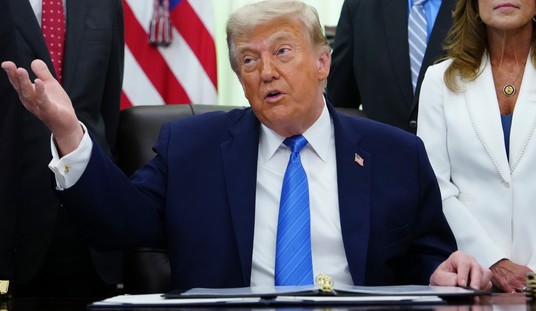
But while the media couldn't get enough of the new US leader, America's most stable allies worldwide began a desperate search for a reset button that would cause the administration to take back its abandonment of America's role as the protector of the free world.
Tokyo was distraught by the administration's reaction to North Korea's three-stage ballistic missile test. Japan recognized the betrayal inherent in Defense Secretary Robert Gates's announcement ahead of Pyongyang's newest provocation that the US would only shoot the missile down if it targeted US territory. In one sentence, uttered not in secret consultations, but declared to the world on CNN, Gates abrogated America's strategic commitment to Japan's defense.
India, for its part, is concerned by Obama's repeated assertions that its refusal to transfer control over the disputed Jammu and Kashmir provinces to Pakistan inspires Pakistani terror against India. It is equally distressed at the Obama administration's refusal to make ending Pakistan's support for jihadist terror groups attacking India a central component of its strategy for contending with Pakistan and Afghanistan. In general, Indian officials have expressed deep concern over the Obama administration's apparent lack of regard for India as an ally and a significant strategic counterweight to China.
Then there is Iraq. During his brief visit to Baghdad on Tuesday afternoon, Obama didn't even pretend that he would ensure that Iraqi democracy and freedom are secured before US forces are withdrawn next year. The most supportive statement he could muster came during his conversation with Turkish students in Istanbul earlier in the day. There he said, "I have a responsibility to make sure that as we bring troops out, that we do so in a careful enough way that we don't see a complete collapse into violence."
Hearing Obama's statements, and watching him and his advisers make daily declarations of friendship to Iran's mullahs, Iraqi leaders are considering their options for surviving the rapidly approaching storm.
Then there is Europe. Although Obama received enthusiastic applause from his audience in Prague when he announced his intention to destroy the US's nuclear arsenal, drastically scale back its missile defense programs and forge a new alliance with Russia, his words were anything but music to the ears of the leaders of former Soviet satellites threatened by Russia. The Czech, Polish, Georgian and Ukrainian governments were quick to recognize that Obama's strong desire to curry favor with the Kremlin and weaken his own country will imperil their ability to withstand Russian aggression.
It is not a coincidence, for instance, that the day Obama returned to Washington, Georgia's Moscow-sponsored opposition announced its plan to launch massive protests in Tblisi to force the ouster of pro-Western, anti-Russian Georgian President Mikhail Saakashvili.
And as for Russia, like Iran, which responded to Obama's latest ode to the mullahs by opening a nuclear fuel plant and announcing it has 7,000 advanced centrifuges in operation, so Moscow reacted to Obama's fig leaf with a machine gun, announcing its refusal to support sanctions against North Korea and repeating its false claim that Iran's nuclear program is nonaggressive.
Finally there is Israel. If Obama's assertions that Israel must support the immediate establishment of a Palestinian state, his declarations of support for the so-called Saudi "peace plan," which requires Israel to commit national suicide in exchange for "peace" with the Arab world, and his continuous and increasingly frantic appeals for Iran to "engage" his administration weren't enough to show Israel that Obama is sacrificing the US's alliance with the Jewish state in a bid to appease the Arabs and Iran, on Tuesday Vice President Joseph Biden made this policy explicit.
When Biden told CNN that Israel would be "ill-advised" to attack Iran's nuclear installations, he made clear that from the administration's perspective, an Israeli strike that prevents Iran from becoming a nuclear power is less acceptable than a nuclear-armed Iran. That is, the Obama administration prefers to see Iran become a nuclear power than to see Israel secure its very existence.
AMERICA'S BETRAYAL of its democratic allies makes each of them more vulnerable to aggression at the hands of their enemies - enemies the Obama administration is now actively attempting to appease. And as the US strengthens their adversaries at their expense, these spurned democracies must consider their options for surviving as free societies in this new, threatening, post-American environment.
For the most part, America's scorned allies lack the ability to defeat their enemies on their own. India cannot easily defeat nuclear-armed Pakistan, which itself is fragmenting into disparate anti-Indian nuclear-wielding Islamist and Islamist-supporting factions.
Japan today cannot face North Korea - which acts as a Chinese proxy - on its own without risking a confrontation with China.
Russia's invasion of Georgia last August showed clearly that its former republics and satellites have no way of escaping Moscow's grip alone.
This week's Arab League conference at Doha demonstrated to Iraq's leaders that their Arab brethren are incapable and unwilling to confront Iran.
And the Obama administration's intense efforts to woo Iran coupled with its plan to slash the US's missile defense programs - including those in which Israel participates - and reportedly pressure Israel to dismantle its own purported nuclear arsenal - make clear that Israel today stands alone against Iran.
THE RISKS that the newly inaugurated post-American world pose for America's threatened friends are clear. But viable opportunities for survival do exist, and Israel can and must play a central role in developing them. Specifically, Israel must move swiftly to develop active strategic alliances with Japan, Iraq, Poland, and the Czech Republic and it must expand its alliance with India.
With Israel's technological capabilities, its intelligence and military expertise, it can play a vital role in shoring up these countries' capacities to contain the rogue states that threaten them. And by containing the likes of Russia, North Korea and Pakistan, they will make it easier for Israel to contain Iran even in the face of US support for the mullahs.
The possibilities for strategic cooperation between and among all of these states and Israel run the gamut from intelligence sharing to military training, to missile defense, naval development, satellite collaboration, to nuclear cooperation. In addition, of course, expanded economic ties between and among these states can aid each of them in the struggle to stay afloat during the current global economic crisis.
Although far from risk free, these opportunities are realistic because they are founded on stable, shared interests. This is the case despite the fact that none of these potential alliances will likely amount to increased support for Israel in international forums. Dependent as they are on Arab oil, these potential allies cannot be expected to vote with Israel in the UN General Assembly. But this should not concern Jerusalem.
The only thing that should concern Jerusalem today is how to weaken Iran both directly by attacking its nuclear installations, and indirectly by weakening its international partners in Moscow, Pyongyang, Islamabad and beyond in the absence of US support. If Japan is able to contain North Korea and so limit Pyongyang's freedom to proliferate its nuclear weapons and missiles to Iran and Syria and beyond, Israel is better off. So, too, Israel is better off if Russia is contained by democratic governments in Eastern and Central Europe. These nations in turn are better off if Iran is contained and prevented from threatening them both directly and indirectly through its strategic partners in North Korea, Syria and Russia, and its terror affiliates in Iraq, Pakistan and Afghanistan.
For the past 16 years, successive Israeli governments have wrongly believed that politics trump strategic interests. The notion that informed Israel's decision-makers - not unlike the notion that now informs the Obama administration - was that Israel's strategic interests would be secured as a consequence of its efforts to appease its enemies by weakening itself. Appreciative of Israel's sacrifices for peace, the nations of the world - and particularly the US, the Arabs and Europe - would come to Israel's defense in its hour of need. Now that the hour of need has arrived, Israel's political strategy for securing itself has been exposed as a complete fiasco.
The good news is that no doubt sooner rather than later, Obama's similarly disastrous bid to denude the US of its military power under the naive assumption that it will be able to use its new stature as a morally pure strategic weakling to win its enemies over to its side will fail spectacularly and America's foreign policy will revert to strategic rationality.
But to survive the current period of American strategic madness, Israel and the US's other unwanted allies must build alliances with one another - covertly if need be - to contain their adversaries in the absence of America. If they do so successfully, then the damage to global security induced by Obama's emasculation of his country will be limited. If on the other hand, they fail, then America's eventual return to its senses will likely come too late for its allies - if not for America itself.








Join the conversation as a VIP Member