





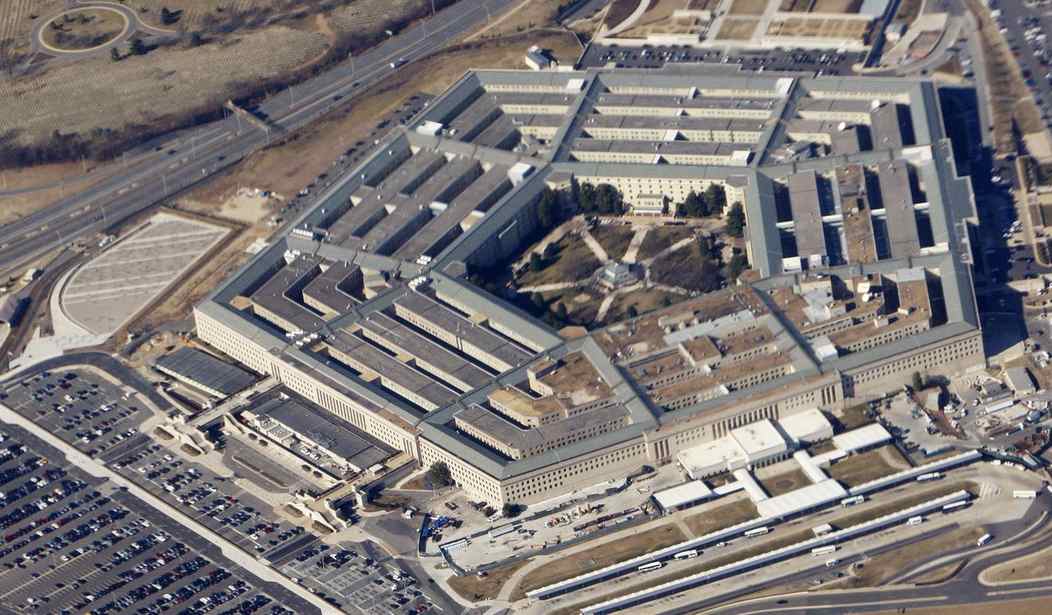
The United States Army is being forced to reduce the size of its force — as a predictable result of failing to meet recruitment and retention goals — by roughly five percent, according to the Pentagon in what the Department of Defense prefers to call more of a reshuffle as a result of what officials say is a "significantly overstructured" service.
According to an ABC News report on the decision, the cuts will include "jobs related to counter-insurgency that swelled during the Iraq and Afghanistan wars but are not needed as much today" and around "3,000 of the cuts would come from Army special operations forces."
It seems as though a time in which Iran-backed terrorists are on the march across the Middle East, including attacking U.S. bases and killing American service members — and following Biden's handover of Afghanistan to the Taliban who have returned the country to an oasis for other radical Islamist terror groups — might not be the best time to cut counter-insurgency positions as irregular warfare continues to spike with the United States in its instigators' sights.
The math for the Army's shortfall is simple, as laid out by ABC News: the U.S. Army is supposed to have as many as 494,000 soldiers to carry out the tasks planned for its force now. But, due to an inability to recruit and keep soldiers, they're having to retool, consolidate, and slash positions to fit the current force of roughly 445,000. Due to the lack of an adequate number of personnel, most of the cuts being made out of the 24,000 announced this week will occur in already empty positions, and soldiers are not being asked to leave the already reduced force number, with the hope of recruiting and retaining enough to build up to around 470,000 by 2029.
But recruitment has lagged in recent years. ABC News noted that FY23 saw the Navy, Army, and Air Force fail to meet recruitment goals and in FY22 the Army "also missed its enlistment goal" of 60,000 new soldiers, coming up 15,000 short.
ABC News added that the Pentagon's restructuring "plan will add about 7,500 troops in other critical missions, including air-defense and counter-drone units and five new task forces around the world with enhanced cyber, intelligence and long-range strike capabilities." This "significant shift," ABC News added, is supposedly "for the Army to prepare for large-scale combat operations against more sophisticated enemies" but "underscore the steep recruiting challenges that all of the military services are facing."

Join the Conversation
VIP members get the ability to comment on articles.