





Thursday's first meeting of the Senate Department of Government Efficiency (DOGE), led by Elon Musk and Vivek Ramaswamy, marked a significant step toward transforming federal government operations. Convened to streamline processes, reduce waste, and improve overall productivity, the meeting brought together key policymakers, experts in public administration, and efficiency advocates. As government agencies continue to face mounting pressure to do more with less, the DOGE's efforts promise to reshape how resources are allocated, services are delivered, and taxpayer dollars are spent. The meeting set the tone for what many hope will be a new era of accountability, transparency, and innovation in government operations.
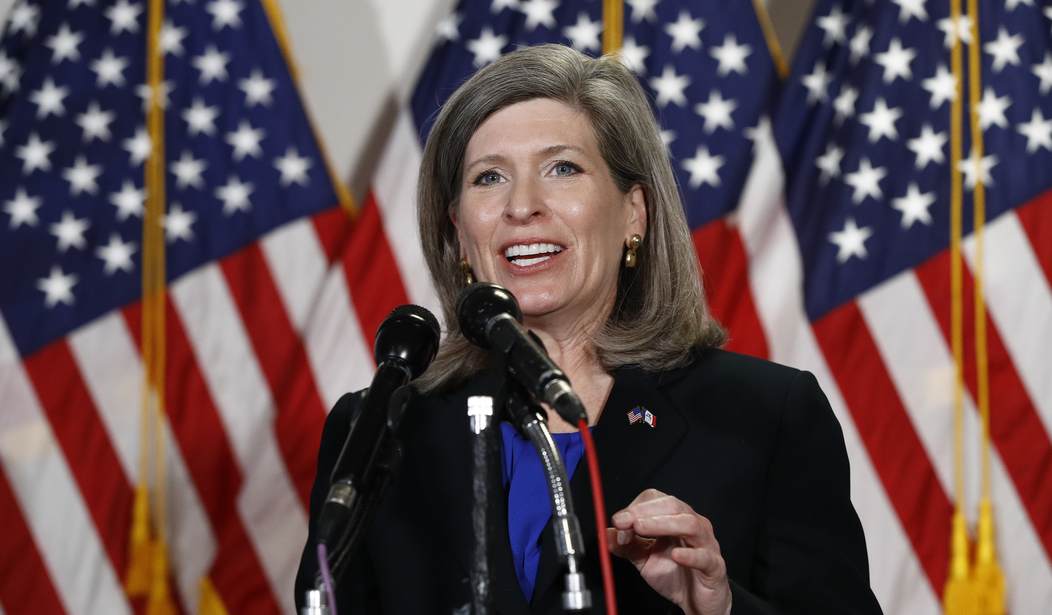
Republican Sen. Joni Ernst (R-IA) hand-delivered a report to Musk, Ramaswamy, and President-elect Donald Trump that will serve as a roadmap to eliminate more than $2 trillion in waste, which it exposed that only six percent of federal workers “report in-person on a full-time basis.” At the same time, nearly one-third are remote on a full-time basis.
As a result, Ernst is demanding a full investigation into the 24 federal departments and agencies to determine the impact of telework on service delivery and response times. She called Washington, D.C., a “ghost town” and warned federal employees to show up for work or risk being fired.
“Bureaucrats have been playing a game of hide-and-seek, and the only place you can’t find them is at the office,” Ernst said in a statement to Townhall. “It has gotten so bad that you might ask, if a phone rings in an agency office, but no one is around, does it make a sound? The party is over for the absent federal workforce.”
The General Services Administration’s (GSA) Inspector General responded by considering an audit to determine whether the agency had appropriately evaluated its physical space needs and utilization after Ernst demanded an investigation of every major department and agency. Months later, the GSA announced it would downsize 3.5 million square feet of federal buildings, saving taxpayers over $1 billion.
Earlier this year, Ernst revealed that federal buildings remained vacant for months, even four years after the COVID pandemic. Despite this, government agencies use only half of their office space. In response, President Joe Biden’s administration has urged agencies to either fill these empty facilities with federal workers or sell off the unused properties.
The senator demands to know: “If federal employees can’t be found at their desks, exactly where are they?”
Ernst highlighted Biden’s continued absence from the White House, during which he spent nearly 40 percent of his presidency on vacation.
“President Biden is setting the example,” she said, noting that the federal government owns about 7,697 vacant buildings, with 2,265 that are only half-occupied. This costs about $15 million for leasing and maintenance of underutilized space.

Join the Conversation
VIP members get the ability to comment on articles.