





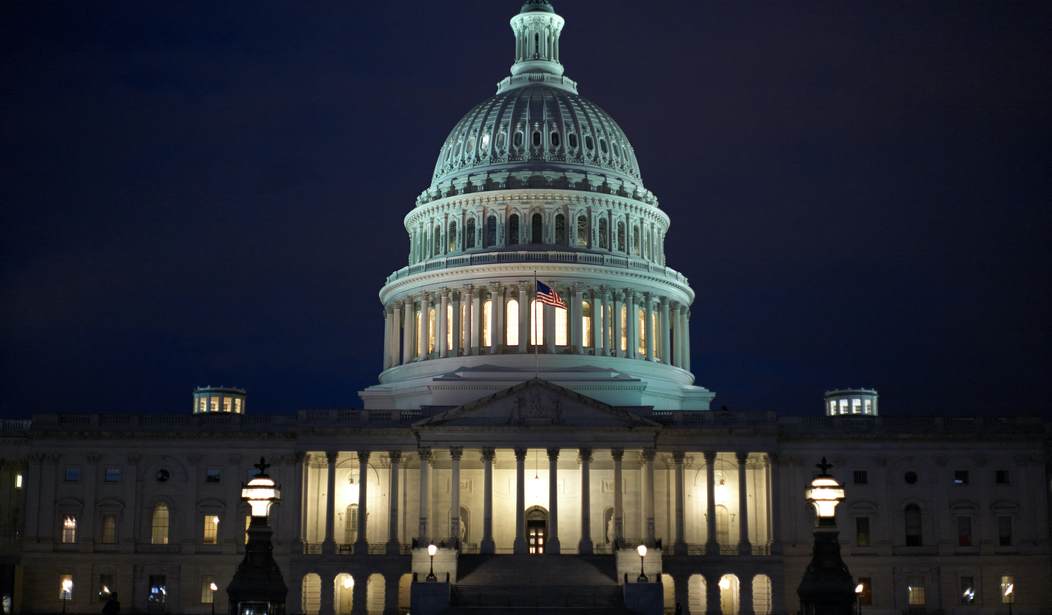
On Thursday night, the U.S. Senate voted 68-31 to fund the government with a massive spending bill that comes in at 2,741 pages long. Despite its length, lawmakers were forced to move quickly in order to avoid a government shutdown and to send emergency aid to Ukraine. Members had only just received the text on Wednesday.
More than five months into the fiscal year, Congress approves a $1.5T bill to fund the government through September 30. With a 68-31 vote, the bill — which would also provide $14B in Ukraine aid — heads to Biden’s desk. After months of talks, the bill was released only yesterday
— Manu Raju (@mkraju) March 11, 2022
Initially, there were concerns about delays when it came to various disagreements about what was included in the bill and what amendments would be voted on. Subsequent reports, also on Thursday evening indicated that Senators had reached a deal. The vote came in at about 10:00pm.
Amendments were offered by Republican Sen. Mike Lee (UT) to defund Biden administration vaccine mandates for healthcare workers, military personnel, federal employees, and federal contractors; by Sen. Mike Braun (IN) to get rid of earmarks in the bill; and by John Kennedy (LA), who wanted $2.5 billion in disaster relief for his state of Louisiana. The amendments failed.
As Jordain Carney reported for The Hill:
...The two-day sprint to pass the sprawling funding bill wasn’t without drama.
Senate conservatives fumed over being pushed to quickly vote on a bill that they didn’t physically have time to read.
"There are a lot of people in my conference who are very upset, you can include me in number, that once again we're being asked to vote on legislation that we haven't had a reasonable opportunity to read. There are a lot of people upset, I'm among that number, that we can't seem to get amendments," said Sen. John Kennedy (R-La.).
Sen. John Thune (R-S.D.), the No. 2 Senate Republican, acknowledged that “the process stinks.”
House members had even less time to read the bill, with the vote of 361-69 to back funding for the Pentagon, Department of Homeland Security, and other national security priorities and then 260-171, to adopt the provisions largely related to domestic programs, as Aris Folley and Cristina Marcos reported for The Hill on Wednesday night.
This did not come without some bumps, though, as the vote was delayed in the House and COVID funding had to be removed. While Speaker Nancy Pelosi (D-CA) blamed the move on Republicans, it was members of her own party who took issue.
While the bill, which includes $1.5 trillion in spending for government funding and $13.6 billion in aid for Ukraine will be sent to President Joe Biden to sign, the Senate also passed a short-term continuing resolution (CR) to fund the government in the meantime. That received a voice vote, as Carney also reported.



Join the Conversation
VIP members get the ability to comment on articles.