





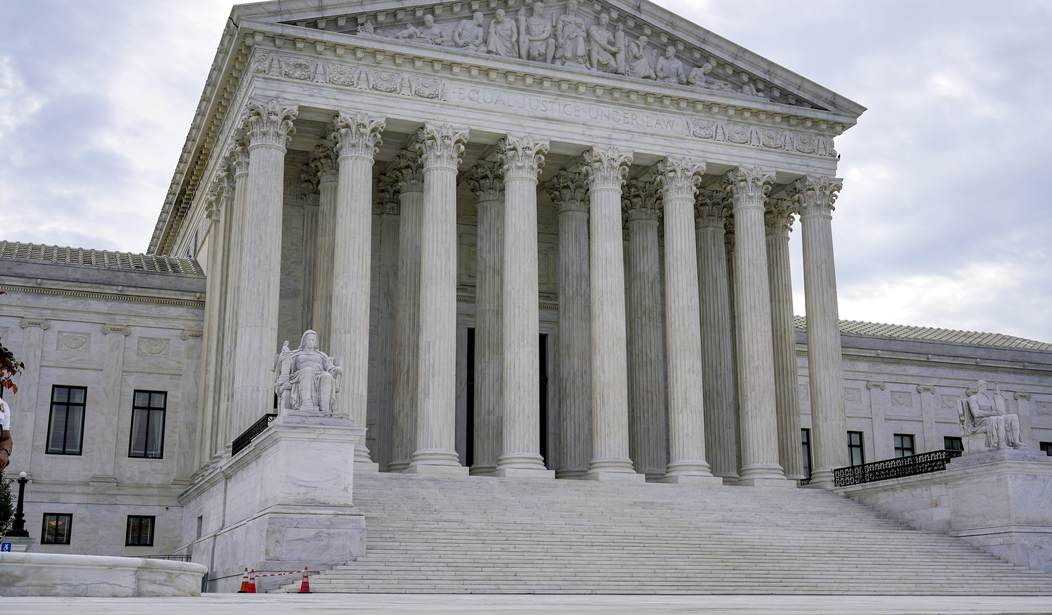
Less than a week after the Sixth Circuit Court of Appeals reinstated President Joe Biden's vaccine mandate the U.S. Supreme Court announced that it had scheduled oral arguments on the challenges. The Wednesday night announcement, as reported by Adam Liptak for The New York Times, lays out a special hearing for January 7 to do with two cases, one addressing Biden's vaccine mandate for private employers with 100 or more employees and another to do with requiring employees who work at hospitals that receive federal funds to be vaccinated.
The case to do with Biden's vaccine mandate or regular testing for private employees, with enforcement from Occupational Safety and Health Administration (OSHA) has sought to examine whether it is an overreach of OSHA's authority. The decision from the Sixth Circuit had overturned a previous stay from the Fifth Circuit.
President Biden hinted at such a mandate on September 9, when he announced a vaccine mandate for federal employees and contractors. The actual mandate was announced on November 4, with lawsuits being filed immediately afterwards. The mandate is set to go into effect on January 4.
Liptak also noted something that may send the Court's critics into a tailspin, depending on how the justices ruled:
The court said it would move with exceptional speed, setting the cases for argument on Friday, Jan. 7. The justices had not been scheduled to return to the bench until the following Monday.
Both sets of cases had been on what critics call the court’s shadow docket, in which the court decides emergency applications, sometimes on matters of great consequence, without full briefing and argument. The court’s decision to hear arguments on the applications may have been a response to mounting criticism of that practice.
The Democratically-controlled Congress has even held hearings condemning the concept of the shadow docket, especially when it comes to cases to do with abortion.
The Court has ruled before without full argument on cases to do with vaccine mandates. Justices, conservative and liberal alike, have failed to stop vaccine mandates from going into effect, sometimes without bringing such requests for relief before the other justices.
President Biden himself admitted concerns with his vaccine mandates. "I know vaccination requirements are unpopular for many. They’re not even popular for those who are anxious to get them," he said during his Tuesday address on the Wuhan coronavirus.

Join the Conversation
VIP members get the ability to comment on articles.