





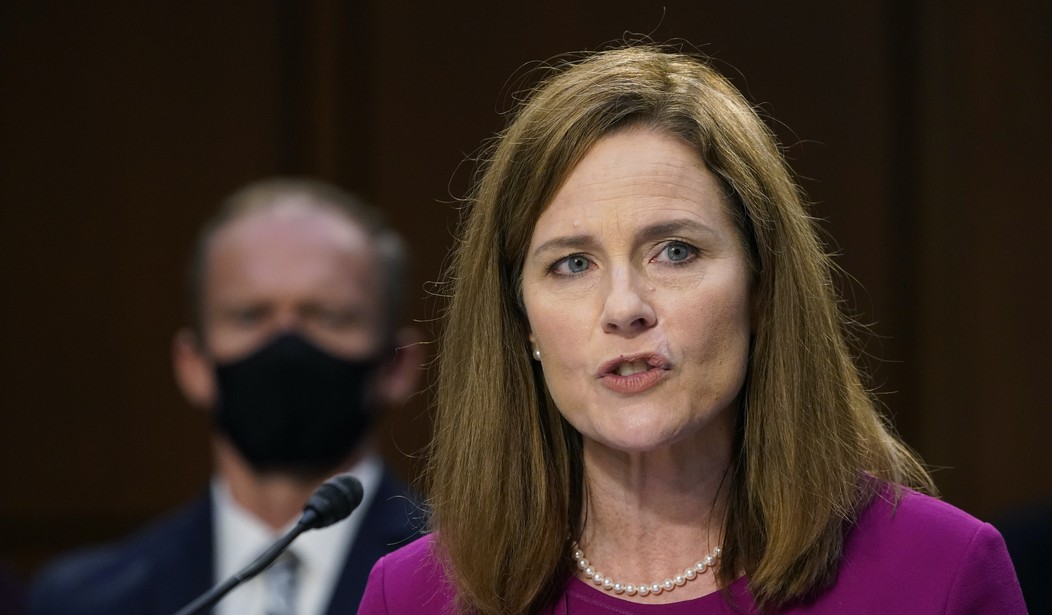
The Senate Democrats on the Judiciary Committee spoke endlessly about Obamacare. I know some were asking, ‘is this a Supreme Court nomination hearing or one on Obamacare?’ It was both. The Affordable Care Act will come before the Court again on November 10. By all accounts, the vote count hasn’t changed. The Senate GOP has the votes to confirm her, so Judge Amy Coney Barrett, who President Trump nominated to fill the vacancy left by the late Justice Ruth Bader Ginsburg, will be a deciding vote. Yet, there’s another case where soon-to-be-Justice Amy Coney Barrett will weigh in on the 2020 census. The Supreme Court just announced that they will hear arguments concerning whether illegal aliens can be excluded from the count (via NBC News):
The U.S. Supreme Court agreed Friday to consider whether the Trump administration can leave undocumented immigrants out of the count of total population in the census.
In a brief order, the court set the case for argument on Nov. 30. If she's confirmed by then, Judge Amy Coney Barrett could participate in the case.
A census is required every ten years by the Constitution, and the results determine how many members of Congress each state gets in the US House of Representatives. The data is also used to calculate a local government's share of $1.5 trillion in funds under many federal programs
In July, President Donald Trump said people who are undocumented should not be included in the final count. In response to a lawsuit filed by a group of states, lower courts said the exclusion would violate federal law and result in a reapportionment of congressional seats no longer based on the actual census results.
Under the president's plan, the Census Bureau would report two sets of figures to the president — one including everyone counted and another leaving out undocumented immigrants. He would then report the smaller number to Congress for use in reapportionment. The plan would reduce the number of seats in the House for states with large immigrant populations and would cut their share of federal funds.
Most recently, the Trump administration won a battle to end the 2020 census to ensure the processing of the data is done in time for the reapportionment phase. Arguments for the exclusion of illegals in the census is slated for November 30.



Join the Conversation
VIP members get the ability to comment on articles.