





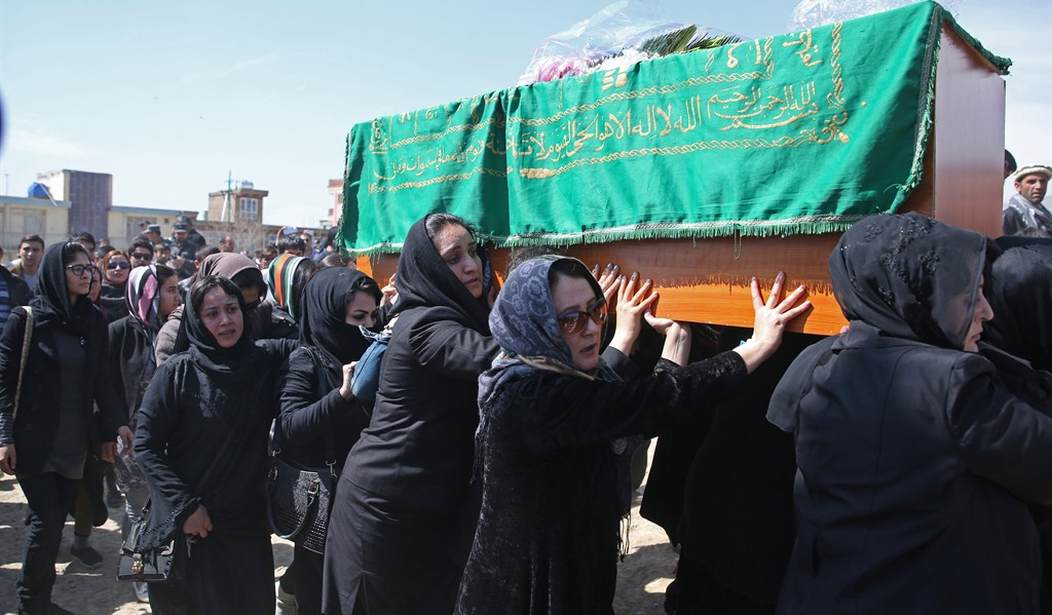
In March, I wrote a 27-year-old Afghan woman who was brutally murdered by a mob of men, infuriated that she had burned a copy of the Koran in a Muslim shrine. The video of the event is nothing short of horrific. By the time the men decided it was time to burn her corpse, her clothes were so soaked with blood that it couldn’t be set on fire. This woman’s body was also run over by a car while being dragged through the streets. At the time, she was only known as Farkhunda, but we now have her full name: Farkhunda Malikzada. Malikzada was said to be an “aspiring student of Islam,” and her vicious murder shows how the rule of law is still very much an alien concept in a land fraught by tribal ties and clan justice. To boot, Malikzada never burned the Koran. She was completely innocent (via NYT):
The tormented final hours of Farkhunda Malikzada, a 27-year-old aspiring student of Islam who was accused of burning a Quran in a Muslim shrine, shocked Afghans across the country. That is because many of her killers filmed one another beating her and posted clips of her broken body on social media. Hundreds of other men watched, holding their phones aloft to try to get a glimpse of the violence, but never making a move to intervene. Those standing by included several police officers.Unlike so many abuses against Afghan women that unfold in private, this killing in March prompted a national outcry. For Farkhunda had not burned a Quran. Instead, an investigation found, she had confronted men who were themselves dishonoring the shrine by trafficking in amulets and, more clandestinely, Viagra and condoms.
At first, the trial and convictions that followed seemed a victory in the long struggle to give Afghan women their due in a court of law. But a deeper look suggests otherwise. The fortuneteller who several investigators believe set the events in motion was found not guilty on appeal. The shrine’s custodian, who concocted the false charge of Quran burning and incited the mob, had his death sentence commuted. Police officers who failed to send help and others who stood by received slaps on the wrist, at most. Some attackers identifiable in the videos avoided capture altogether. Afghan lawyers and human rights advocates agree that most of the accused did not receive fair trials. Farkhunda’s family, fearing reprisals and worried that the killers would not be held accountable, fled the country.
Farkhunda’s death and the legal system’s response call into question more than a decade of Western efforts in Afghanistan to instill a rule of law and improve the status of women. The United States alone has spent more than $1 billion to train lawyers and judges and to improve legal protections for women; European countries have provided tens of millions more.
But like so many other Western attempts to remake Afghanistan, the efforts have foundered, according to Afghan and Western lawyers and officials. Afghan society has resisted more than 150 years of such endeavors by outsiders, from the British to the Russians to the Americans. This remains a country where ties of kinship and clan trump justice, and where the money brought by the West has made corruption into a way of life. The rule-of-law programs were often designed in ignorance of Afghan legal norms, international and Afghan lawyers say. And Western efforts to lift women’s legal status provoked fierce resentment from powerful religious figures and many ordinary Afghans.

Warning: Graphic violence













Join the conversation as a VIP Member