


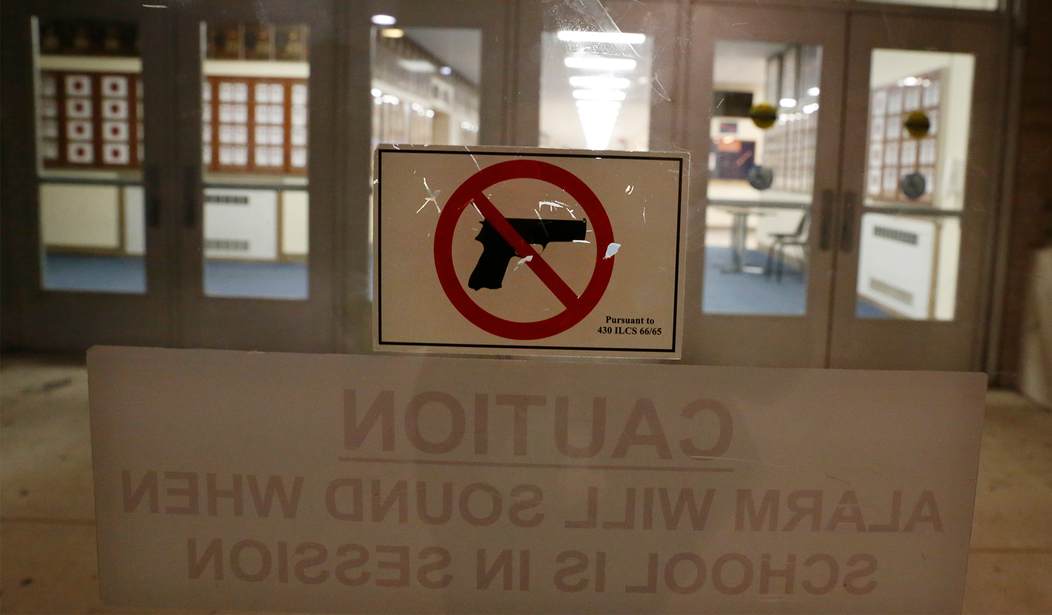
A group of Jewish gun owners in Brooklyn, New York filed a lawsuit over the state’s firearm law that prohibits citizens from carrying concealed guns at “sensitive locations,” including “places of worship or religious observation.”
The lawsuit filed Sept 29 was organized by the New York State Jewish Gun Club, the New York Post reported. The complaint argues that the law, which went into effect Sept. 1, makes congregants more susceptible to violent crime in their places of worship and leaves them unable to defend themselves.
“You are making them sitting ducks,” lawyer Ameer Benno told The Post. “It’s not a myth that Jewish houses of worship are targets for hate.”
Steven Goldstein, president of the Brooklyn Orthodox Congregation Bnei Matisyahu, told The Post that he is a concealed carry permit holder. He shared that he has attended less services out of fear that his synagogue will be targeted for an anti-Semitic attack since the law took effect. In addition, he said he knows of others who’ve quit attending services altogether.
“We’ve had people say they will not attend because we no longer have an armed security guard,” Goldstein said, referring to himself. “We’re a small, tight knit group, and to lose people, it takes a toll on the entire community.”
Tzvi Waldman, founder of the New York State Jewish Gun Club, said that group membership has “surged” since it was founded in 2019. The Post added that an April report from the Anti-Defamation League found that anti-Semitic “incidents” in the U.S. has reached an “all time high,” with New York topping the list at 416 cases.
Recommended

“People realize what the answer to the problem is,” Waldman said. “To get licensed, to be there discreetly with the crowd to stop anybody that comes in with bad intent.”
Last week, Townhall covered how a federal judge blocked key components of the law. But, the provision that prohibits guns from being carried in “sensitive locations” stayed in effect.
Hochul signed the law in response to the Supreme Court’s ruling in New York State Rifle & Pistol Association Inc. v. Bruen, a lawsuit over a New York law requiring permit applicants to show “proper cause” before they can be licensed to carry.
The ruling came down 6-3 with Justice Clarence Thomas penning the majority opinion. As Spencer noted, Thomas wrote that the Second Amendment should not be treated differently than other rights outlined in the Bill of Rights.
The constitutional right to bear arms in public for self defense is not “a second-class right, subject to an entirely different body of rules than the other Bill of Rights guarantees.” We know of no other constitutional right that an individual may exercise only after demonstrating to government officers some special need. That is not how the First Amendment works when it comes to unpopular speech or the free exercise of religion. It is not how the Sixth Amendment works when it comes to a defendant’s right to confront the witnesses against him. And it is not how the Second Amendment works when it comes to public carry for self defense. New York’s proper-cause requirement violates the Fourteenth Amendment in that it prevents law-abiding citizens with ordinary self-defense needs from exercising their right to keep and bear arms. We therefore reverse the judgment of the Court of Appeals and remand the case for further proceedings consistent with this opinion.









Join the conversation as a VIP Member