







Patients waiting to get an abortion procedure in Georgia this week were abruptly turned away after a federal appeals court immediately allowed a pro-life law to go into effect Wednesday.
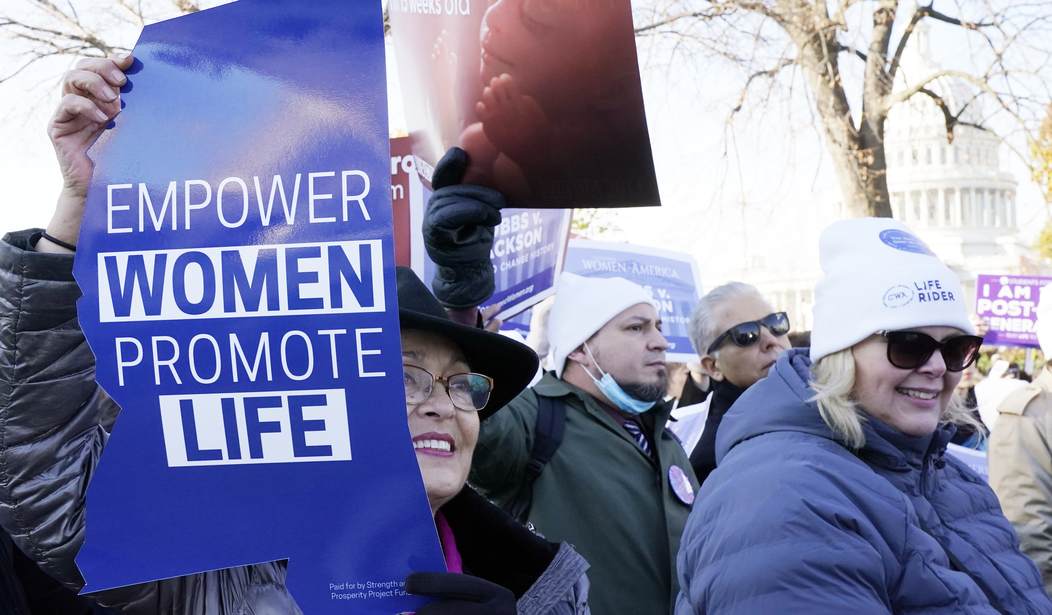
To recap, Townhall covered this week how a Georgia law banning abortions after fetal heartbeat detection went back into effect after abortion providers challenged the law. The 11th Circuit Court of Appeals’ ruling noted that the Supreme Court’s overturn of Roe v. Wade last month paved the way for the Georgia law to go into effect.
Some patients in Georgia were waiting in a clinic or scheduled for an abortion that week when the ruling came out. They were told the procedure was no longer legal and were turned away, according to the Associated Press.
At one Atlanta clinic, four patients were sent home, its Chief Operating Officer Melissa Grant told AP.
“It was difficult every time the staff had to bring it up, whether it was someone on the phone for tomorrow or somebody in the office today,” Grant said.
Georgia’s law is similar to legislation in Texas and Tennessee.
This month, a California doctor announced that she is spearheading a project to get an offshore abortion clinic vessel in federal waters in the Gulf of Mexico to provide abortions to women in states where abortion is restricted.
CBS News reported that the project is expected to cost at least $20 million. The project, called “PRROWESS,” stands for Protecting Reproductive Rights of Women Endangered by State Statutes.
"This is all about bodily autonomy and choice, and so people have a right to be pregnant and also not to have a pregnancy," Dr. Meg Autry, who is behind the project, told CBS. She said that people who “care deeply about access to reproductive rights” have to be “innovative and creative” going forward.
CBS noted that Autry is working with a team of attorneys and looking for a donated boat to get the project underway.
"There's operational logistics, there's the whole idea of maritime law and then there's obviously security, there's liability, I mean the challenges are countless," Autry said.
Townhall covered this week how Mississippi’s last abortion clinic shut its doors and sold its building. It is packing up and moving to New Mexico. The clinic, Jackson Women’s Health Organization, was the abortion clinic at the center of the Supreme Court case, Dobbs v. Jackson Women's Health Organization, that overturned Roe and Planned Parenthood v. Casey.
In the Supreme Court’s majority opinion, the justices wrote that the U.S. Constitution does not protect the right to abortion and determined that Roe and Casey were wrongly decided.
“The Constitution does not confer a right to abortion; Roe and Casey are overruled; and the authority to regulate abortion is returned to the people and their elected representatives,” the opinion stated. A Mississippi trigger law protecting the unborn took effect shortly after.



Join the Conversation
VIP members get the ability to comment on articles.