







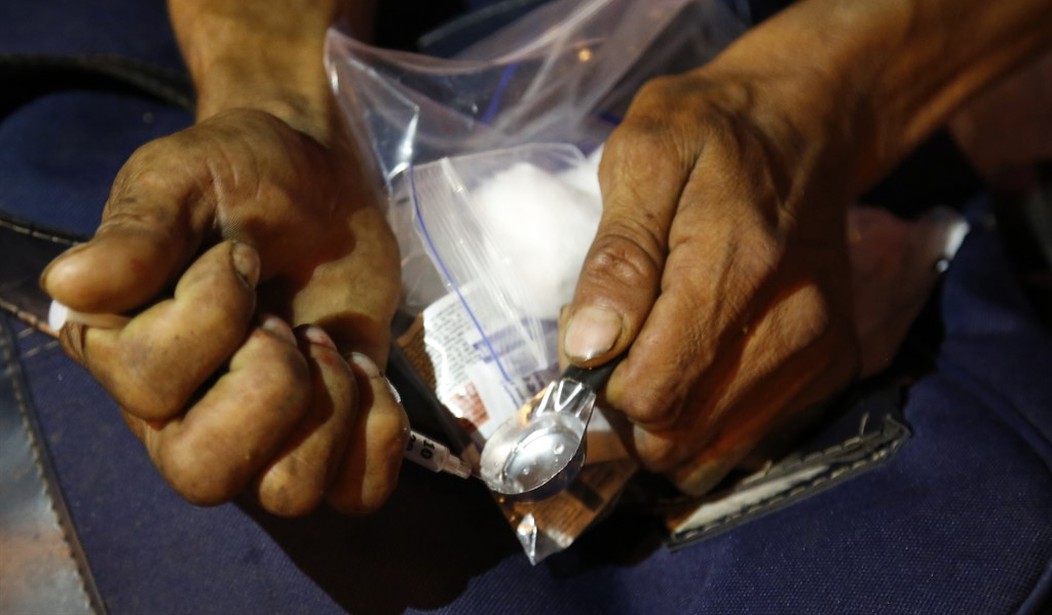
It didn’t take long for Oregon to realize decriminalizing hard drugs was a bad idea.
On Tuesday, Gov. Tina Kotek, a Democrat, signed legislation that recriminalizes drug possession, reversing Measure 110, which 58 percent of voters approved in 2020. By August, however, 56 percent of Oregonians disapproved after a major uptick in overdose deaths and addiction in the state. Lawmakers from both parties got to work drafting legislation to reverse the measure.
The new law, HB 4002, makes so-called personal use possession a misdemeanor punishable by up to six months in jail. It enables police to confiscate the drugs and crack down on their use on sidewalks and in parks. It also establishes ways for treatment to be offered as an alternative to criminal penalties by encouraging law enforcement agencies to create deflection programs that would divert people to addiction and mental health services instead of the criminal justice system.
The changes take effect Sept. 1.
In a signing letter, Kotek said the law’s success will depend on "deep coordination" between courts, police, prosecutors, defense attorneys and local mental health providers, describing them as "necessary partners to achieve the vision for this legislation.
Oregon House Republican Leader Jeff Helfrich said he supported the governor’s decision and said it was a crucial first step toward addressing the ongoing drug crisis in the state.
"Republicans stood united and forced Democrats to do what Oregonians demanded: recriminalize drugs," Helfrich said, according to KEZI. (Fox News)
“Now that the Governor has given the recriminalization bill her stamp of approval, we can finally end the chapter on Oregon’s experiment with decriminalizing hard drugs," Senate Republican Leader Tim Knopp (R-Bend) said in a statement. "HB 4002 is not a perfect solution; legislators will undoubtedly have much more work to do in upcoming sessions. But it sets a standard for how the state should approach the drug addiction crisis: by empowering law enforcement and our behavioral health systems to work together to help Oregonians struggling with chronic addiction seek life-saving treatment.”



Join the Conversation
VIP members get the ability to comment on articles.