





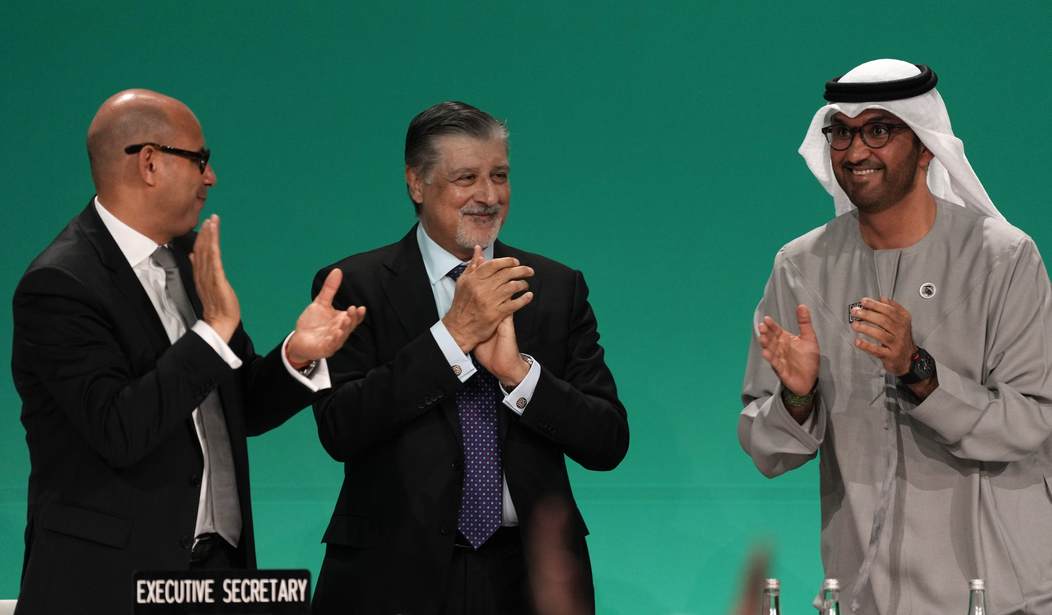
After two weeks of negotiations at the COP28 United Nations climate summit in Dubai, nearly 200 countries approved of a plan that not only calls for “transitioning away from fossil fuels…in a just, orderly and equitable manner ... so as to achieve net zero by 2050,” but also tasks members with tripling renewable energy infrastructure by 2030 and doubling energy efficiency.
"It is the first time that the world unites around such a clear text on the need to transition away from fossil fuels," said Norway's Minister of Foreign Affairs Espen Barth Eide.
The new deal is not legally binding and can’t, on its own, force any country to act. Yet many of the politicians, environmentalists and business leaders gathered in Dubai hoped it would send a message to investors and policymakers that the shift away from fossil fuels was unstoppable. Over the next two years, each nation is supposed to submit a detailed, formal plan for how it intends to curb greenhouse gas emissions through 2035. Wednesday’s agreement is meant to guide those plans.
“This is not a transition that will happen from one day to the other,” Susana Muhamad, Colombia’s environmental minister, said this week. “Whole economies and societies are dependent on fossil fuels. Fossil capital will not disappear just because we made a decision here.” But, she added, an agreement sends “a strong political message that this is the pathway.” (NYT)
The United States and other member nations are required under the agreement formalized Wednesday to submit a nonbinding emissions reduction plan by 2025.
"This is a moment where multilateralism has actually come together and people have taken individual interests and attempted to define the common good," said U.S. climate envoy John Kerry.
This COP will mark the beginning of the end of fossil fuels.
— European Commission (@EU_Commission) December 13, 2023
The text we have in front of us sets in motion an irreversible, and accelerated transition away from fossil fuels.
Remarks by Commissioner @WBHoekstra at #COP28 pic.twitter.com/CWeam2qlnM
The moment history was made.
— COP28 UAE (@COP28_UAE) December 13, 2023
⁰Everyone came together from day one. Everyone united, everyone acted and everyone delivered. pic.twitter.com/KYsRN6Bu4K
Join the Conversation
VIP members get the ability to comment on articles.