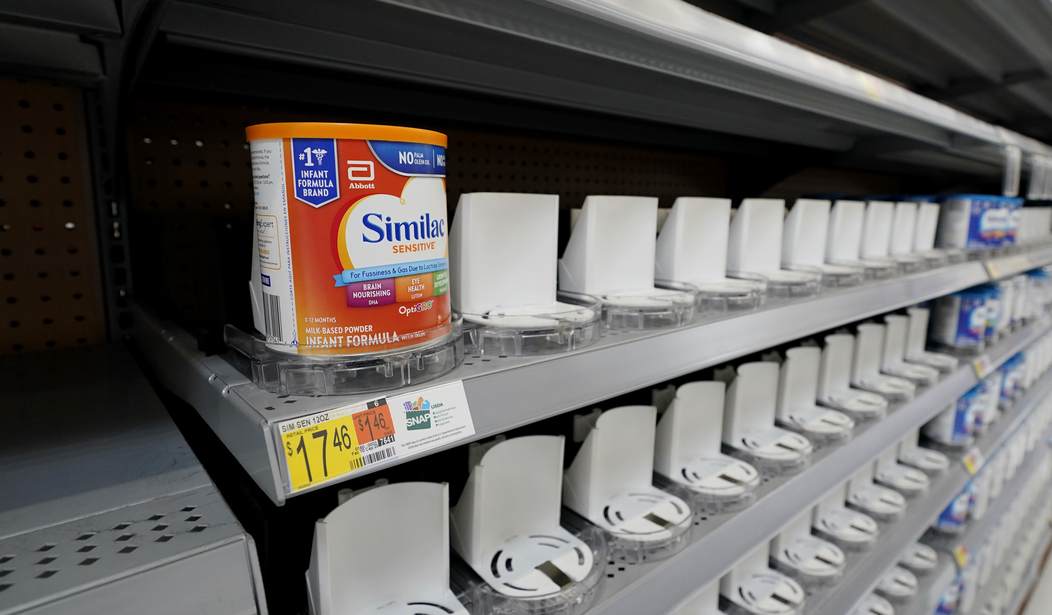
For the first week of May, out-of-stock rates for baby formula shot up to 43 percent, according to Datasembly. Parents are scared, scrambling, and searching for answers. The Biden administration does not appear to be putting all hands on deck to address the shortage—a life-threatening problem for our nation's most vulnerable. Under pressure to do something, the Department of Health and Human Services threw up a fact sheet, ostensibly meant to help families find formula.
By all accounts, however, it's useless. And even CNN acknowledged as much.
"To address infant formula shortages in the wake of Abbott Nutrition's voluntary recall of certain powdered infant formulas, the Biden-Harris Administration is working to ensure that infant formula is safe and available for families across the country. Yesterday, President Biden spoke with retailers and manufacturers, including Walmart, Target, Reckitt, and Gerber, to discuss ways to get more formula quickly and safely onto store shelves. He also announced a series of actions, including cutting red tape on the types of formula parents can buy, calling on the Federal Trade Commission and state attorneys general to crack down on price gouging and unfair market practices, and increasing the supply of formula through increased imports," the HHS site states.
"Thanks to these efforts, manufacturers have ramped up production 30-50 percent, bringing total production today above pre-recall levels with a different mix of products and sizes now available in the market," the statement continues. "Still, it's clear that too many families continue to encounter challenges obtaining infant formula—especially families of about 5,000 infants as well as some older children and adults with rare metabolic diseases that depend on specialty formulas."
To parents faced with empty shelves, those are all empty words. So what does the administration suggest on this emergency website? All they offer is contact information to manufacturer hotlines, community resources, such as food banks, links for WIC-eligible families, and a general suggestion to call your OBGYN or pediatrician's office to see if they have samples or other feeding suggestions (though watering down formula or making your own is never advised).
Recommended
CNN tried those avenues to no avail.
A CNN reporter tested out some of those resources to try to determine how helpful they are likely to be for parents who are desperately looking to procure baby formula. The exercise resulted in apologetic customer service representatives, one hold time that lasted well over an hour, and serious challenges in finding baby formula through some of the main suggestions listed on the new HHS website. (CNN)
On Monday, Abbott announced it reached a deal with FDA to reopen its Michigan plant, which was shut down in February after infant hospitalizations and death from bacterial infections. If approved by a court, production could restart in two weeks.
After that, it will take between six and eight weeks for product to hit store shelves, the company said.