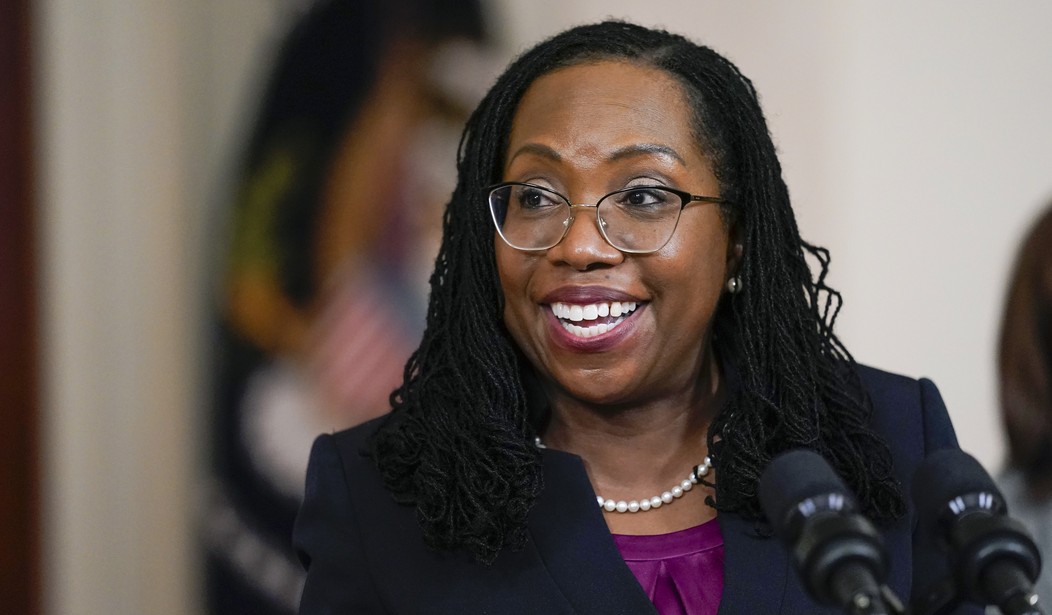

During an exchange with Republican Senator Ted Cruz (R-TX) on Capitol Hill Wednesday, Judge Ketanji Brown Jackson said she would recuse herself from a specific Supreme Court case if confirmed to serve on the high court.
If Jackson were not to recuse herself, it would be a clear conflict of interest.
News --> Jackson says (if confirmed), she would recuse from an affirmative action case next term that takes up Harvard's admission policies
— Seung Min Kim (@seungminkim) March 23, 2022
The Supreme Court announced in January it would take up an affirmative action case stemming from raced-based admissions standards at Harvard and the University of North Carolina.
The Supreme Court announced Monday that it will once again look at whether universities may consider the race of applicants when trying to build diverse student bodies, an ominous development for those who say there is a continuing need for affirmative action in higher education.
George Washington Law Professor Jonathan Turley previewed this likely move earlier this month.
The first major decision of Judge Ketanji Brown Jackson after her Supreme Court nomination may be to recuse herself from one of the most significant cases before the court. Indeed, it seems she will have little practical or ethical choice but to say that she will not participate in a case that could fundamentally change the use of race in college admissions.
The college admissions cases before the court have been much discussed since President Biden announced that he would consider only black females for the next vacancy on the court. Some of us immediately noted that Biden’s exclusionary criteria have been declared unconstitutional or unlawful by the court for schools and businesses; they also are unprecedented, unnecessary, and unfair to potential nominees. To make matters even more awkward, the new justice would sit on two cases raising the use of race in admissions to Harvard and the University of North Carolina.
Judge Jackson just promised to recuse herself from the Harvard lawsuit despite claims by legal experts that she does not have a conflict of interest. https://t.co/7QzriMJyoF I believe recusal was unavoidable on from an ethical basis.
— Jonathan Turley (@JonathanTurley) March 23, 2022
Jackson, a Harvard law graduate, currently serves on the Board of Oversees. This causes the conflict of interest.
What makes Jackson different than the 2394823048239 other current Harvard grads on the Supreme Court: Since 2016, she has served on its Board of Oversees, which offers “counsel to the University’s leadership on priorities, plans, and strategic initiatives."
— Seung Min Kim (@seungminkim) March 23, 2022