





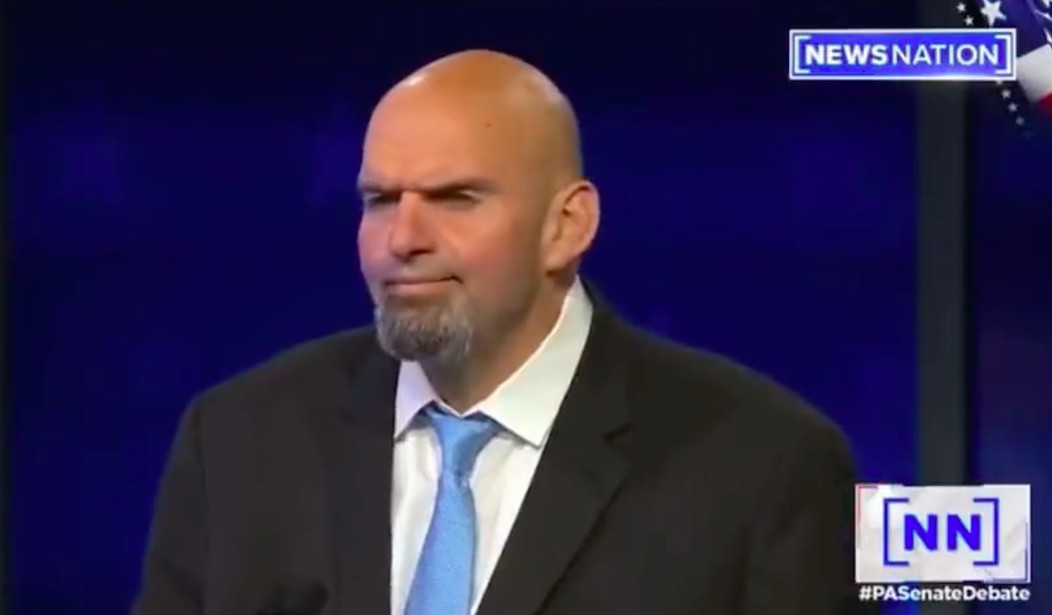
Senator John Fetterman's (D-PA) health challenges after his near-fatal stroke would probably never go away once he entered office. According to a new story from the New York Times, it appears Fetterman realizes just how difficult the job will be while still recovering from brain damage.
The Senate has done several accommodations within the upper house chamber so Fetterman can understand what is being said. This includes:
- A monitor that rises or lowers, depending on whether he sits or stands, and that provides closed captioning
- Another monitor at the center dais, along with a custom desk stand, for when he takes his shifts presiding over the Senate
- Live audio-to-text transcription for the committees Fetterman is serving on.
Despite all of this, sources told the Times Fetterman regrets not taking more time to recover after experiencing his stroke.
"What you’re supposed to do to recover from this is do as little as possible," Adam Jentleson, his chief of staff, explained. Instead, Fetterman "was forced to do as much as possible — he had to get back to the campaign trail. It’s hard to claw that back."
His schedule has gotten even more demanding now that he is a senator, between meetings and appearances in Washington, D.C, and Pennsylvania:
The stroke — after which he had a pacemaker and defibrillator implanted — also took a less apparent but very real psychological toll on Mr. Fetterman. It has been less than a year since the stroke transformed him from someone with a large stature that suggested machismo — a central part of his political identity — into a physically altered version of himself, and he is frustrated at times that he is not yet back to the man he once was. He has had to come to terms with the fact that he may have set himself back permanently by not taking the recommended amount of rest during the campaign. And he continues to push himself in ways that people close to him worry are detrimental.
The true nature of Fetterman's capabilities was heavily called into question by Republicans during the midterm elections. The few times mainstream media reporters noted his lack of comprehension skills, they were criticized not just by Democrats but other people within the media. During the campaign, supporters touted a doctor's note from Dr. Clifford Chen, who was a donor to Fetterman and other Democrats, proving he could serve in the Senate.
Fetterman has had to spend two nights in the hospital out of an abundance of caution because he was feeling extreme fatigue.


Join the Conversation
VIP members get the ability to comment on articles.