




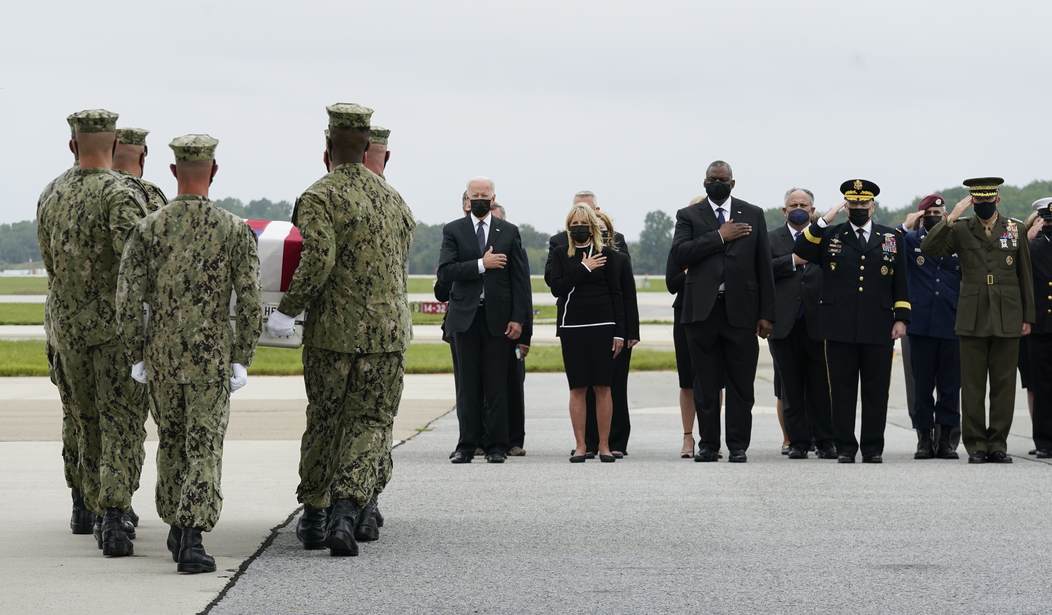
Nearly two years after an ISIS-K suicide bomber attacked the Kabul Airport, killing 13 service members and injured many more, Pentagon officials insist the attack was “not preventable.”
But a new report alleges that U.S. military commanders were not only aware of the threat ahead of time, but they also missed two chances to eliminate the deadly terrorist network behind the attack.
First reported by the Daily Mail, the findings come from a new book, 'Kabul: The Untold Story of Biden's Fiasco and the American Warriors Who Fought to the End,' authored by Jerry Dunleavy and James Hasson, and published on August 15, the two-year anniversary of the Taliban takeover.
Dunleavy and Hasson obtained information through freedom of information requests, Pentagon documents and interviews with military personnel involved in the attack in order to analyze the bombing.
Their report shows that nine days prior to the attack, U.S. officials gathered intelligence showing ISIS-K planned to strike U.S. and international forces at the airport. Dunleavy and Hasson point to the Pentagon’s own bombing report, which included a sworn statement from an officer with 'target engagement authority' to conduct strikes defending American forces.
“Intelligence indicated that I.S.I.S.-K planned to attack international forces and the Taliban in order to disrupt the 'establishment of stability and governance,” the officer testified.
In response, the officer “conducted a targeting effort focused on ISIS K threats leading into Kabul,” and requested strike permission.

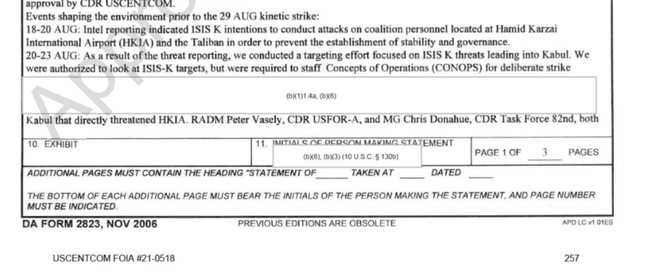 The request was rejected, however, by Rear Admiral Peter Vasly, commander U.S. Forces-Afghanistan Forward and Major General Chris Donahue, who worried about provoking a “negative response” from the Taliban.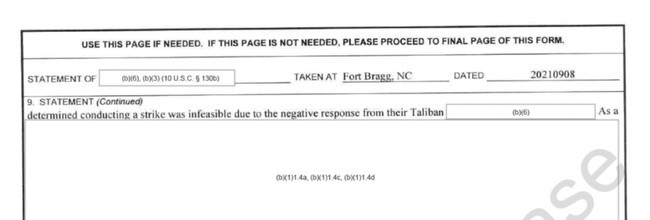
Instead of striking the cell themselves, U.S. commanders asked Taliban forces to raid the ISIS-K location. The Taliban never attacked the ISIS-K, however, and the bomber was left free to attack the airport. 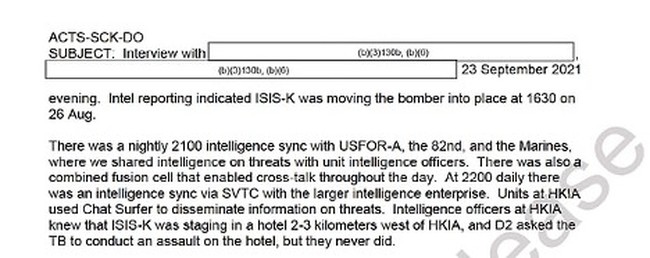 The information contradicts the Pentagon’s public claim that the Taliban didn’t know about the impending attack, and that American intelligence about potential threats was not specific.
“Based upon our investigation, at the tactical level this was not preventable,” concluded Brig. Gen. Lance Curtis.
For his part, Hasson blasted U.S. leadership.
"Leaders in D.C. made one unforced error after another throughout the withdrawal, and each mistake compounded the risk to the men and women on the ground,” Hasson told the Daily Mail.
"Ultimately, it led to U.S. commanders tailoring decisions to the desires of Taliban leaders who had them surrounded, and to the loss of thirteen brave Americans."







Join the conversation as a VIP Member