





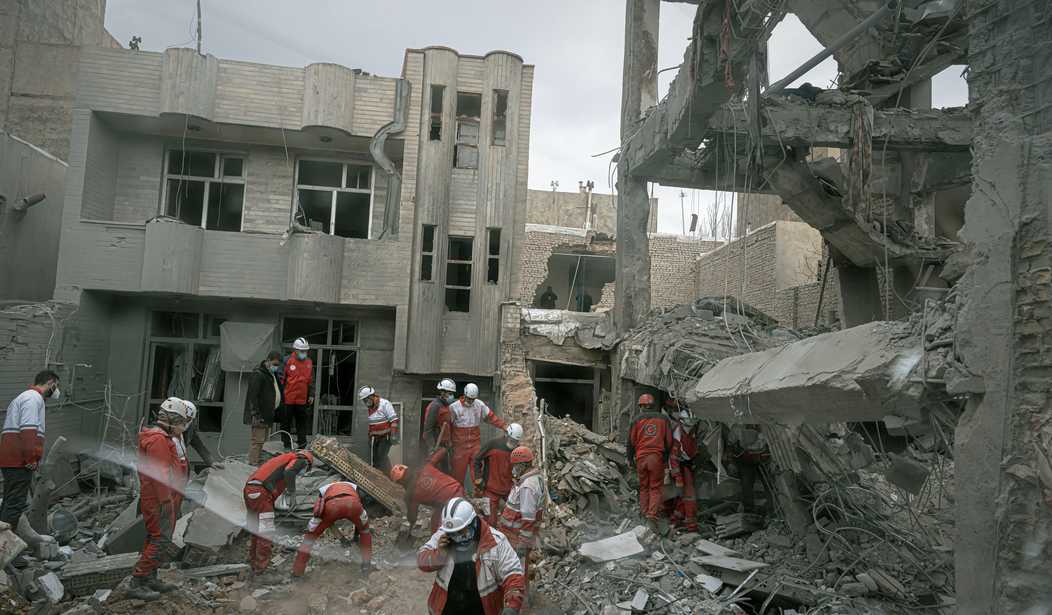
U.S. special forces crossed into Iran on Friday in a combat search-and-rescue mission after Iranian forces shot down an F-15E fighter jet in the region. This marks the first known ground entry into the country’s borders since the war began on February 28.
The downing of the U.S. jet triggered a rescue effort involving special operations aircraft and ground teams operating in hostile territory, CBS News reported.
Navy SEAL Team Six entered the region to rescue the second pilot, who managed to elude Iranian forces long enough to be extracted. U.S. B-1 bombers backed up the team as they moved to get him to safety.
The operation, which took about 36 hours, involved a disinformation campaign carried out by the CIA in Iran to prevent the regime from locating and capturing the pilot. Air cover used heavy gunfire during the rescue to prevent Iranian forces from closing in on the pilot. U.S. Air Force jets pounded Iranian troops moving closer to the area.
🚨 BOOM: US B-1 bombers UNLEASH nearly 100 2,000-pound satellite-guided bombs during the EPIC airman rescue in Iran, while MQ-9 Reapers STRIKE fighters trying to capture our guy.
— Gunther Eagleman™ (@GuntherEagleman) April 6, 2026
‘GOD IS GOOD!’ pic.twitter.com/O1oC8YK4oT
President Donald Trump on Saturday issued a 48-hour ultimatum to the regime to reopen the Strait of Hormuz or face overwhelming military force.
Iranian media circulated photos of the jet’s wreckage. It was the first loss of a manned U.S. aircraft during the conflict after 13,000 missions flown and 12,300 targets struck since Operation Epic Fury started.
U.S. helicopters and other aircraft have aided in the search-and-rescue operation. One of the helicopters rescued the first pilot shortly after the crash It sustained small arms fire during the mission and one crew member was wounded.
Mission to Recover Downed F-15E Aircrew Puts Combat Search And Rescue in the Spotlight
— The Aviationist (@TheAviationist) April 4, 2026
The loss of an F-15E in Iran prompted specialized CSAR units to spring into action, with a multitude of assets working together to recover all missing aircrew. Here’s how.
Story:…
Another aircraft took fire and forced its pilot to eject over the Persian Gulf, according to CBS News. That pilot was successfully recovered.
For the seventh time on Saturday, missiles launched from Iran triggered sirens in multiple cities and towns in Israel.
Fire and Rescue services said their teams were treating two sites in East Jerusalem where buildings were damaged in the latest round. It wasn't immediately clear if the impact was from parts of a missile or of an interceptor. No injuries were reported.
The military had said its defense systems were activated to try and intercept the missiles.
Hezbollah on Saturday also kept up its rocket fire on communities in northern Israel. Most were intercepted and there were no reports of injuries.
"High-end combat against a capable, integrated air defense system is never risk-free," said retired Lt. Gen. David A. Deptula, dean of AFA's Mitchell Institute for Aerospace Studies, in a statement. "What distinguishes modern Western airpower is not invulnerability, but the ability to survive, penetrate, and sustain operations while keeping losses exceptionally low."
DARING Rescue Mission Continues For F-15E Strike Eagle Aircrew in Iran https://t.co/1lfQvUB2Oh via @YouTubewhere’s the WIZO ?
— Drifter (@HighPlnsDrftr) April 4, 2026
I want one of these. What’s stopping me scoop the downed Wart Hog up for repair ? pic.twitter.com/yPhDPIzOtl
Iran’s government quickly used the incident for propaganda purposes. In a post on Telegram, parliamentary speaker Mohammad-Bagher Ghalibaf warned days earlier that “the enemy publicly signals negotiations while secretly planning a ground invasion.”
In a post on X, Ghalibaf mocked the United States, saying the war had been “downgraded from ‘regime change’ to ‘Hey! Can anyone find our pilots? Please?”
Iran’s blockade of the Strait of Hormuz has choked off one-fifth of the world’s oil supply. Barrel prices surged above $110 a barrel as a result.
Editor’s Note: Do you enjoy Townhall’s conservative reporting that takes on the radical Left and woke media? Support our work so that we can continue to bring you the truth.
Join Townhall VIP and use promo code FIGHT to receive 60% off your membership.


Join the Conversation
VIP members get the ability to comment on articles.