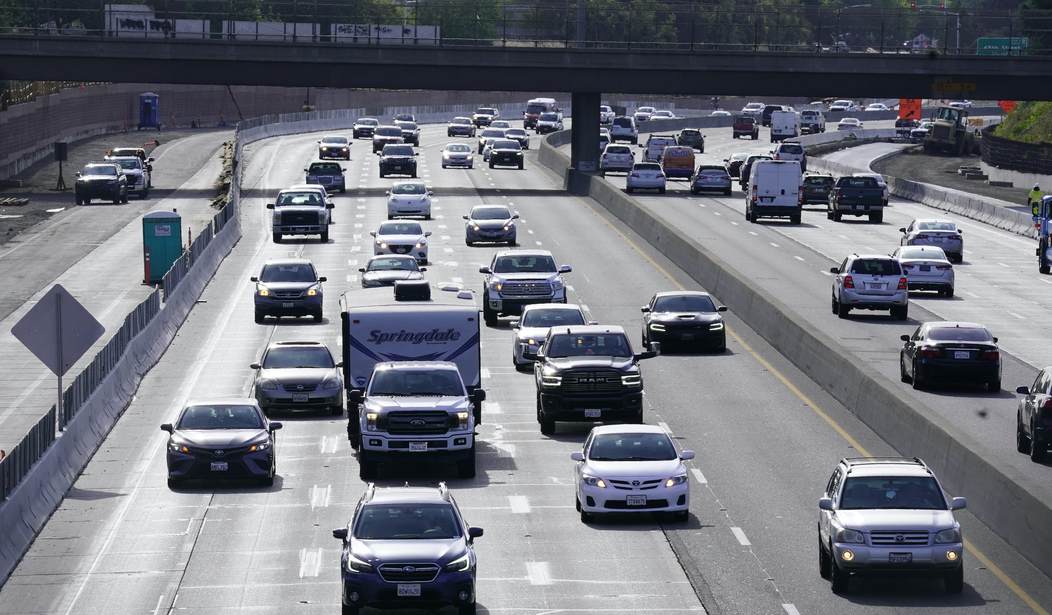

A bill passed in 2021 under the Biden administration is making its way back into the headlines, as concerns over government surveillance intensify. A regulation, tucked away in the legislation, is set to require all vehicles sold in the United States to include active advanced surveillance systems by 2027.
Every new car in the U.S. will be required by law to have tech that puts constant surveillance on the driver by 2027.
— Pubity (@pubity) April 25, 2026
AI in your car will determine if you're sober and fit to drive, automatically turning off the vehicle if it determines you're a danger on the road. pic.twitter.com/7SDbAJ2GyC
DYSTOPIAN doesn't even begin to cover it. You'll want to sit down for this one.. hopefully it's not in your new black mirror vehicle. 👇
— Jessica Rojas 🇺🇸💪 (@VoicesUnheard) April 26, 2026
In new patents filed with the US Patent and Trademark Office (Serial No. 20250104469), Ford is envisioning a future where your pickup turns… pic.twitter.com/6tURFLtyjZ
The regulation is Section 24220 of the Infrastructure Investment and Jobs Act, which requires new passenger vehicles (starting around model year 2027) to include driver-monitoring systems that passively track indicators such as eye movement, pupil size, head position, drowsiness cues, and, in some cases, lane-control behavior, using infrared cameras and sensors.
It also requires the technology to be capable of “preventing or limiting motor vehicle operation” if impairment is detected. This could include blocking the vehicle from starting, reducing its speed, or forcing it to pull over.
The requirement was initially pitched as a drunk- and impaired-driving safety measure, as it would monitor driver alertness and could help prevent the thousands of deaths each year in the United States caused by impaired driving.
However, concerns have been raised about potential failures of this so-called “safety” system in situations that may reflect normal driving behavior for some individuals, as well as the lack of clarity over where the collected data would be sent or how it would be used. Currently, it is unclear whether the information collected could be shared with insurance companies, manufacturers, or even law enforcement.
It also doesn’t take much imagination for those wary of government oversight to consider how such a system could be abused, or even be a threat to driver safety.
So far, Trump administration officials have not broadly addressed the requirement. However, Jonathan Morrison, who was tapped to lead the National Highway Traffic Safety Administration, said during his confirmation hearing that enacting the safety regulation “is a day one priority of mine,” seemingly framing it as a safety requirement rather than a broader surveillance measure.
It remains unclear if any broader effort to halt the regulation, either from elected officials or the public at large, will materialize.