





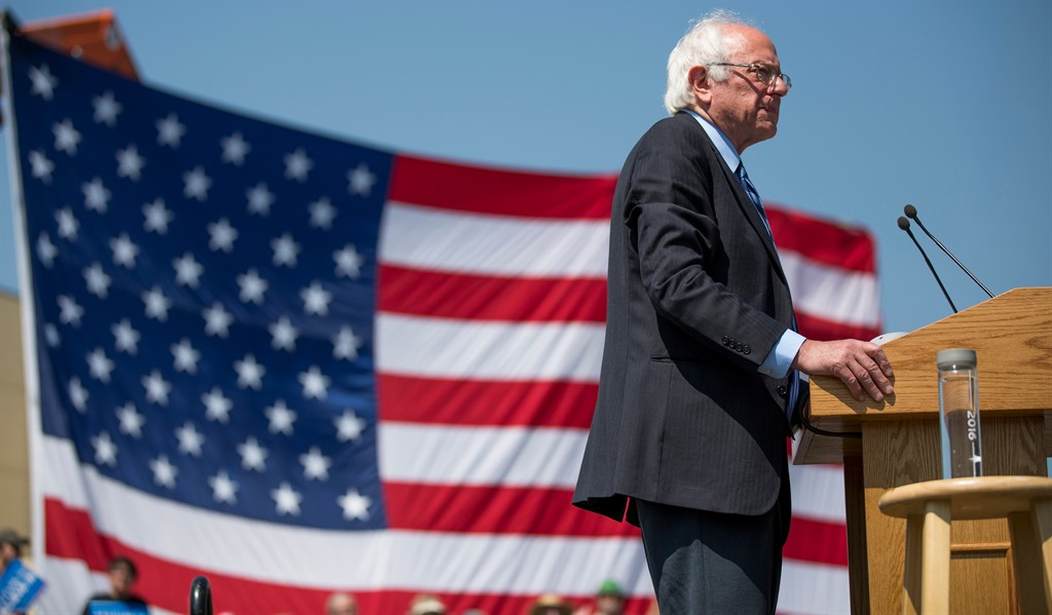
Democratic presidential candidate Sen. Bernie Sanders (I-VT) has some pretty radical ideas about healthcare, even for the Democratic Party. Namely, Sanders wants to create a "medicare for all" universal health care system similar to those found in Europe. Sanders claims that this system will cost about $13.8 trillion over the next decade, which would be paid via tax increases. A new study, however, is suggesting that Sanders' math may be more than a tiny bit off: the "medicare for all" system may actually cost $32 trillion--more than double the estimate.
Now, a new study from the left-leaning Urban Institute corroborates many of these concerns, finding that Berniecare would cost more than twice as much as the $13.8 trillion price tag touted by the Sanders campaign.
The authors from the Urban Institute estimate that Berniecare would increase federal health care expenditures by $32 trillion, 233 percent, over the next decade. The $15 trillion in additional taxes proposed by Sanders would fail to even cover half of the health care proposal’s price tag, leaving a funding gap of $16.6 trillion. In the first year, federal spending would increase by $2.34 trillion. To give some context, total national health expenditures in the United States were $3 trillion in 2014.
Oh my.
Any way you spin it, that's a lot of money and a whole lot of tax increases. Granted, there's very little chance Sanders secures the nomination, and an even smaller one that he would win the presidency, but this is still some eye-opening numbers.









Join the conversation as a VIP Member