







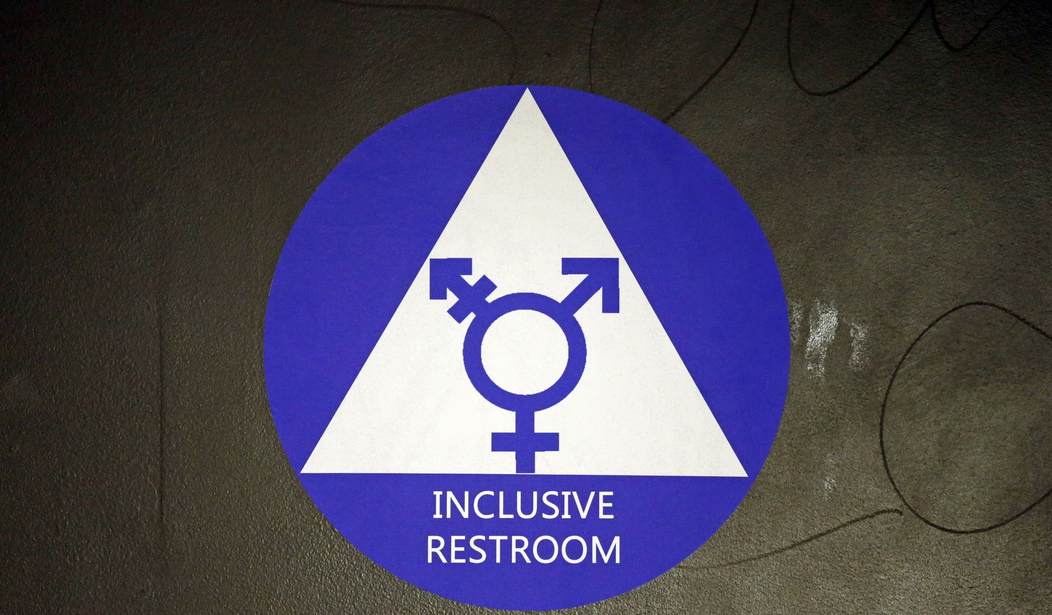
Fifteen additional states have now joined Nebraska in supporting a Michigan funeral home’s right to fire a transgender employee.
In 2013, R.G. & G.R. Harris Funeral Homes terminated the employment of Anthony Stephens, after Stephens told a supervisor of his plans to become “Aimee”, and transition from being a man to being a woman. Stephens intended to begin dressing like and identifying as a woman one year prior to his planned surgery. He had been employed at the funeral home since 2007, as a funeral director and embalmer.
But according to funeral home owner and president Thomas Rost, Anthony’s dressing like a woman would be in violation of the funeral home’s dress code. Furthermore, Rost was also concerned about Anthony using the women’s restroom, and said that to employ a man presenting himself as a woman would go against Rost’s Christian religious beliefs. Rost is a devout Baptist.
After Anthony Stephens was fired, the Equal Employment Opportunity Commission (EEOC) filed a lawsuit against the funeral home on Stephens’ behalf. Once President Donald Trump was elected, the American Civil Liberties Union (ACLU) became involved as well, allegedly concerned that the administration would not be favorable to the case.
Initially, federal district court judge Sean Cox ruled in favor of the Detroit-area funeral home, which was represented by well-known First Amendment-champion Alliance Defending Freedom.
The case was said to rest on whether a funeral home owner could prevent a biological male from wearing a skirt at work. Rost had testified that he had no problem with Anthony identifying as a woman when he was off-duty, but merely that he didn’t want him wearing a skirt while at the funeral home. Judge Cox found that gender identity is not a protected class under Title VII.
According to the court, "Congress can change that by amending Title VII. It is not this Court's role to create new protected classes under Title VII."
But this past March, an appeals court ruled against R.G. & G.R. Harris Funeral Homes, declaring they had indeed violated a federal anti-discrimination ban when firing Stephens.
And now last week, Nebraska’s State Attorney General Doug Peterson filed a friend-of-the-court brief on behalf of 16 states, urging the United States Supreme Court to hear the funeral home’s case.
In the brief, Peterson argues that Congress never intended for Title VII of the 1964 Civil Rights Act to address discrimination against gay, lesbian, bisexual, and transgender employees. He is also claiming that the 6th US Circuit Court of Appeals, in ruling against the funeral home, has remade the law “to its own liking.”
If the United States Supreme Court does indeed take up the funeral home’s case, it remains unknown whether the Department of Justice, under Attorney General Jeff Sessions, will allow the EEOC to continue participating in the lawsuit. Sessions issued a memo last year stating the law does not cover discrimination against transgender individuals.
The Title VII provision in question prevents employers from discriminating on the basis of “race, color, religion, sex or national origin.”
States joining Nebraska in filing the brief are Alabama, Arkansas, Kansas, Kentucky, Louisiana, Maine, Mississippi, Oklahoma, South Carolina, South Dakota, Tennessee, Texas, Utah, West Virginia and Wyoming.


Join the Conversation
VIP members get the ability to comment on articles.