





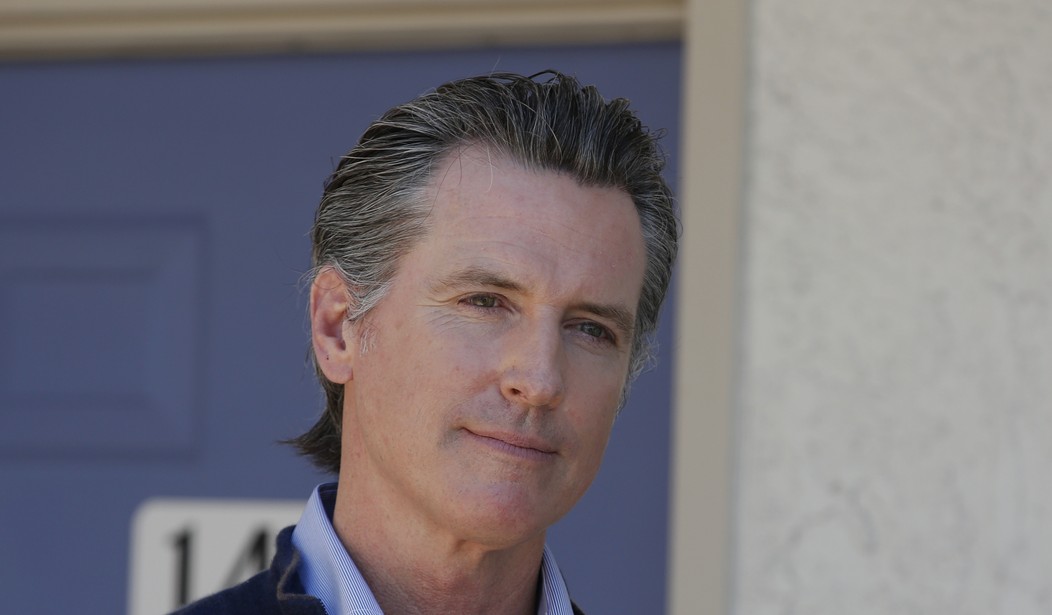
Late Friday night, the United States Supreme Court delivered a blow to some of California Gov. Gavin Newsom's (D) Wuhan coronavirus restrictions. In a 6-3 decision, the high court ruled that the state can't outright ban indoor church services but they be capped at 25 percent capacity. The state's ban on singing and chanting indoors can also remain in effect.
The restrictions were put in place as part of the Golden State's response to the coronavirus pandemic. Each area of the state was put in tiers depending on the transmission rate in a county. Those counties that were in the purple tier – the most restrictive tier because of its weekly transmission rate – were previously banned from operating "non-essential indoor business operations."
The South Bay United Pentecostal Church brought forth the lawsuit, saying the state's restrictions violated the First Amendment
“California’s shoppers are entitled to indoor, climate-controlled spaces, but not California’s worshipers,” the church's lawyers wrote in the court filing.
Roberts made the argument that the state overlooked First Amendment protections.
“The state’s present determination — that the maximum number of adherents who can safely worship in the most cavernous cathedral is zero — appears to reflect not expertise or discretion, but instead insufficient appreciation or consideration of the interests at stake,” Chief Justice John Roberts wrote in his concurring opinion.
Justice Amy Coney Barrett said the ban on singing indoors can remain in effect because it's unclear whether or not church worshippers are being targeted or if the rule applies across the board.
"As the case comes to us, it remains unclear whether the singing ban applies across the board (and thus constitutes a neutral and generally applicable law) or else favors certain sectors (and thus triggers more searching review)," Barrett wrote in her concurring opinion. "Of course, if a chorister can sing in a Hollywood studio but not in her church, California's regulations cannot be viewed as neutral. But the record is uncertain, and the decisions below unfortunately shed little light on the issue."
The liberal justices on the court dissented, saying the Supreme Court's actions are effectively "worsening the pandemic" by "making a special exception for worship services." Justice Elena Kagan argued that the court isn't looking at church services in the same way as other activities where a large gathering takes place "in close proximity for extended periods of time."
“I fervently hope that the Court’s intervention will not worsen the Nation’s COVID crisis. But if this decision causes suffering, we will not pay. Our marble halls are now closed to the public, and our life tenure forever insulates us from responsibility for our errors. That would seem good reason to avoid disrupting a State’s pandemic response. But the Court forges ahead regardless, insisting that science-based policy yield to judicial edict,” Kagan wrote in the dissenting opinion.
The church's attorney, Charles LiMandri, said he and his clients were "heartened by this order" and thanked the Supreme Court for "upholding religious liberty."
As it currently stands, 99.9 percent of California is under purple tier restrictions.

Join the Conversation
VIP members get the ability to comment on articles.