





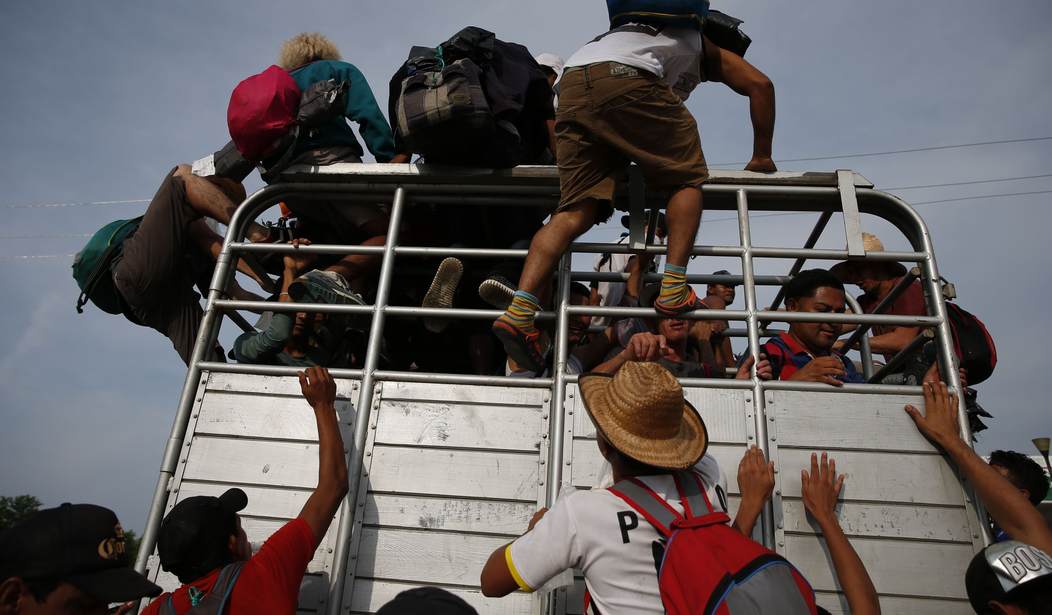
Those who rode the Central American Caravan a couple months ago have come to a stark realization: President Donald Trump isn't backing down from his position on immigration. The chances of them being granted asylum is unlikely. While the riders remain hopeful that they'll be able to eventually get to the United States, they're also planning for the likelihood that Tijuana, Mexico is as close as they're going to get.
Mexican president Andrés Manuel López Obrador is following up with the Estas en Tu Casa plan he established, which would provide caravan riders with asylum in Mexico, the first step in getting adults jobs and kids placed in school.
In order to qualify for asylum in Mexico, an immigrant must be in the southern states of Chiapas and Oaxaca. Those who fail to qualify for refugee status can be deported back to their home country.
Another vital part of the plan is to invest $30 billion in Central American countries. And Mexico's main partner is none other than China.
Although many riders said they refused to accept Obrador's offer, they've now changed their mind, the New York Times reported. Rodolfo Figueroa, an official with the National Immigration Institute, told the Times that most of the riders who applied for "humanitarian visas" have been approve. Over the last month, 2,200 visas have been approved. Around 1,300 riders have either been deported or voluntarily returned home.
The El Barretal, a concert venue that is currently holding a portion of the caravan riders, has been set up as a makeshift shelter filled with tents. Those who were granted work visas work at nearby markets as meat and poultry vendors or they serve as truck drivers, construction workers or laborers in the city’s electronics manufacturing plants.
Since Mexico began awarding work visas and asylum for caravan riders, the number of people at the El Barretal shelter has significantly decreased. At the height of riders' stay, the shelter had around 3,000 people. That number has now dropped to 1,000. The reason? Some found their own places to live, others returned home and some even decided to cross into the United States.
José Daniel Castro, a 44-year-old Honduran, decided his best bet was to stay in Mexico. He came to that conclusion after being deported from the United States on three separate occasions.
“I can work here and make a little money,” Castro told the Times. “That is already more than I can say about back home. In the end, all we wanted was to work and help our loved ones back home.”
Caravan rider Taracio Pérez shared a similar sentiment.
“We are fighting, and hustling,” said Pérez, who scrubs floors in a downtown Tijuana restaurant and sells bottles of soda on the streets. “The dream was and is the United States. But it has all become so difficult and dangerous for us that the best thing to do is work while we wait for things to get better.”



Join the Conversation
VIP members get the ability to comment on articles.