


As negotiations between the United States and Iran continue over the terror regime's nuclear program, the White House is arguing any criticism about Congress not being involved in negotiations is coming from Republicans with political motives.
But a closer look at members of Congress criticizing the White House deal with the Iranians shows it isn't just Republicans who are concerned about being frozen out of the process. A number of Democrats have also voiced their concerns. In fact, Democrats in the Senate are so skeptical of the White House refusal to involve Congress that Republican Bob Corker may have enough votes to override a deal should the President sign one at the end of June.
Regardless of bipartisan opposition, the White House is pinning opposition and criticism of the current deal and process on Republicans. The administration is painting Republican concerns as illegitimate while at the same time entertaining the same concerns of "principled" Democrats.
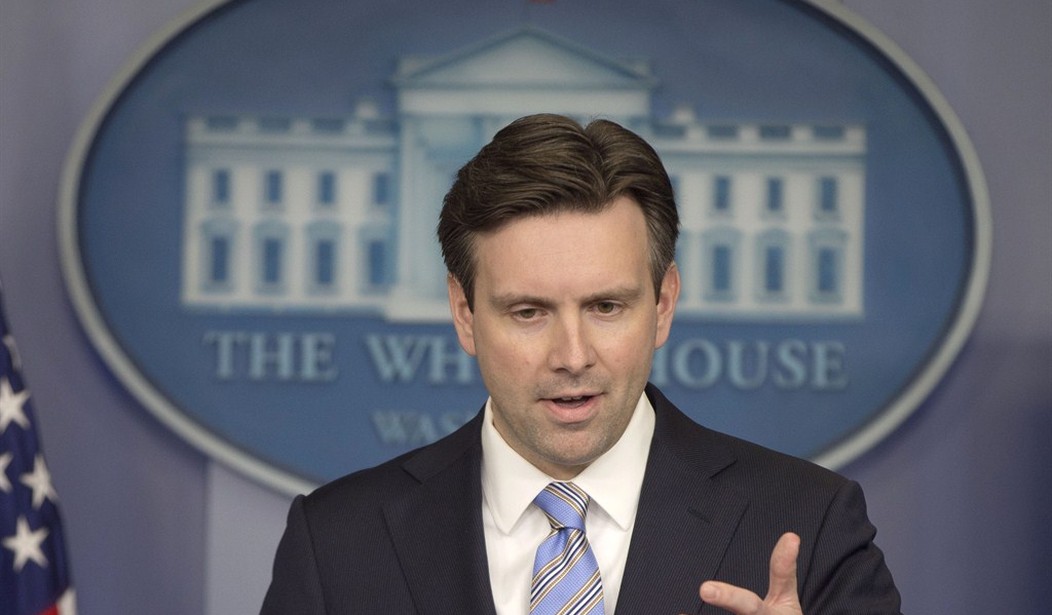
"My view is that there are a number of members of Congress that have considered this in a principled way. And those are members of Congress with whom we can have legitimate conversations about our efforts to try and prevent Iran from obtaining a nuclear weapon," Earnest said Monday afternoon. "There are a substantial number of members of Congress, all of them Republicans as far as I can tell, who have engaged in an effort to just undermine the talks from the very beginning."
Earnest once again slammed Senator Tom Cotton (R-AR) and other Republicans who sent a letter directly to Iran's Ayatollah last month explaining how any deal reached by the White House without Congress will be temporary.
Recommended

It has come to our attention while observing your nuclear negotiations with our government that you may not fully understand our constitutional system. Thus, we are writing to bring to your attention two features of our Constitution—the power to make binding international agreements and the different character of federal offices—which you should seriously consider as negotiations progress.
First, under our Constitution, while the president negotiates international agreements, Congress plays the significant role of ratifying them. In the case of a treaty, the Senate must ratify it by a two-thirds vote. A so-called congressional-executive agreement requires a majority vote in both the House and the Senate (which, because of procedural rules, effectively means a three-fifths vote in the Senate). Anything not approved by Congress is a mere executive agreement.
Second, the offices of our Constitution have different characteristics. For example, the president may serve only two 4-year terms, whereas senators may serve an unlimited number of 6-year terms. As applied today, for instance, President Obama will leave office in January 2017, while most of us will remain in office well beyond then—perhaps decades.
What these two constitutional provisions mean is that we will consider any agreement regarding your nuclear-weapons program that is not approved by the Congress as nothing more than an executive agreement between President Obama and Ayatollah Khamenei. The next president could revoke such an executive agreement with the stroke of a pen and future Congresses could modify the terms of the agreement at any time.
We hope this letter enriches your knowledge of our constitutional system and promotes mutual understanding and clarity as nuclear negotiations progress.
A deal is expected by the end of June after talks were extended last week. Guy has all of the details about what the deal looks like at this point and where talks may end up in coming months.











Join the conversation as a VIP Member