


As long as President Obama is in the White House, tax reform is dead in Washington. House Republicans simply will never agree to the tax hikes Obama insists must be part of any change to the tax code.
But Obama will not be in the White House forever. And when he does leave, the tax policies Republicans will push on Capitol Hill in 2017 will look nothing like they did under President Bush. Just look at the tax plan House Ways and Means Chairman Dave Camp (R-MI) submitted last week. The Washington Examiner's David Drucker reports:
The House Ways and Means Committee chairman sought a blueprint that was impervious to charges that it would benefit the wealthy and burden the middle class. That was a direct reaction to the beating Republicans took on the issue in the 2012 presidential contest, with Obama's “fairness” pitch to increase taxes on the so-called wealthy resonating better than GOP nominee Mitt Romney's traditional Republican proposal for across-the-board cuts to stimulate economic growth.
Breaking with GOP orthodoxy, Camp also wanted a plan that, while lowering tax rates for all income brackets, received a “revenue neutral” score from Congress' nonpartisan accounting agencies. Camp wanted to avoid potent Democratic attacks that tax cuts increase the deficit and cost Washington money it needs for cherished programs. Republicans had long dismissed the concept of paying for tax cuts on the grounds that they create jobs and boost revenue, while asserting that the government's money belongs to the people and reducing their tax load shouldn't require offsets.
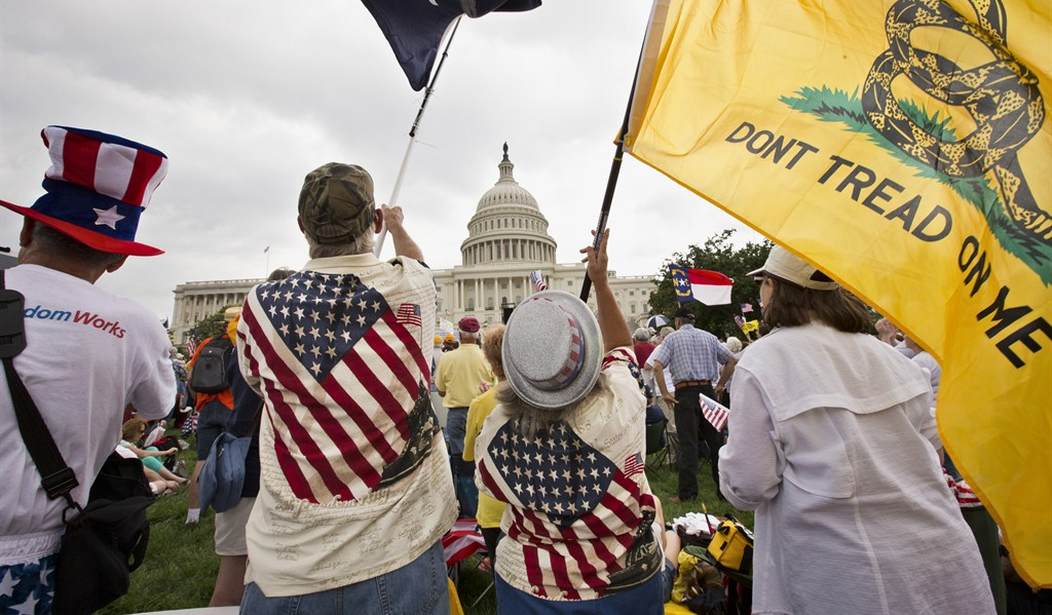
Camp's draft has received perhaps the most attention for proposing to simplify the tax code by scaling back typically politically sacred exemptions, such as the mortgage interest deduction popular with voters and the housing industry. For years, Republicans -- including Camp -- promoted these carve-outs as crucial economic drivers. But in a nod to the Tea Party's sway with House Republicans, Camp was liberated to target a host of breaks the conservative grassroots deride as “crony capitalism.”
Recommended

And there is no doubt about it: tax exemptions and credits are a prime example of "crony capitalism" that the Tea Party should be fighting. Even the CBO admits that "tax expenditures increase the size and scope of federal involvement in the economy." No limited government conservative could possibly support that.
Worse, tax breaks overwhelmingly benefit the wealthiest Americans. Almost 90 percent of the state and local tax deduction (which Camp would eliminate) goes to households making over $100,000 as does 77 percent of the home mortgage deduction (which Camp caps for properties worth over $500,000).
And Drucker reports, eliminating these federal government interventions, is popular:
One survey, conducted by the American Action Network in May, tested “base GOP” House districts, “swing” districts and “lean Democrat” districts and found support for Camp’s mortgage deduction changes, respectively, at 68 percent, 68 percent and 65 percent. The same poll asked likely voters in those districts whether they could support changes to other popular deductions, such as those affecting education costs and state and local taxes, in exchange for cuts to federal income tax rates. Support clocked in at 67 percent, 60 percent and 55 percent, respectively.
The Camp tax plan is far from perfect. For what appear to be purely scoring reasons, it lengthened the timeframe businesses must use to deduct capital expenditures when it should have shortened them, and it did nothing to lower the payroll tax burden on all working Americans either.
But the direction Republican party is heading is pretty clear, especially when the Camp plan is compared to Sen. Mike Lee's (R-UT) tax plan, which also eliminated many tax breaks for the rich. The GOP is moving in a populist direction. One that frowns upon using the tax code to, in the words of the CBO, "further societal goals by providing benefits to particular activities, entities, or groups of people."
This is not the populism of the Democratic party. There will be no net tax hikes or higher spending. And Republicans will not return to the big government of Bush's compassionate conservatism.
No, the future of the Republican party is a libertarian populism, where Americans have learned that by trying to do too much, and often advantaging the wealthy and politically connected when it does, the federal government has become a force for growing inequality and economic immobility.











Join the conversation as a VIP Member