








Sacramento County Superior Court Judge Allen Sumner on Friday said California must consider early parole for thousands of sex offenders, the Associated Press reported.

About the Lawsuit
Janice Bellucci, a Sacramento attorney and president of Alliance for Constitutional Sex Offense Laws, was the one who filed the lawsuit on behalf of sex offenders. According to Bellucci, the rules the CDCR were putting in place directly conflicted "with the ballot measure's language and voter's intent in approving Proposition 57."
From the Associated Press:
Bellucci argued the measure requires earlier parole consideration for any sex crime not on the state's narrow list of 23 violent felonies, which includes murder, kidnapping and forcible rape.
That could allow earlier parole for those convicted of raping a drugged or unconscious victim, intimately touching someone who is unlawfully restrained, incest, pimping a minor, indecent exposure and possessing child pornography.
The judge said corrections officials can make the case for excluding those offenders as they rewrite the regulations, but Bellucci said she will sue again if officials go too far.
According to a press release on the group's website, Bellucci's focus is primarily on how the term "non-violent felony" is defined:
The focus of the pending lawsuit is how the term “non-violent felony” is to be defined. Although Prop. 57 does not include a definition of “non-violent felony”, petitioners argued that current state law which defines “violent felony” should be used in CDCR’s regulations. If CDCR used that law (Penal Code Section 667.5), only 9 out of more than 100 sex offenses would be excluded from early parole consideration. The judge did not agree with this argument because he said there is insufficient evidence to identify the voters’ intent regarding use of that current law.

About the Proposition That Made This Ruling Possible
According to Sumner, the California Department of Corrections and Rehabilitation (CDCR) must rewrite regulations for Proposition 57, a 2016 ballot initiative that "supported increasing parole and good behavior opportunities for felons convicted of nonviolent crimes and allowing judges, not prosecutors, to decide whether to try certain juveniles as adults in court."
Because Proposition 57, also known as the California Parole for Non-Violent Criminals and Juvenile Court Trial Requirements Initiative, was written so broadly, sex offenders fall into this category of being considered for early parole. What makes things even more convoluted: when Gov. Jerry Brown campaigned for this initiative, he promised voters all sex offenders would be excluded from being considered for early parole if Proposition 57 passed.
The judge dismissed Deputy Attorney General Maria Chan's argument that Proposition 57 gave CDCR "officials the discretion to exclude any class of offenders whose release might harm public safety."
"If the voters had intended to exclude all registered sex offenders from early parole consideration under Proposition 57, they presumably would have said so," Sumner said.
According to the Associated Press, roughly half of the state's 20,000 sex offenders could qualify for early release under Proposition 57.

What the Department of Corrections Must Do
Sumner told the California Department of Corrections and Rehabilitation that they must:
• Narrow the scope of who is excluded from Proposition 57 benefits down to those now serving time for violent sexual offenses.
• Inmates who previously served time for a sex crime and are now incarcerated for a different crime must be considered for early release.
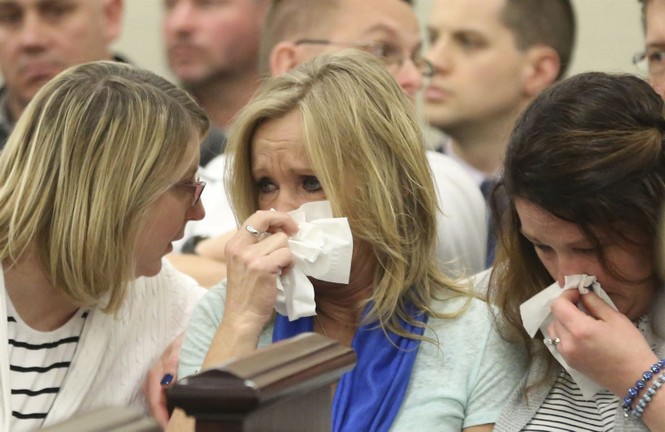
A Slap in the Face to Victims Everywhere
Judge Sumner's ruling is disheartening to hear. While his ruling is a setback for sexual assault survivors everywhere, the real fault lays on those who drafted Proposition 57. While their intentions may have been great and they didn't want sex offenders to be included in this now-law, they didn't do their due diligence in making sure the initiative was written in a way that resulted in the desired outcome. And now victims are paying the price.
Ultimately, it's up to the Californians for Public Safety and Rehabilitation committee, which is compromised of various government officials, political parties, organizations and unions to get the ball rolling on correction the language issue. Because there's nothing worse than being a victim who thought you received justice.



Join the Conversation
VIP members get the ability to comment on articles.