
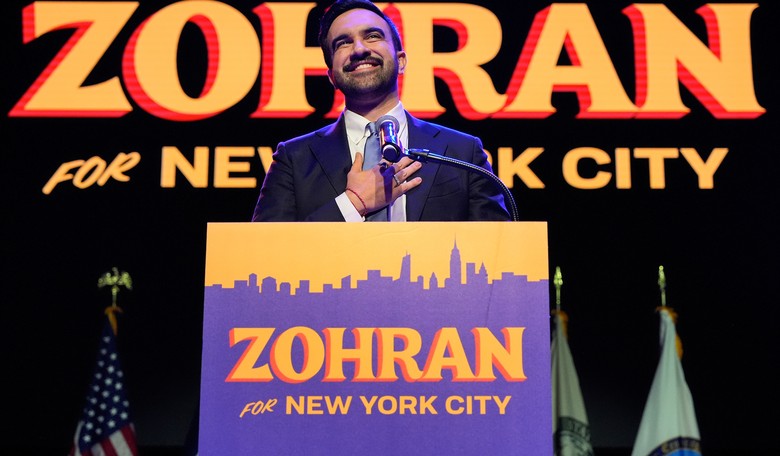
The New York Times DealBook Summit kicked off yesterday, bringing together prominent business executives, policymakers, and cultural figures, including Elon Musk, Palmer Luckey, Sam Altman, Canadian Prime Minister Mark Carney, and New York City Mayor Zohran Mamdani, for live interviews and panel discussions.
In his interview with the city’s socialist mayor, DealBook founder Andrew Ross Sorkin pressed Mamdani on the math behind his plan for city-run grocery stores. How could a business that typically operates on profit margins of just one to four percent afford to offer 30 percent discounts on major food items? And how would the subsidies needed to cover the shortfall affect competing supermarkets?
Mamdani’s response offered a political rationale rather than a financial explanation. If we deem something necessary for people to live, he argued, it becomes “necessary” for government to support and subsidize it.
Zohran Mamdani when asked about subsidizing public grocery stores: “I take a step back, and I think about when society deems something necessary for the public, then we subsidize its creation and its operation. We know that so much of what we rely on from the public sector is not being paid for at price. Whether it be the subway or a public school or a library or sanitation, we have determined this is necessary. And when I think about what is necessary for a dignified life in New York City, and anywhere frankly, it is very easy to come back to food because you cannot live without it. And when you were saying, “Explain the math to me,” in some ways, that’s the question that New Yorkers are asking themselves every day when they go to the grocery store: “Explain the math to me of how the same thing that I used to buy a couple of years ago has now skyrocketed in price.”
— More Perfect Union (@MorePerfectUS) November 18, 2026
"I take a step back and I think about when society deems something necessary for the public, then we subsidize its creation and its operation," Mamdani said. "We know that so much of what we rely on from the public sector is not being paid for at price, whether it be the subway or a public school or a library or sanitation. We have determined this is necessary. And when I think about what is necessary for a dignified life in New York City and anywhere, frankly, it is very easy to come back to food because you cannot live without it."
But notice several things. First, even the services he cites already struggle to deliver quality at a reasonable cost. Second, the American founding did not see government as responsible for providing a “dignified life.” Our Constitution emphasizes limits on what government can do and protections for individual liberty, negative rights. Progressives, in the tradition of Woodrow Wilson and FDR, champion positive rights, which require government to provide goods and services.
While negative rights protect liberty, autonomy, and help to prevent tyranny, positive rights by definition require a larger government with more control over individuals' lives, the power to take from some to provide for others. A bastardization of what the Founding Father fought for.
But this isn't complicated. Look around the globe, or even right here in the United States. Name a government-subsidized industry that isn’t reliant on the tech sector, and you’ll find declining quality, massive waste, and persistent complaints, from healthcare and higher education to public housing, transit, and agriculture. Why should we expect government-run grocery stores to be any different?
But Mamdani went on to appeal to affordability. The math, he said, should focus on everyday New Yorkers struggling to make ends meet at the grocery store. Never mind that the trick is simply forcing New Yorkers to pay later by increasing their taxes.
"And when you were saying explain the math to me, in some ways, that's the question that New Yorkers are asking themselves every day when they go to the grocery store," Mamdani said. "Explain the math to me of how the same thing that I used to buy a couple of years ago has now skyrocketed in price."
"We need to make it easier for them to actually be able to afford."
This is what lies at the heart of progressivism. When government must provide you with things deemed necessary, the danger is not in the desire to help, but that doing so is a recipe for tyranny. You no longer have to take care of just yourself, your family, and your community, but everyone else, and voters have willingly given government the power to force you to do it.