
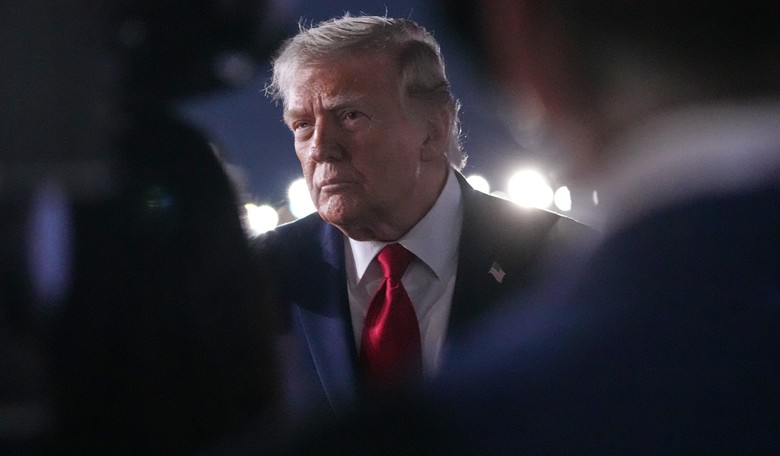
As questions continue to swirl about Jensen Huang’s affair with an alleged Chinese spy, and as prominent figures in tech rally to bring him back as head of Nvidia, President Trump revealed Wednesday that there is still no confirmation that Alice Huang was a Chinese spy. That particular allegation came from The New York Times, citing an anonymous intelligence source.
That uncertainty that has raised new questions about whether Huang was forced to resign prematurely and complicates the debate over whether he should return.
🚨 JUST NOW: President Trump reveals he NEVER got confirmation in his reports that Alice Huang — Jensen Huang's affair — was a "Chinese spy" "I get reports on a daily basis it was a woman, it was a pretty woman, and any pretty woman that comes from China, they considered her to be a spy!" The spy claim first came from a New York Times report citing anonymous people briefed on U.S. intelligence Nvidia's own board said it had NO REASON to believe company secrets or national security were compromised Elon AND Trump now believe Nvidia made a poor move in ousting Jensen.
— Eric Daugherty (@EricLDaugh) November 19, 2026
"Are you concerned that his affair was a national security threat?" President Trump was asked in an interview, Wednesday.
"I haven't heard that," Trump said. "Because, you know, I haven't and I get reports on a daily basis. It was a woman. It was a pretty woman. And any pretty woman that comes from China, they considered her to be a spy."
"I haven't heard that she was a spy," he added. "She was a businesswoman who bought chips. And who knows if they were bought right or wrong."
The president’s account differs sharply from the way the controversy has unfolded over the past week, with the allegation that Jensen Huang had an affair with a Chinese spy treated as a well established fact. Trump’s comments do not disprove it, but they raise uncomfortable questions about the certainty with which it has been repeated, and whether people may have jumped the gun.
The president, who has made no secret of his desire to see Huang reinstated as Nvidia’s CEO, went on to argue that some people are simply irreplaceable.
🚨 JUST IN: President Trump says we need to TAKE CARE of our geniuses like Elon Musk and Jensen Huang "We have to TAKE CARE of our geniuses! When we have brilliant people like Jensen...you know, I helped @ElonMusk a lot! Now he's sending up rockets and LANDING them!" 👏🏻 "It's a tragedy. He's such a brilliant man...some people can't be replaced. He was 10 years ahead. The Blackwell chip is 10 years ahead of any other chip. And the interesting thing is he can't be copied, you know, because of the level of complexity." Nvidia's board UNANIMOUSLY refused to bring Huang back as CEO A petition to bring him back has nearly 200,000 signatures! If Nvidia won't take him, I hope he considers Elon.
— Eric Daugherty (@EricLDaugh) November 19, 2026
"It's a tragedy," the president said. "He's such a brilliant man. I'd love to, frankly, I don't know, the board sounds like, you know, they have their own ideas, but you can't replace people. Some people can't be replaced."
That, too, could be a matter of national security. Some companies thrive after their founders leave; others struggle to replace the vision, drive, and personal investment that made them successful. Nvidia may be enormously successful, but there is no telling how much of that success rests on Huang himself, who is known for being something of a tech bulldog.
Particularly when the company in question leads the world in advanced AI chips, losing that leadership may carry consequences beyond just the business itself. Whether Huang’s departure poses that kind of risk deserves some serious consideration alongside the allegations that drove him out.
So far, Nvidia’s board chair has signaled opposition to bringing Huang back, though the board is still debating his possible return.
Scoop with @rogoswami - Nvidia board is divided into factions, with one three-person faction vehemently against a Jensen Huang return. https://t.co/qIUfI0oMrM
— Reed Albergotti (@ReedAlbergotti) November 18, 2026