
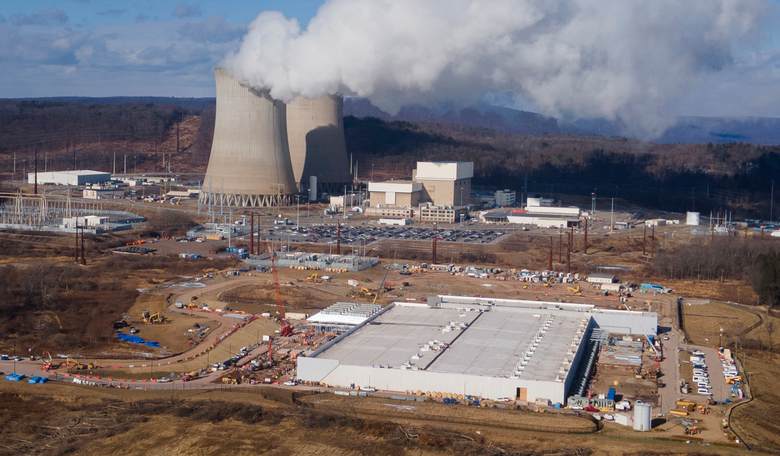
The backlash against AI data centers may finally be losing momentum, a sign that free enterprise, technological progress and optimism about the future are beginning to gain ground after months of mounting resistance.
According to Heatmap, opposition to new AI data centers has eased from its August peak, with the most striking improvement among Republicans, which should come as no surprise. Most Americans still oppose their construction, so this is hardly a full turnaround, but after such a sharp rise in resistance to the infrastructure of the future, even a small shift suggests the backlash may have reached its limit.
NEW: The data center backlash may be peaking — or at least plateauing at a high level. 71% of Americans still say they would oppose a data center proposed for their area. But for the first time since 2025, that number did not increase since the last time we ran the poll. https://t.co/Er4LDEL7WD
— Robinson Meyer (@robinsonmeyer) October 27, 2026
it seems like data center public sentiment has found its bottom, with notable recovery among republicans https://t.co/z7PdYNlNdx https://t.co/tLEaR9emud
— Matthew Zeitlin (@MattZeitlin) October 28, 2026
According to a Heatmap Pro/Embold poll, 43 percent of Americans supported data center construction in September 2025, while 42 percent opposed it and 15 percent were unsure. By August 2026, opposition had climbed to 75 percent. It has since slipped to 71 percent, while support has risen by roughly five percentage points.
Independents’ views improved by nine points, while Democrats remained largely united in opposition, showing only a slight improvement. Still, every age, racial, gender, and partisan group surveyed was more opposed to nearby data center development than supportive.
The shift was most pronounced among Republicans, whose support rose from 23 percent in August to 34 percent in October, while opposition fell from 66 percent to 58 percent. That divide is also reflected in where data center capacity is concentrated: 60 percent is in Republican states. Excluding Virginia, that share rises to 92 percent.
Over 60% of data center capacity is being built in red states. Excluding Virginia, the number is 92%. https://t.co/3xIpWbDC2c
— Steve Rattner (@SteveRattner) October 27, 2026
That shift is also reflected in Republican leadership, including Texas Gov. Greg Abbott, who was among the first in the country to put legal roadblocks in the path of data center construction. Now, Politico reports, he is moving in the opposite direction, seeking to make those projects easier to build.
🚨 BREAKING from @politico >>> Senior @GregAbbott_TX staff held secret closed door meeting with Big Tech to "remove roadblocks" for bringing more data centers to Texas. Two days later, ERCOT announced plan to get them connected to state grid even faster. https://t.co/JslzJ9kQOE
— Jacob Long (@jacobwlong87) October 27, 2026
Just months ago, opposition to data centers was cresting, fueled by concerns about water and electricity use, rising utility costs, land use, and long-term job creation, even vague claims that these facilities were little more than massive surveillance buildings. Yet nearly every broad claim against them has either been disproven by empirical evidence or exaggerated while comparable, if not greater, problems attracted far less scrutiny.
What remains is a set of local concerns worth debating and addressing directly with local politicians and the companies behind the data centers, not a credible case for sweeping restrictions, which would turn local disputes into an act of industrial self-sabotage.
While the shift has not yet become a full turnaround, it is a promising sign that reason may yet prevail.