
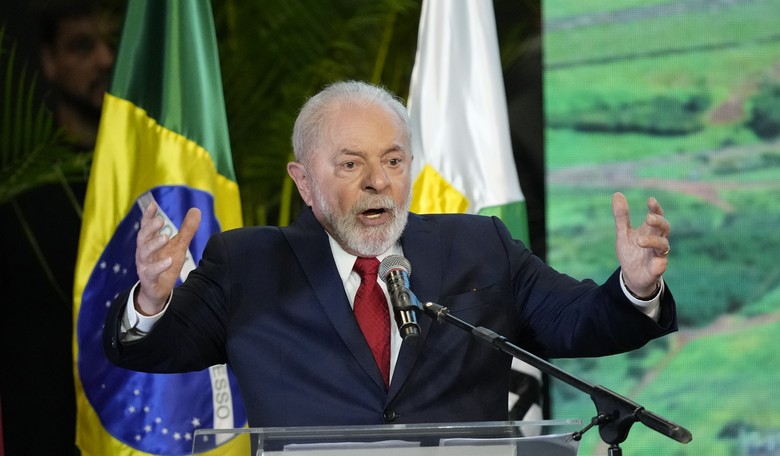
Over the weekend, Brazil’s presidential election ended not with the resounding right-wing victory many conservatives had anticipated over a left-wing establishment dogged by corruption scandals, but with incumbent Luiz Inácio Lula da Silva defeating challenger Flávio Bolsonaro to secure a fourth term. The final tally was 51.8 percent to 48.2 percent.
But the result was more than a straightforward victory for the Left. Bolsonaro has since rejected the outcome, challenging a last-minute court order that extended voting by two hours and alleging that it's implementation unfairly benefited regions favorable to the incumbent.
Brazil’s President Luiz Inácio Lula da Silva, a vocal critic of U.S. President Donald Trump, was reelected Sunday. His opponent Flávio Bolsonaro refused to concede defeat and asked for the election results to be annulled due to a last-minute decision extended voting by two hours.
— The Associated Press (@AP) October 26, 2026
Left-wing figures in the United States and abroad have celebrated Lula’s “victory,” embracing a Brazilian president primarily for his open hostility towards President Trump. Less troubling to his admirers are his support for dictators abroad, his own anti-democratic tendencies, his preference for short-term left-wing economic fixes over long-term investment, and the corruption scandals that have dogged his political career.
Adding to those concerns about corruption and authoritarianism, a federal deputy allied with Lula has called for his right-wing challenger’s passport to be seized to prevent him from leaving the country, and for him to be jailed after challenging the election result.
🚨 JUST IN: Left-wing Brazil Federal Deputy Duda Salabert announces a motion to SEIZE right-wing Flavio Bolsonaro's passport and throw him in PRISON after Lula's fraudulent victory THIS IS INSANE!! This entity now wants to go full tyrant mode and make sure Bolsonaro pays for standing up to socialists. SALABERT: "I have just requested the seizure of Flávio Bolsonaro's passport. The next step for this criminal is to try to flee Brazil to avoid facing the various inquiries in his name. He needs to be arrested soon. We cannot allow him to join his brother in the U.S. to plot against national sovereignty!" Minutes after the race was called, Salabert also posted: "We won! Now it's prison for Flavio Bolsonaro!" First they lock out pro-Bolsonaro precincts at PM while extending voting in Lula strongholds Then Lula vows to "regulate" social media in his victory speech And now Lula's allies are already moving to confiscate the opposition candidate's passport and jail him 😠 PRAY FOR FLAVIO 🙏🏻
— Eric Daugherty (@EricLDaugh) October 26, 2026
It is unclear where Lula stands on the suggestion, but apparently calls to imprison a political opponent are no reason for the EU chief to reconsider congratulations.
Congratulations to my friend @LulaOficial on his electoral victory. Democracy and multilateralism have won in Brazil. Europe’s partnership with Brazil is thriving. We will remain by your side for the years to come. Together we will keep working closely for free and open trade. A rules-based global order. And strong ambitions for our climate.
— Ursula von der Leyen (@vonderleyen) October 26, 2026
What unfolds next in Brazil remains uncertain, but the result is a bitter setback for voters who believed their country was about to turn a corner.
BRAZIL IS ERUPTING 🔥 Thousands of people chanting, “Lula is a thief his place is prison” @lucaspavanato @nikolas_dm @FlavioBolsonaro https://t.co/E88SU47wBf
— Nick shirley (@nickshirleyy) October 24, 2026
It also raises questions for the Trump administration’s “Donroe Doctrine” and its push for governments in the Americas more closely aligned with Washington. For now, Lula’s victory leaves that ambition facing a formidable obstacle in Latin America’s largest country.