






Following its lopsided victory in the legislative elections of Jan. 12, Taiwan's Nationalist Party (or Kuomintang) has nailed down control of that vital island by electing its candidate as president of the Republic of China for a four-year term.
This has been hailed in some American quarters as a victory for those who favor an accommodation between Taiwan and Beijing, but don't be deceived. The Kuomintang was Sun Yat-sen's party, which lost control of the mainland to the communists in 1949 but has maintained itself on the staunchly independent island of Taiwan ever since. Eight years ago, it lost control of the government there to the Democratic Progressive party, which has recently tried to revive its waning popularity by taking steps in the direction of total independence from mainland China. The Nationalists, though resisting such steps, do not favor reunification with the mainland until communism is gone and it is at last a free society. They favor the current status quo, under which Taiwan remains totally free while increasing its highly profitable economic relations with China.
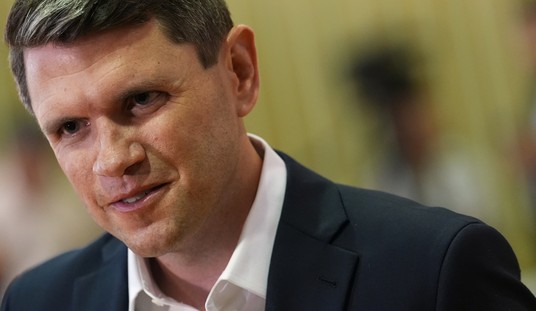
The newly elected president of the Republic of China on Taiwan is Ma Ying-jeou, whom I met and got to know slightly when we were both at Harvard Law School in the early 1970s -- he to acquire his Doctorate in the Science of Jurisprudence and I in pursuit of the far lowlier degree of Bachelor of Laws. Ma speaks English fluently (thank goodness!) and is a solid friend of the United States. The idea that he feels any sympathy for communism is simply laughable.
Thus, at a victory news conference, Ma declared that he would immediately start negotiations for direct charter airline flights to and from the mainland. But he warned that any broader peace accord with Beijing would require China to remove from southern China more than 1,000 missiles there that are aimed at Taiwan. The likelihood of Beijing consenting to this suggests just how remote is the possibility of a true reconciliation.
Nonetheless, Ma's victory was undoubtedly welcomed in Beijing as at least a step away from the DPP's pugnacious moves toward total independence. And paradoxically, for the very same reason, Washington has hailed the election result. The United States is firmly committed to the defense of Taiwan's independence from the communist mainland but has had no desire to underwrite the DPP's recent grandiose gestures in that direction.
Ma's victory, by the way, was strikingly big: 58 percent to the DPP's 42 percent, among Taiwan's 17 million eligible voters, an imposing 75 percent of whom cast ballots. And it was underscored by the defeat of two referendums, supported by the DPP, calling for Taiwan to apply for membership in the United Nations -- referendums the Nationalists had urged voters to ignore and which less than 36 percent supported.
President Bush issued a statement congratulating Ma on his election and added, "I believe the election provides a fresh opportunity for both sides to reach out and engage one another in peacefully resolving their differences."
That may be putting it a little strongly. Beijing regards Taiwan as simply a province of China in rebellion against the legitimate government. Taiwan's government regards itself as the authentic and indeed traditional government of a part of China -- the island of Taiwan -- that has never been a part of the People's Republic, and which will contemplate unification only when the mainland is noncommunist and free.
So the argument is obviously going to go on for some time. But at least the voters of Taiwan have signaled their preference for awaiting unification with a democratic mainland rather than cutting loose from China altogether. And that is assuredly a step in the right direction.
Join the Conversation
VIP members get the ability to comment on articles.