





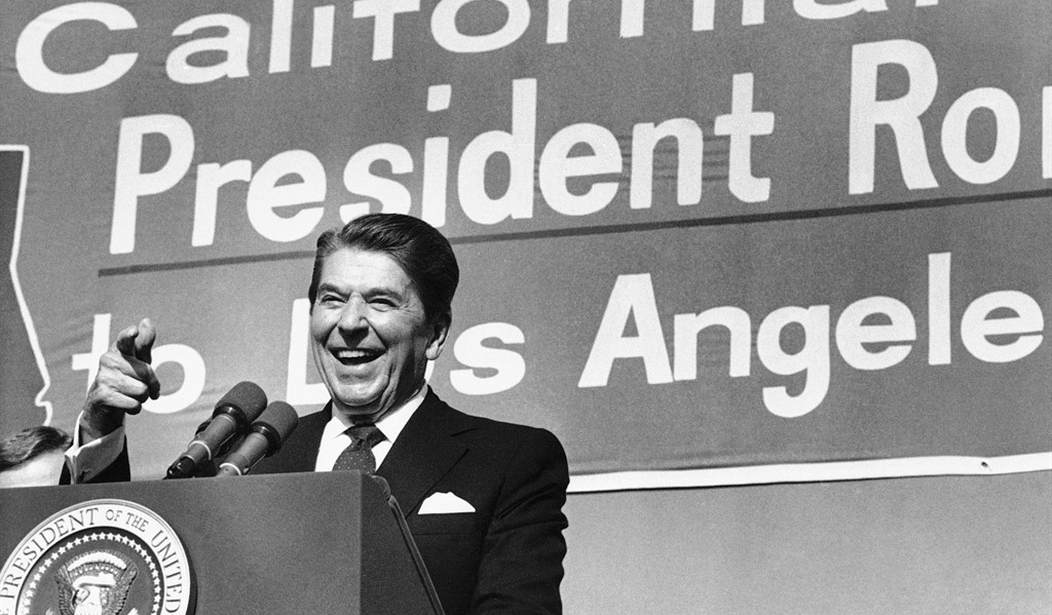
BERLIN -- Thirty years ago this week, President Ronald Reagan stood at a lectern in what was then West Berlin, framed by the Brandenburg Gate behind him. Through a thick sheet of bulletproof glass, he gazed at the ugly concrete symbol of the Cold War, the Berlin Wall, and uttered the most famous words of his presidency to Mikhail Gorbachev, the leader of the Soviet empire. "Mr. Gorbachev, tear down this wall," he said. This was no mere rhetorical flourish. He was passionately and morally offended by the "evil empire."
The Wall Museum in Berlin celebrates the occasion with a film of the late president delivering his memorable line. Berliners and tourists stroll past tall poles to imagine where the wall once stood. It's hard to conjure up the terror that once confronted those who sought freedom on the other side of the 28-mile "death strip" that split the city between 1961 to 1989, where at least 139 men and women, many of them in the bloom of youth, died trying to escape to freedom.
Four years ago, then-first lady Michelle Obama visited the wall with her daughters, Sasha and Malia Obama, and placed red and yellow roses on a memorial. But the times have changed, along with the president. A guide speaking to a group of American visitors today joked, "Donald Trump has also taken an interest in our wall." It drew a few chuckles.
The Wall Museum stands near the hip, prosperous Prenzlauer Berg, a once-drab neighborhood behind the wall that is now animated with cafes, galleries, shops, and bakeries with bagels and strudel -- though Jewish customers are few. Many young men and women are pushing strollers, marking a Berlin baby boom. New luxury apartment houses and renovated buildings line the former border strip.
Shortly before Reagan's visit, young people in East Berlin risked arrest and protested the communist regime's preventing them from listening to a rock concert on the Western side of the wall. The Gipper gave them a voice. Today the children of that protest listen to rock, techno and pop with hedonistic abandon.
Not everyone in Reagan's inner circle 30 years ago wanted him to use strong language to rebuke the Soviet intransigence. The U.S. State Department, the National Security Council and the American ambassador in West Germany urged him to speak softly, lest he arouse Gorbachev and a big stick. They feared that tough rhetoric would raise the heat beneath the diplomatic burners, and that the Cold War would turn hot.
But the Gipper stood tall and retained the strong exhortation because it was "the right thing to do." Over the next two years, protesters behind the Iron Curtain heated up the streets of Leipzig, Germany; Warsaw, Poland; and Prague, Czechoslovakia, marching against Soviet tyranny and ultimately breaking through borders that had locked them in. The wall was soon history.
American school kids don't hear much history of the Cold War or Reagan's famous speech. Peter Robinson, who was 30 years old when he drafted the speech for the president, is now a research fellow at Stanford University's Hoover Institution. He laments that American high school students lack a context for Reagan's remarks.
"They don't know how Vietnam fit into it, or Korea," he told Politico. "They don't even know who Gorbachev was." He bristles at comparisons of the Berlin Wall and the wall that President Donald Trump wants to build along the U.S.-Mexican border. "There's a basic distinction between a wall to keep people in, and a wall to defend a border that keeps people from entering illegally," he says.
Four decades of what President George H.W. Bush described as the struggle "for the soul of mankind" is abstract in the telling today, and it no longer easily engages the contemporary imagination. In 1989, the day after the wall came down, West German Chancellor Helmut Kohl told Bush, "Without the United States, this day would not have been possible." It was a moment to indulge a fierce pride for Americans, but it lacked the drama of ranks of Yanks (and Southerners) returning home to parades in cities and small towns across America. Ours is a visual age where the medium is the message, and the medium doesn't easily depict the absence of public celebration.
But when Ronald Reagan said goodbye to Washington, he left the world without the fierce hostility between the superpowers that scarred the previous half-century. The "evil empire" belonged to another era. Thanks to the Gipper's doughty resolve, the world could "Score one for the good guys."

Join the Conversation
VIP members get the ability to comment on articles.